
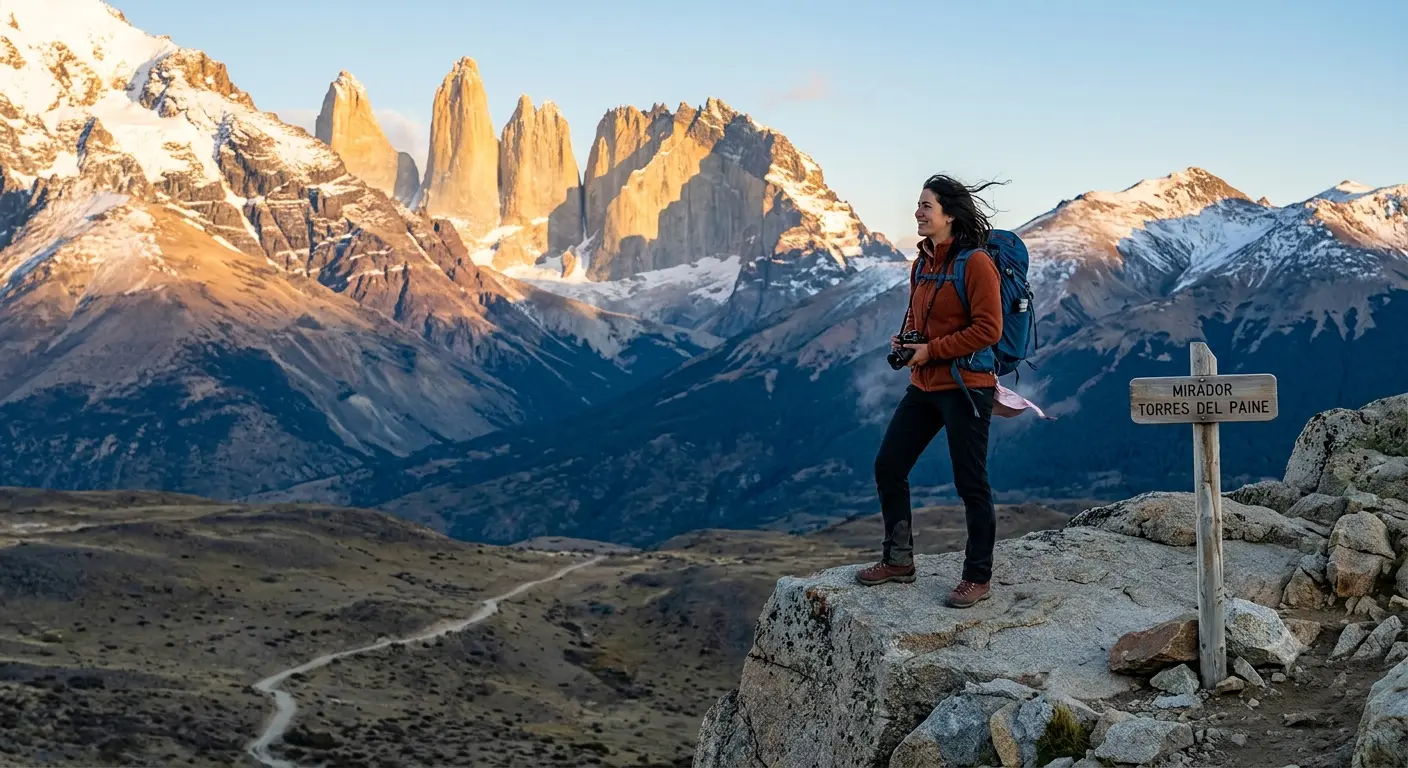
If you’re wondering what to wear in Patagonia in November, start with this: it’s the windiest month of the year here, with gusts that regularly hit 40-60 mph on open trails. I found that out the hard way outside Torres del Paine, where a gust knocked my hiking pole clean out of my hand and sent my hat halfway to Argentina.
The fix isn’t a heavier coat. It’s a wind-blocking layer worn closer to your body than you’d think, plus a system built to swap on and off fast, since Patagonia genuinely can throw four seasons at you in one afternoon.
Table of Contents
| When/Where | Typical Temp | What You Actually Need |
|---|---|---|
| Torres del Paine, daytime | 45-51°F | Base layer + fleece + windbreaker, shell on standby |
| Torres del Paine, wind gusts | Feels 10-15° colder | Windbreaker layer is non-negotiable |
| El Calafate / El Chaltén, daytime | Up to 60-65°F | Base layer + light fleece, shell rarely needed |
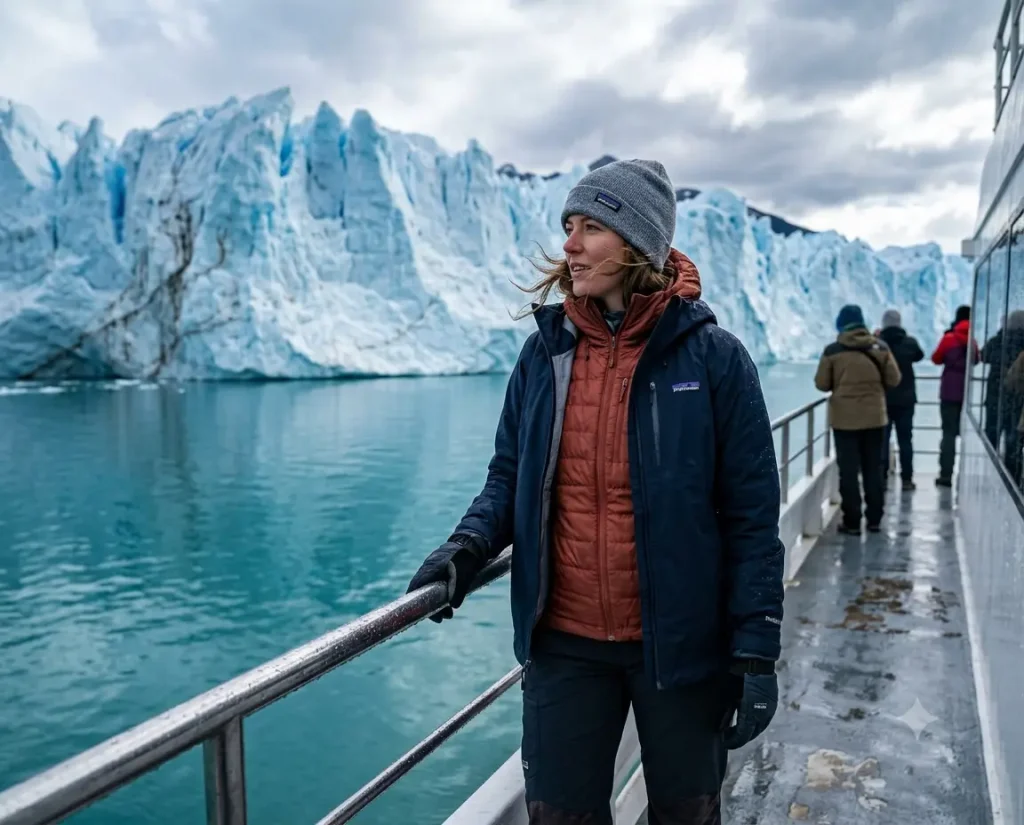
| Glacier boat tours | 35-40°F on deck | Insulated layer + windbreaker + waterproof shell |
| Evenings, either side | 32-40°F | Fleece + wind layer, wool beanie and gloves |
Why Patagonia in November Breaks Most Packing Lists
Most guides lump November into one long “Patagonian summer” that runs from November through March. That’s a mistake, and it’s the main reason so many generic lists get what to wear in Patagonia in November wrong. November is late spring here, not summer — wildflowers are just opening, guanacos are calving on the steppe, and the wind hasn’t settled into its calmer late-summer pattern yet.
November is officially the windiest month of the year in Torres del Paine, averaging over 20 mph with regular gusts far beyond that.
The other thing most packing lists miss: Patagonia isn’t one climate. It’s two countries with genuinely different weather, and which side of the border you’re on changes what you pack more than the calendar date does.
The Four-Layer Wind System, Explained
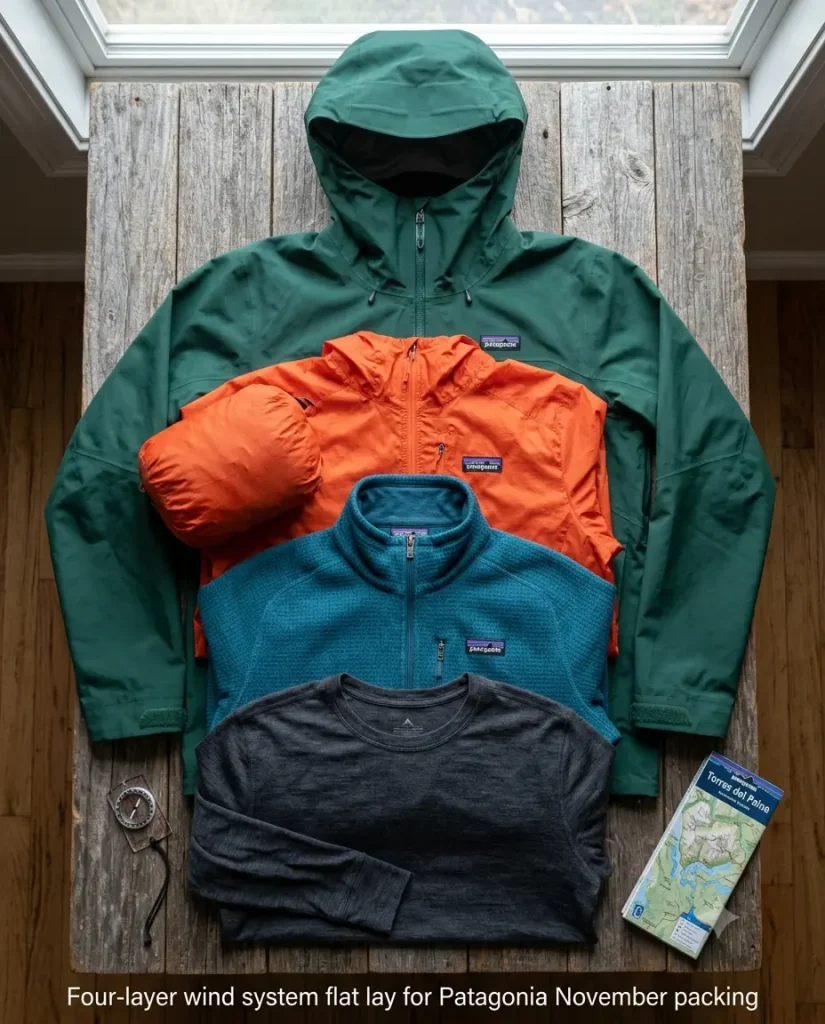
Every piece here does one of four jobs, and once you understand the job, you stop overpacking. Layer one wicks moisture off your skin. Layer two holds warmth.
Layer three blocks wind, which in Patagonia matters more than temperature alone. Layer four blocks rain, and you only need it on the Chilean side or for glacier days.
A heavy coat tries to do all four jobs at once and does none of them well. You’ll overheat hiking, then freeze the second the wind picks up and you stop moving.
Buy for the system, then look for pieces in a color palette that actually works in photos.
Base Layer: Merino, Not Cotton
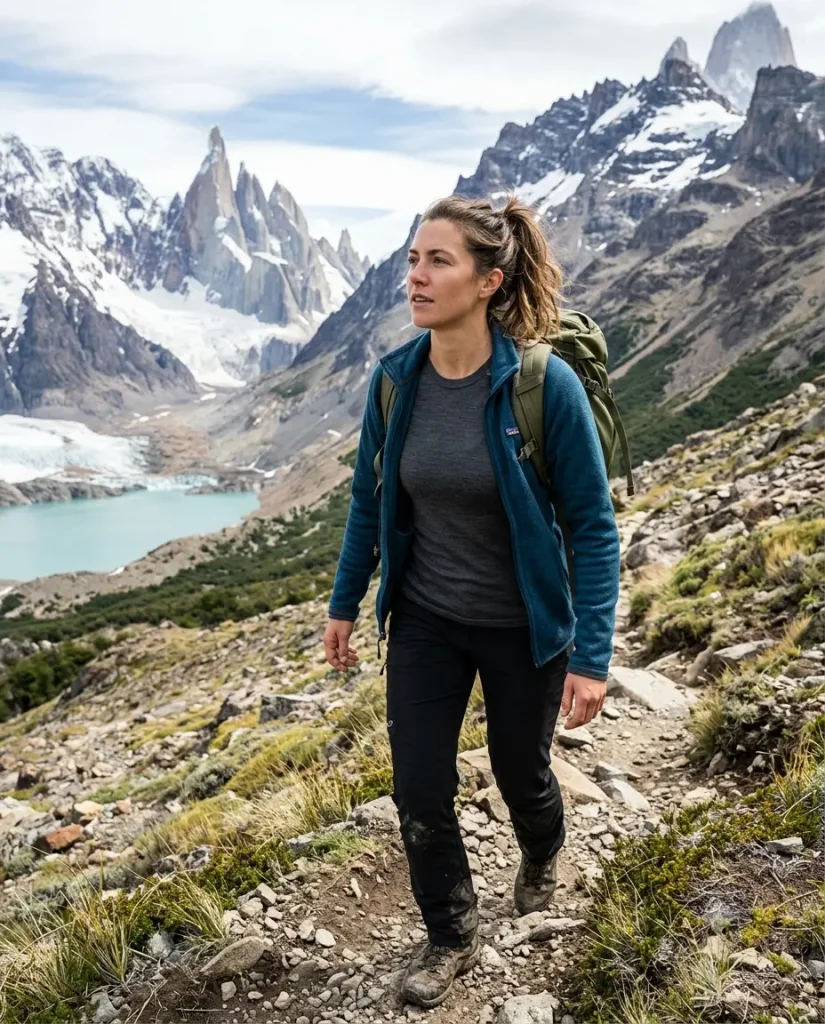
Cotton has no place in a Patagonia bag. Once it’s damp from sweat or spray, it stays damp, and damp fabric next to skin is how the wind chill actually gets you. The Smartwool Women’s Classic Thermal Merino Base Layer has been the layer I regret packing the least, trip after trip — it regulates temperature whether you’re standing still at a mirador or hiking the base-of-the-towers trail, and it doesn’t need washing every single day.
Mid Layer: Fleece That Still Photographs Well
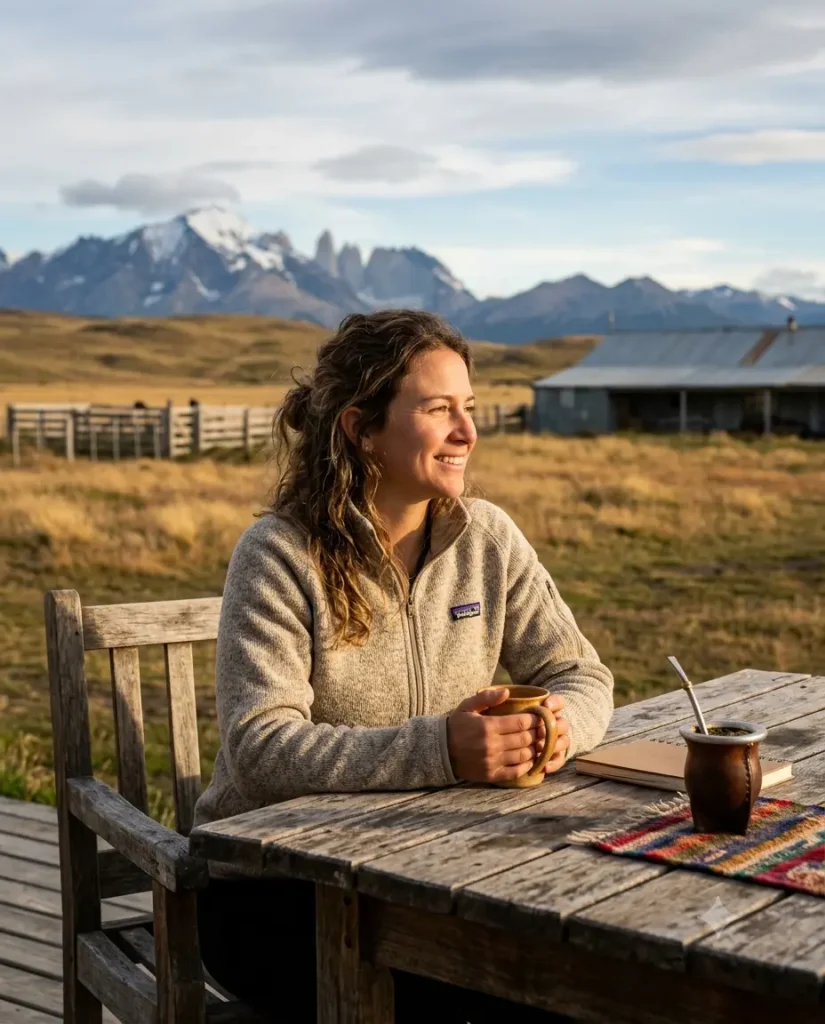
A midweight fleece is your warmth layer, and it needs to work indoors at an estancia dinner as much as outdoors on a trail. The Patagonia Women’s Better Sweater Fleece Jacket is the obvious choice — not just because the brand name matches the destination, but because the sweater-knit texture reads as an actual outfit in photos instead of technical gear, while still being 100% recycled polyester fleece built to hold warmth when damp.
Wind Layer: The Piece Most Packing Lists Skip
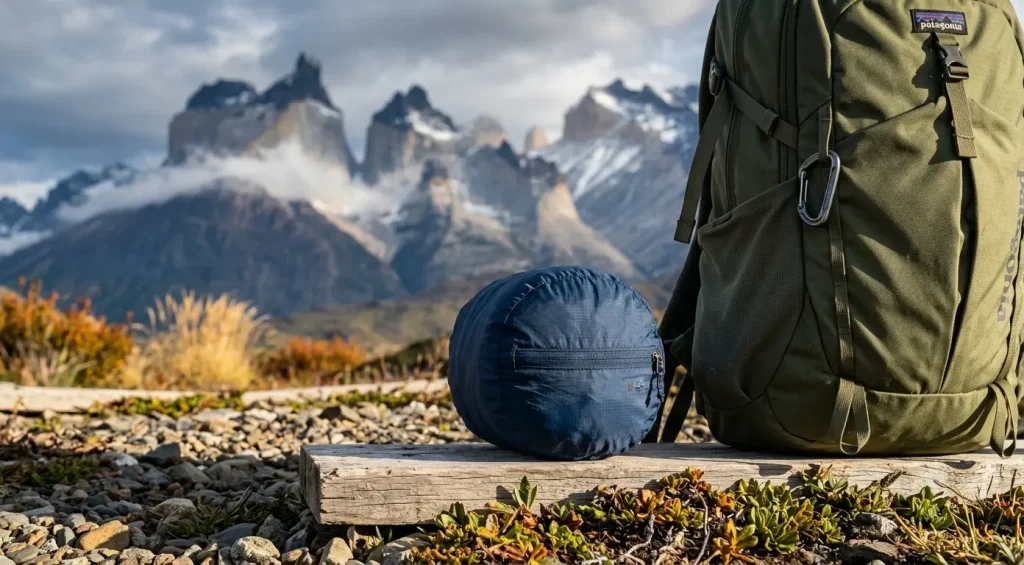
This is the layer that makes or breaks a trip built around what to wear in Patagonia in November, and it’s the one almost every generic packing list leaves out entirely. A dedicated windbreaker, worn over your fleece and under your shell, cuts the wind chill dramatically without adding bulk.
The Patagonia Women’s Houdini Windbreaker Jacket packs down into its own chest pocket small enough to live in a daypack all day, so there’s no excuse to leave it behind on a “sunny” morning that turns into a 40 mph afternoon.
Outer Shell: Waterproof for the Chilean Side
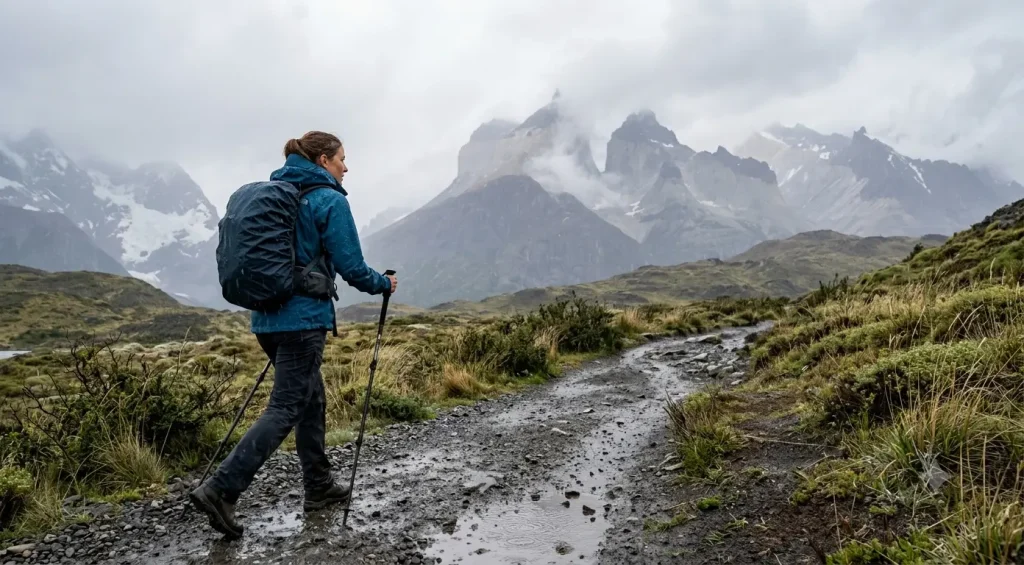
You don’t always need a full waterproof shell in Argentine Patagonia, but on the Chilean side — Torres del Paine, Puerto Natales — rain shows up fast and sideways. The Marmot Women’s PreCip Eco Jacket is fully waterproof, packs small, and has pit zips so you’re not sweating through it on an uphill push.
Rain pants can stay in the closet unless you’re doing a multi-day trek. For day hikes and sightseeing, the shell jacket alone covers most scenarios.
Pants and Footwear
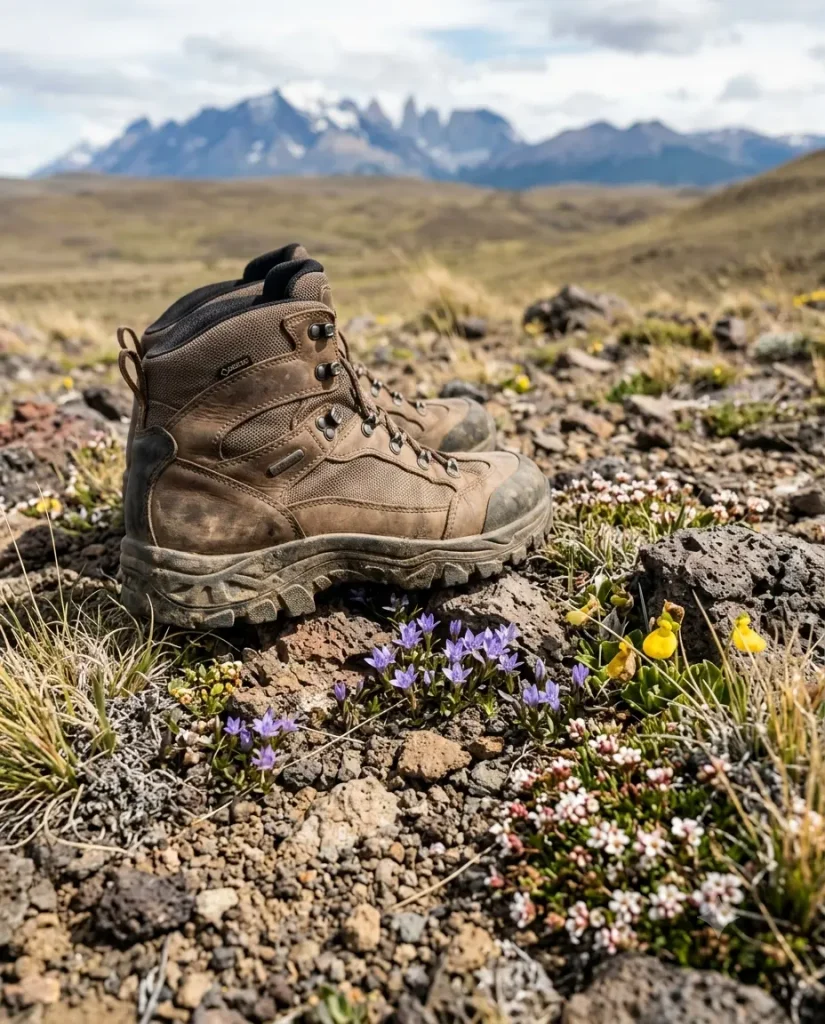
Quick-dry hiking pants beat jeans here, full stop — denim takes forever to dry and offers zero wind protection. prAna’s Halle hiking pants move well on trail and don’t look overly technical for a lunch stop in Puerto Natales or El Chaltén afterward.
For footwear, the Merrell Women’s Moab 3 Waterproof gives you ankle support on rocky trails without the bulk of a full boot, and it’s comfortable straight out of the box. Bring one pair of casual shoes for town days in El Calafate or Puerto Natales so you’re not clomping around in trail shoes at dinner.
Accessories That Actually Get Used
- Wool beanie — wind hits your ears first and hardest here
- Touchscreen gloves — you’ll want your phone out for guanacos and glacier shots without stripping off gloves in 35°F wind
- Buff or neck gaiter — doubles as a scarf in town and blocks wind at exposed viewpoints
- Small daypack — the Osprey Daylite Plus fits your packed-down wind layer, shell, water, and camera without feeling bulky
What I’d Leave at Home
A heavy down parka is overkill for most of a November trip — you’ll roast in it hiking and end up carrying it strapped to your bag half the day. Save real insulated warmth for glacier boat decks and early-morning starts specifically, where you’re standing still in the cold.
The umbrella can stay home too. Every local guide will tell you the same thing: Patagonian wind turns an umbrella into a wrecked handful of metal spokes within minutes.
Chile vs. Argentina: Pack Differently by Region
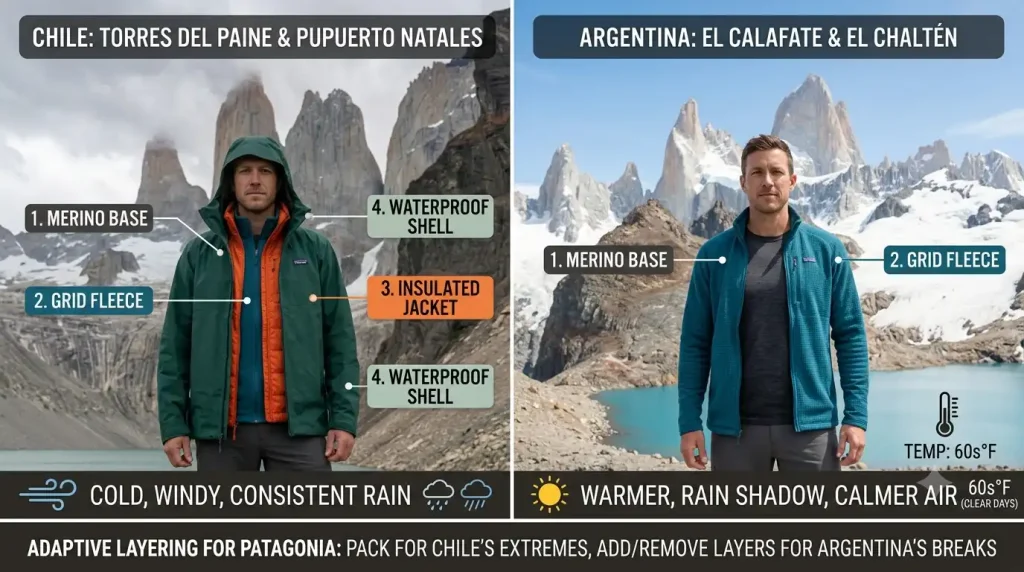
If your route covers both Torres del Paine (Chile) and El Calafate or El Chaltén (Argentina), pack for the colder, windier Chilean side and treat the Argentine leg as a relative break.
Torres del Paine and Puerto Natales run cooler and considerably windier, with more consistent rain. El Calafate and El Chaltén sit in more of a rain shadow, often reaching into the 60s°F on a clear November afternoon, with noticeably calmer air.
I packed my full four-layer system for the Chilean leg of a two-week trip and dropped down to base layer plus fleece for most of the Argentine side, only adding the wind layer back for the glacier boat tour out of El Calafate.
What to Wear for Specific Activities
Torres del Paine Day Hikes
Full four-layer system, plus your daypack loaded with the wind and rain layers even if the morning looks clear. Weather here changes faster than you can hike back to a shelter.
El Chaltén Trails (Fitz Roy, Laguna de los Tres)
Base layer, fleece, and wind layer usually cover it, since this side runs drier and the wind is less relentless than the Chilean steppe. Keep the rain shell in your pack as insurance, not as your default layer.
Perito Moreno Glacier Boat Tour
The boat deck runs 10-15 degrees colder than the dock thanks to wind chill over open water. Wear your full system here, gloves included — I stood on that deck for maybe twenty minutes waiting for the ice to calve, and my hands were the first thing to go cold despite three layers on my torso.
Estancia Dinner or Puerto Natales Evening Out
Swap the technical shell for a wool coat over your fleece, keep the beanie for the walk over, and lose it once you’re inside. I ended up carrying my fleece over one arm through most of an estancia dinner because the wood stove was doing more work than any of my layers needed to.
Styling Tips: Wildflowers, Wildlife, and Wind-Proof Photos
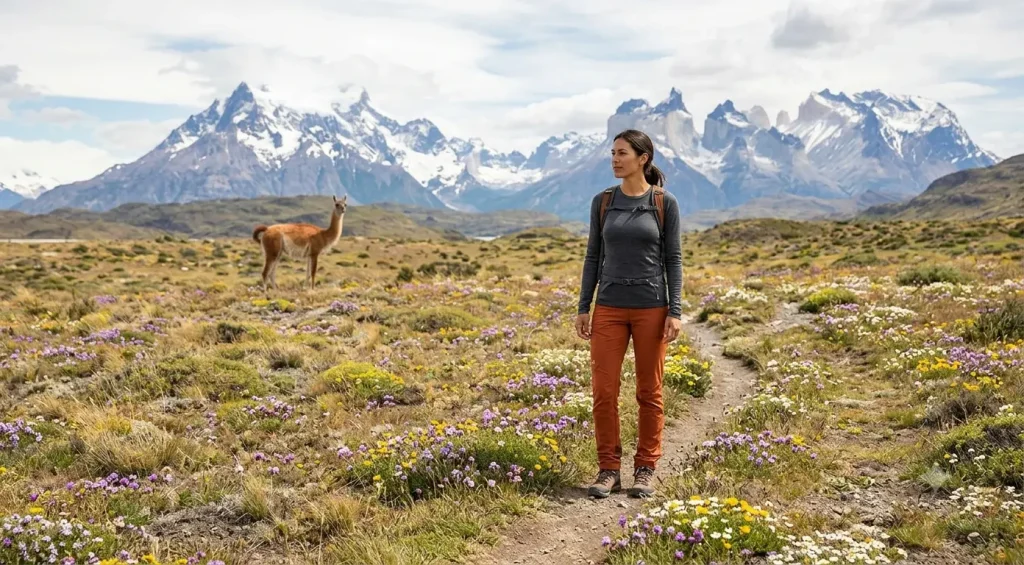
November is peak wildflower season on the steppe, and it’s also when guanacos are calving, so you’ll have soft green-and-gold backdrops that don’t exist later in summer. Stick to a tight palette across your layers — rust, forest green, camel, and charcoal all hold up against the grey granite towers and gold grasslands without competing with the scenery.
Zipped, fitted layers photograph better than baggy ones in wind — anything loose will be visibly flapping in nearly every outdoor shot here. Save your one “nice” outfit for an estancia dinner, since anything worn near the trails is getting windblown or muddy regardless of how it looks starting out.
Common Mistakes First-Time Visitors Make
Treating November like peak summer is the biggest one. Travelers who pack for the December-January crowds end up under-layered for a month that’s still windier and cooler than the guidebooks suggest.
Underestimating the wind specifically is the second. A fleece alone in 40 mph wind feels far colder than the actual temperature reading, and most first-timers don’t realize how much a thin windbreaker changes that equation.
Packing identically for both countries is the third. Bringing Chilean-side gear for an Argentine-only itinerary means carrying weight you won’t use, and the reverse means being genuinely underprepared.
Packing List Checklist
Here’s the full answer to what to wear in Patagonia in November, condensed into one list:
- 2-3 merino base layers (tops and bottoms)
- 1 midweight fleece
- 1 packable windbreaker
- 1 waterproof shell jacket (essential for the Chilean side)
- 1 pair quick-dry hiking pants
- 1 pair waterproof hiking shoes or boots
- 1 pair casual shoes for town evenings
- Wool socks, more than you think you need
- Wool beanie, touchscreen gloves, buff or neck gaiter
- Small daypack for day hikes and boat tours
- One “nice” outfit for estancia dinners
Frequently Asked Questions
What to wear in Patagonia in November?
Layer a merino base layer, a midweight fleece, and a packable windbreaker, adding a waterproof shell on the Chilean side. November’s defining factor is wind, not just cold, so the windbreaker layer matters more than an extra sweater.
Is Patagonia very windy in November?
Yes — November is the windiest month of the year in Torres del Paine, with average speeds over 20 mph and regular gusts well beyond that. A dedicated wind layer matters more here than it does almost anywhere else you’d pack for.
Do I need waterproof clothing for Patagonia in November?
On the Chilean side (Torres del Paine, Puerto Natales), yes — rain arrives quickly and often sideways. On the Argentine side (El Calafate, El Chaltén), a waterproof shell is more of a backup than a daily requirement.
Is Patagonia cold in November?
Not brutally, but it’s cooler than most people expect from “summer.” Torres del Paine typically sees highs in the mid-40s to low 50s°F, while El Calafate and El Chaltén can reach the 60s on a clear day.
What’s the difference between packing for Chilean and Argentine Patagonia?
Chile’s Torres del Paine region runs colder, windier, and wetter, so it needs your full layering system. Argentina’s El Calafate and El Chaltén sit in a rain shadow and run milder and calmer, so you can often drop the shell and rely on base layer plus fleece.
Can I wear jeans in Patagonia?
Fine for town evenings in Puerto Natales or El Calafate if the forecast is dry. Steer clear of them on the trails — wet or wind-exposed denim is miserable and slow to dry.
How Much to Pack for Your Trip Length
A weekend trip covering just one side of the border needs one full layering system plus a spare base layer, since laundry access is limited outside the bigger towns. For a longer trip crossing both countries, the core question of what to wear in Patagonia in November stays the same — you’re just deciding day to day whether the wind layer or the shell is doing the heavy lifting.
For a two-week trip covering both Torres del Paine and the Argentine side, add a second fleece for rotation and consider packing a small tube of wool wash, since ten-plus days is long enough that merino needs a refresh.
For real-time conditions before you head out on a trail, Meteochile covers the Chilean side and Argentina’s Servicio Meteorológico Nacional covers the Argentine side — both update far more reliably than a weekly app forecast this far south.
Planning more cold, windy destinations? Our Norway in September guide covers a similar layering approach for Nordic wind and rain, our Iceland in September guide tackles the same wind-over-cold logic in a different hemisphere, and our international packing list rounds up the gear that works across every cold-weather destination.

Jitu Niranjan is a travel fashion writer and the founder of Travel in Styles. With three years of experience curating outfit guides and packing strategies for women travelers, he covers everything from airport looks to destination dressing across beaches, cities, and beyond. Follow his curation on Pinterest.