
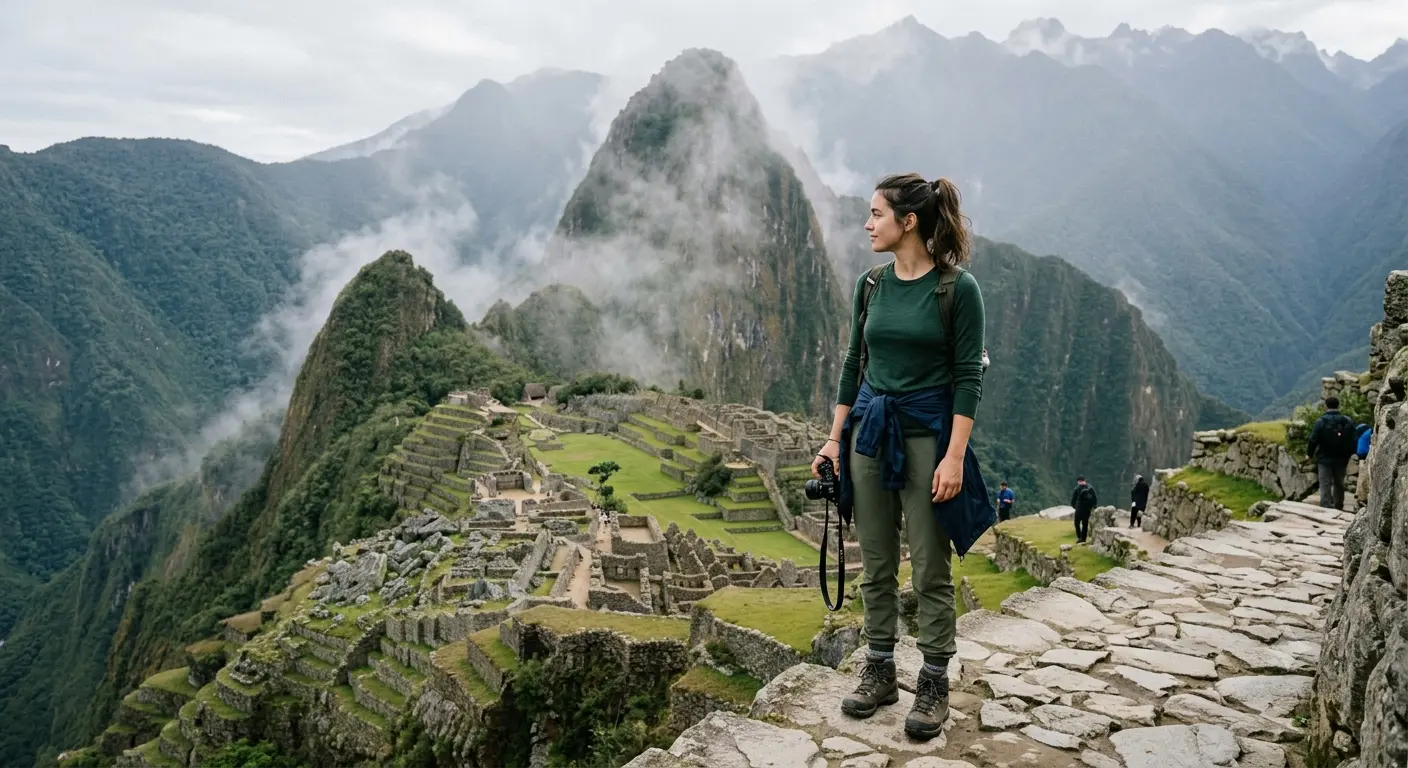
If you’re packing for Peru in April, the honest answer is: you’re covering three climates in one carry-on. Lima stays warm and dry, Cusco and Machu Picchu are shaking off the last of the rainy season into cool, clear days, and the Amazon is still steamy and wet.
The trick isn’t overpacking for all three. It’s building a small capsule of pieces that pull double duty across a coastal desert, a 11,000-foot mountain valley, and a rainforest, sometimes all in the same week.
I made the mistake on my first trip of packing like I was headed to one destination instead of three. By day four in Cusco I was layering a hotel-room bathrobe under my jacket because I’d left every warm piece checked in Lima. Here’s what actually works, region by region, so you land with a bag that does the job without dragging you down.
Table of Contents
What to Wear in Peru in April: Quick Cheat Sheet
| Item | Best Used For | Key Fabric Tech | Styling Tip |
|---|---|---|---|
| Merino base layer | Cusco mornings, Machu Picchu, cool evenings | Merino wool, odor-resistant | Wear alone in Lima, layer under a shell in the Andes |
| Packable rain shell | Amazon jungle, sudden Andes showers | Waterproof, seam-taped nylon | Keep it in your daypack every single day, not your suitcase |
| Quick-dry hiking pants | Inca Trail, Sacred Valley day hikes | Nylon-spandex blend | Roll to capri length for warmer jungle afternoons |
| Lightweight linen top | Lima city days, Amazon lodges | Breathable linen or linen-cotton | Pairs with wide-leg trousers for dinner in Miraflores |
| Waterproof hiking shoe | Machu Picchu, Sacred Valley ruins | Vibram outsole, waterproof membrane | Break in before you fly, cobblestones are unforgiving |
What to Wear in Peru in April: The Weather Behind It
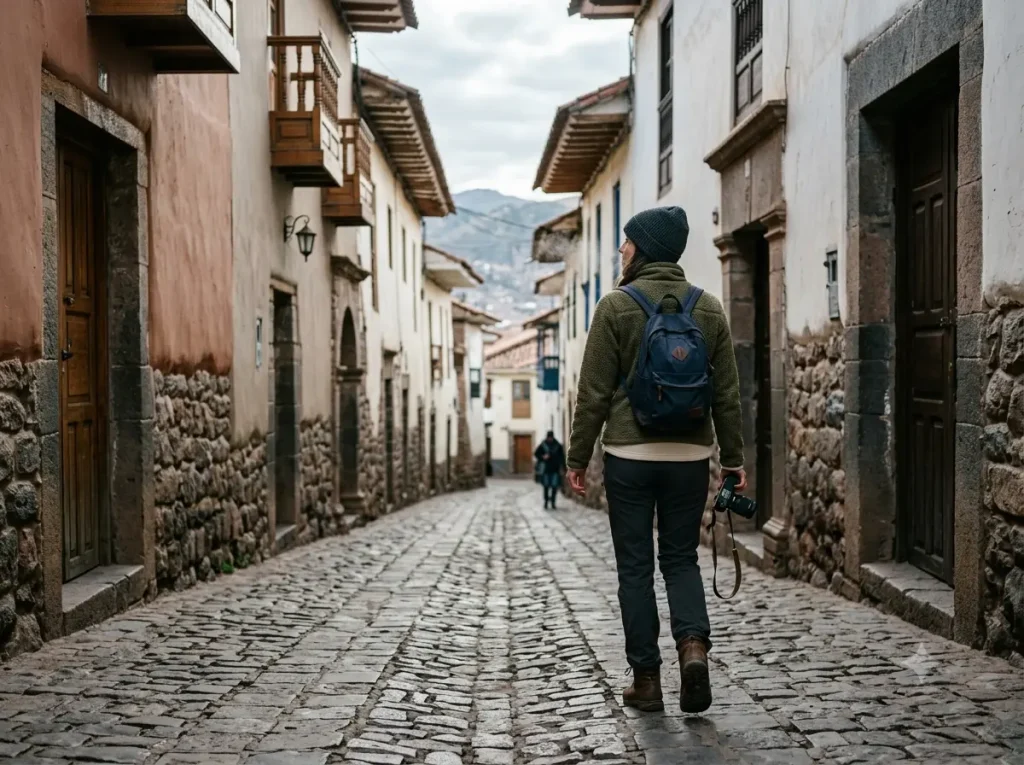
April sits right at the hinge between Peru’s wet and dry seasons, and where you are on the map decides which side of that hinge you feel. The coast is already dry and mild.
The Andes are drying out fast but still catch the odd shower, while the Amazon is still deep in its wet season. For the most current forecast before you pack, Peru’s national weather service, SENAMHI, publishes daily regional updates that are far more reliable than a generic weather app.
- Lima and the coastal desert (Trujillo, Paracas, Máncora): Warm and dry, with highs around 75–77°F (24–25°C) and lows near 64–65°F (18°C). Humidity is noticeable but sea breezes keep it comfortable.
- Cusco and the Sacred Valley: Cool mornings, mild afternoons. Daytime highs run 66–68°F (19–20°C), but nights drop to 41–45°F (5–7°C). This is the region where layering earns its keep.
- Machu Picchu: Slightly warmer and wetter than Cusco proper, with highs near 70°F (21°C) and lows around 50°F (10°C). Light showers are still common, especially early in the month.
- The Amazon (Iquitos, Tarapoto): Hot and humid year-round, with highs near 84°F (29°C). April rainfall is lighter than the peak wet months but still substantial.
The single most useful packing rule for Peru in April: pack for the coolest place on your itinerary and the wettest place on your itinerary, then let one small stuff-sack of jungle gear cover the humidity if you’re headed that far east.
What Peruvians Actually Wear This Time of Year
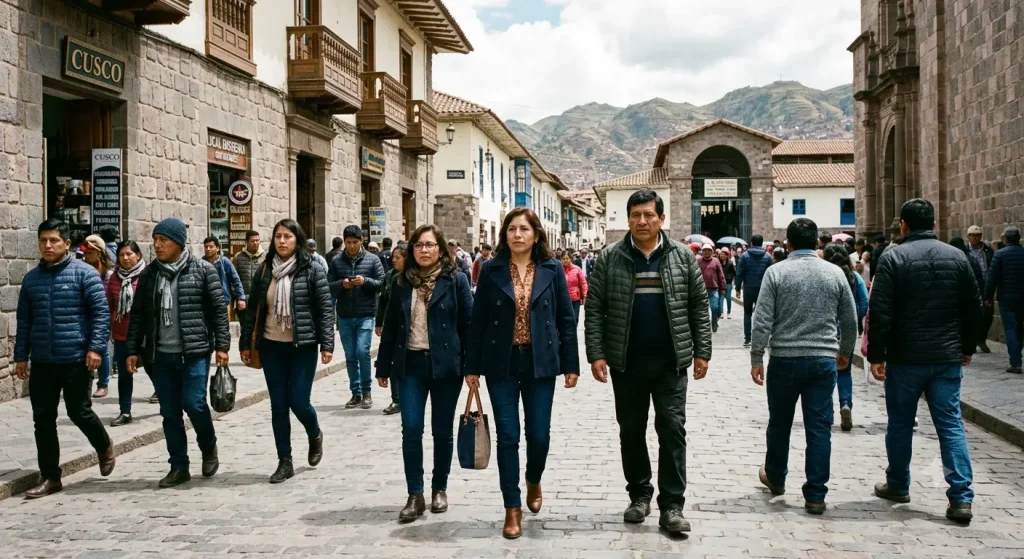
One thing that surprises first-time visitors: Peruvian city dress is more polished than the “backpacker in a poncho” image suggests. In Lima and Cusco, locals lean toward tailored basics, jeans, blouses, and a good jacket, over the loud alpaca knits sold to tourists in the markets. Save the statement alpaca sweater for after you’ve spotted the quality ones (more on that below), and pack your own quieter basics for daily wear.
In rural Andean towns and at religious sites, modesty matters more than it does in Lima’s beach neighborhoods. Covering your shoulders and knees is appreciated, especially around churches and smaller highland communities, and it also happens to double as sun protection at altitude, where UV exposure is far stronger than the mild air temperature suggests.
The Peru April Capsule Wardrobe
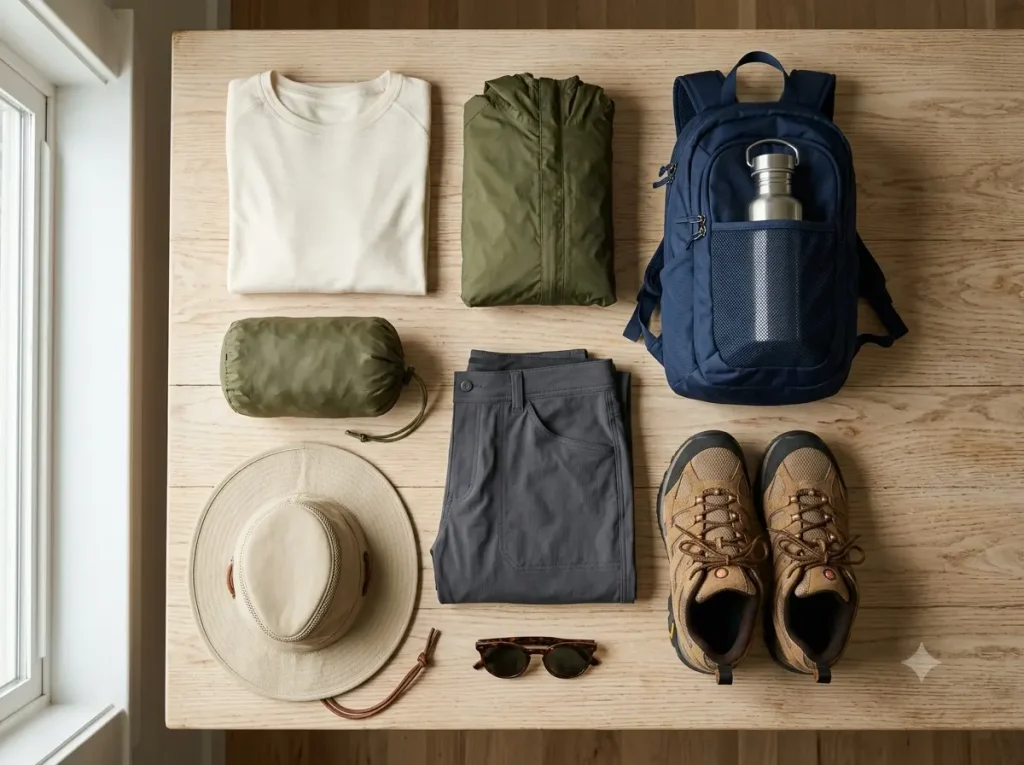
Building a capsule here means thinking in layers you can add or strip depending on altitude, not just temperature. This is what I actually pack for a two-week Lima-to-Cusco-to-Amazon loop:
- Merino base layers (2): The Smartwool Women’s Classic Thermal Merino Base Layer is the one piece I never leave behind. It regulates temperature between a chilly Cusco morning and a warm Lima afternoon without needing a wash in between.
- Packable rain jacket: The Marmot Women’s PreCip Eco Jacket folds into its own pocket and has kept me dry through both a Sacred Valley downpour and an Amazon lodge storm.
- Midweight fleece or knit layer (1): For Cusco evenings and the walk up to any high-altitude lookout.
- Quick-dry hiking pants (1–2 pairs): Look for a nylon-spandex blend that dries overnight after a hand wash, since laundry access is inconsistent outside Lima.
- Lightweight linen or cotton tops (3–4): For Lima’s warmth and layering underneath a fleece in the mountains.
- One versatile dress or jumpsuit: Works for a Miraflores dinner in Lima and packs down to nothing.
- Sun hat and sunglasses: Non-negotiable at altitude. The sun in Cusco and the Sacred Valley is far stronger than the mild air temperature suggests.
- Swimsuit: Lima has beaches, and several Sacred Valley hotels have hot springs.
- Daypack: The Osprey Daylite Plus is the one I bring on every trip. It’s big enough for a rain shell, water bottle, and camera without feeling bulky on a full hiking day.
Lima City Outfits
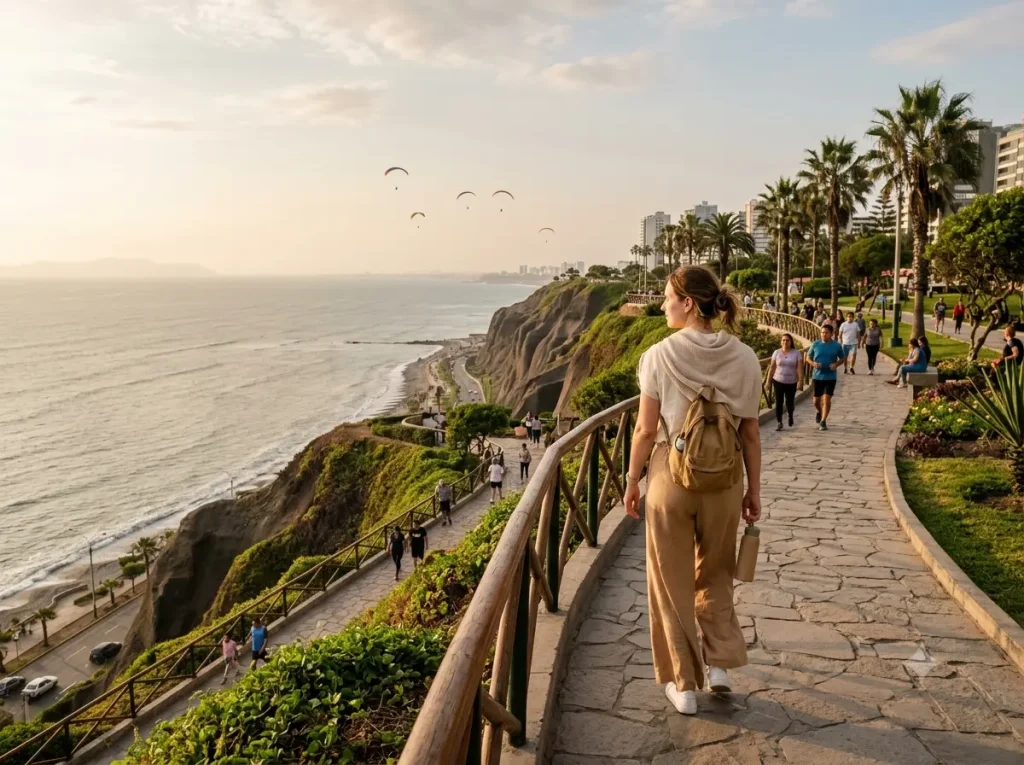
Lima in April is warm, coastal, and casual by day, with a slightly dressier edge by night in neighborhoods like Miraflores and Barranco. During the day, a linen top, comfortable travel pants, and clean sneakers cover museum visits and clifftop walks along the Malecón. For dinner, swap sneakers for flats or low sandals and add a light cardigan, since ocean breezes pick up once the sun sets.
In my experience, Lima is where you’ll want your one dressier outfit ready to go without digging through your bag, since a last-minute invite to one of the city’s excellent restaurants is common if you’re traveling with locals or a tour group.
Barranco, Lima’s arts district, runs more bohemian than Miraflores, so a linen jumpsuit or a printed midi dress fits the neighborhood’s murals-and-live-music vibe better than anything too polished. Save your smartest pieces for a Miraflores clifftop dinner instead, where the dress code creeps closer to smart-casual after dark.
Packing for Altitude Comfort
Cusco and the Sacred Valley sit above 11,000 feet, and altitude changes how clothes should fit, not just what they’re made of. Favor pants and skirts with a stretch or elastic waistband over anything structured, since mild bloating and swelling are common in the first day or two at altitude. Loose, layerable tops also make it easier to add or shed a layer without fully undressing in a shared bathroom or a cold hotel room.
Cusco, Sacred Valley & Machu Picchu Outfits
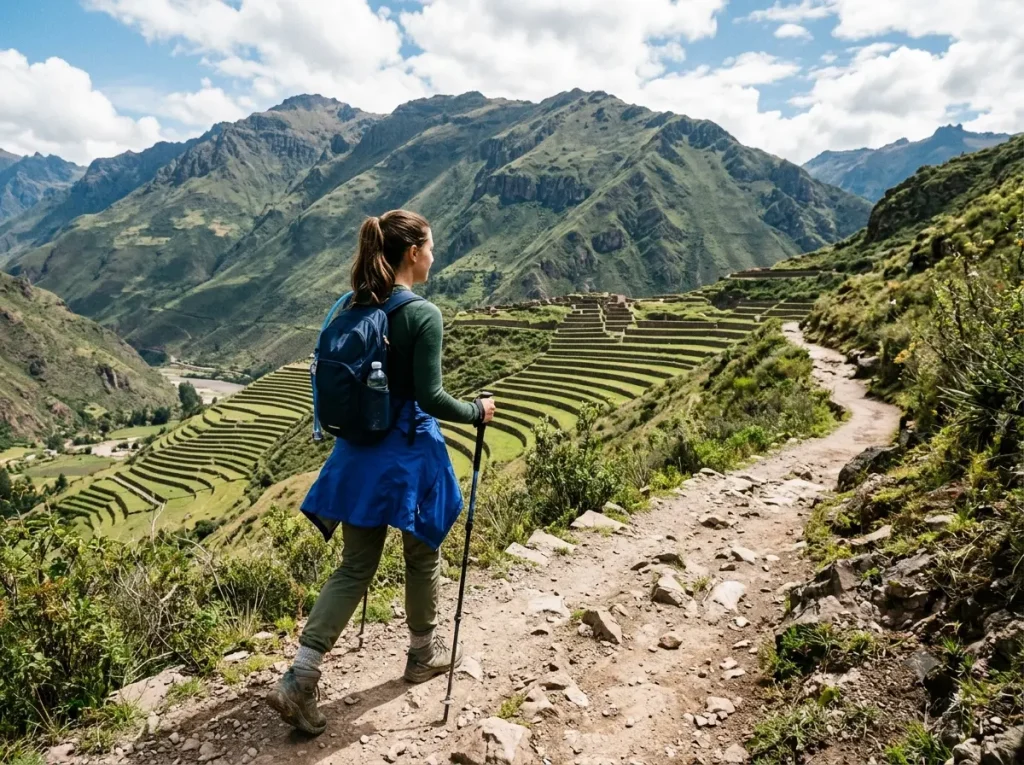
This is where the full layering system matters most. Mornings in Cusco start cold enough for a fleece and gloves, then swing to shirt-sleeve warmth by early afternoon, then drop again fast once the sun dips behind the mountains.
- Merino base layer
- Quick-dry hiking pants or leggings
- Fleece or lightweight insulated mid-layer
- Packable waterproof rain shell
- Wool hiking socks
- Waterproof hiking shoes
- Beanie and light gloves for early starts
If you’re doing the Inca Trail or a Machu Picchu day trip, carry your rain shell in your daypack even on a clear morning. Mountain weather here changes faster than the forecast updates, and April showers tend to arrive without much warning.
For a multi-day Inca Trail trek specifically, April is one of the better windows: permits are still available (they sell out fast for the June–August dry season), and the trail has largely dried out from the wet months. Entrance tickets and permits should only be booked through Peru’s official Ministry of Culture ticketing platform, since third-party resellers frequently overcharge or sell invalid passes. Pack a compression sack for your sleeping layers, since porters weigh everything, and bring a separate lightweight camp outfit you’re not wearing while hiking, so you have something dry to change into each evening.
Shopping for an alpaca sweater in Pisac or Cusco’s San Pedro Market is one of the genuine highlights of this trip, but not every “alpaca” sweater sold on the street is actually alpaca. Rub the fabric between your fingers: real alpaca feels soft but slightly coarse and doesn’t pill immediately, while acrylic blends feel silkier and shed fibers when you tug them. A well-made piece is worth the extra soles and packs down small enough to wear as your Cusco evening layer for the rest of the trip.
💡 Pro-Tip: The Alpaca “Cold Test”
When shopping in Cusco’s markets, touch the knitwear directly to your wrist or cheek. Genuine alpaca fiber naturally retains a distinct chill and feels cold to the touch at first, whereas synthetic acrylic blends will instantly match the room temperature.
Amazon Rainforest Outfits
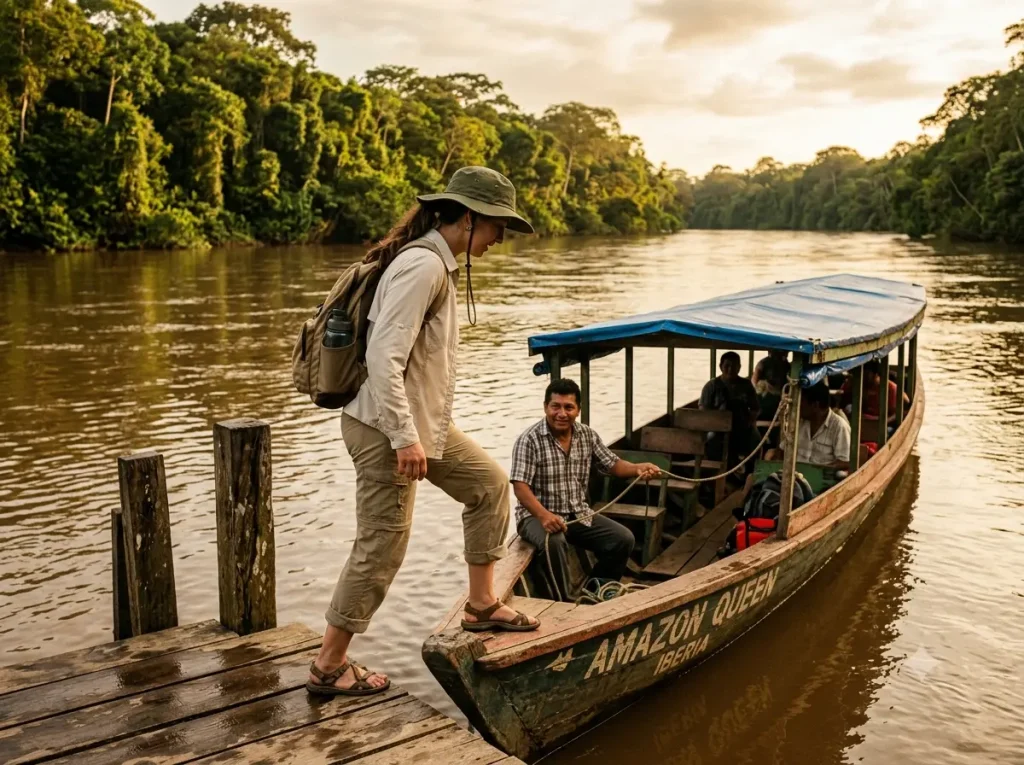
If your itinerary swings east to Iquitos or a jungle lodge, the packing logic flips entirely. Heat and humidity replace altitude and cold as the main challenge, and long sleeves become sun and insect protection rather than warmth.
- Lightweight, quick-dry long-sleeve shirts (for sun and insects, not cold)
- Convertible or roll-up pants
- A rain poncho or the same packable shell from your Andes packing list
- Closed-toe water shoes or quick-dry sandals with straps
- A wide-brim hat with a chin strap for boat rides
The jungle heat caught me off guard the first time I flew straight from a cold Cusco morning into Puerto Maldonado’s humidity. Everything I’d packed for the Andes was suddenly the wrong weight, wool socks included. If your itinerary includes both regions, pack your jungle clothing in a separate packing cube so you’re not digging through fleece layers to find a single breathable shirt.
Footwear for Peru in April
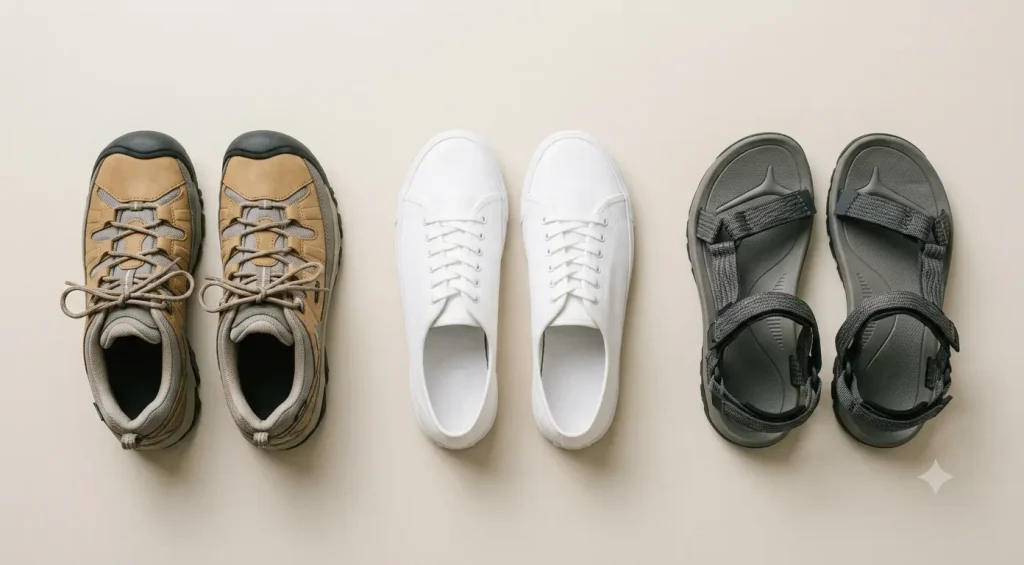
Footwear does more work in Peru than almost anywhere else on a typical South America itinerary, since a single day can move you from cobblestones to ruins to jungle boardwalk.
- Waterproof hiking shoes: The Merrell Women’s Moab 3 Waterproof is the shoe I recommend most often for Machu Picchu and Sacred Valley days. It handles wet stone steps and uneven trail sections without needing a full boot.
- Everyday walking shoes or sneakers: For Lima and Cusco’s cobblestone city center.
- Sandals or water shoes: For Amazon lodges and Lima’s beach towns.
- One pair of flats: For Lima dinners, since heels are impractical almost everywhere else on this itinerary.
Packing Light: Layering & Laundry Tips
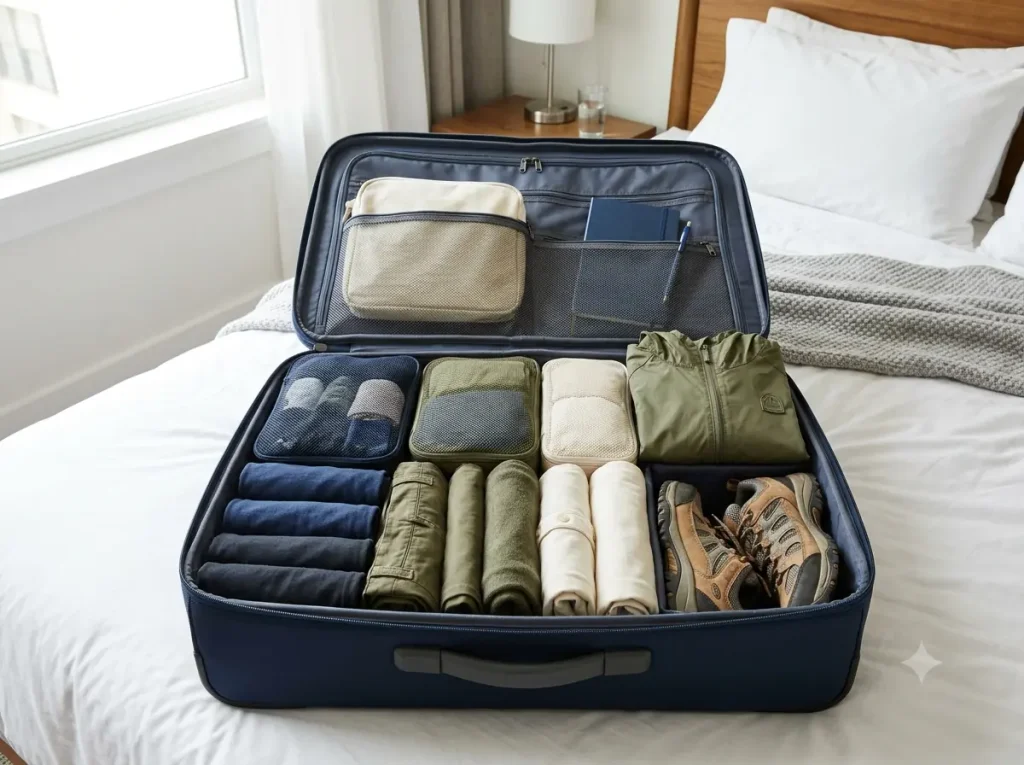
Most hotels in Cusco and Lima offer next-day laundry, so there’s rarely a reason to pack more than five or six days of clothing even on a longer trip. Stick to a tight color palette, navy, olive, and one warm neutral, so every top works with every bottom and every layer works over every other layer.
A habit I picked up after that Cusco laundry mishap: keep your rain shell and one warm layer in your daypack at all times, never in checked luggage or your hotel room. Altitude and weather shift faster here than you can backtrack for a jacket.
Sample 7-Day Peru Outfit Plan
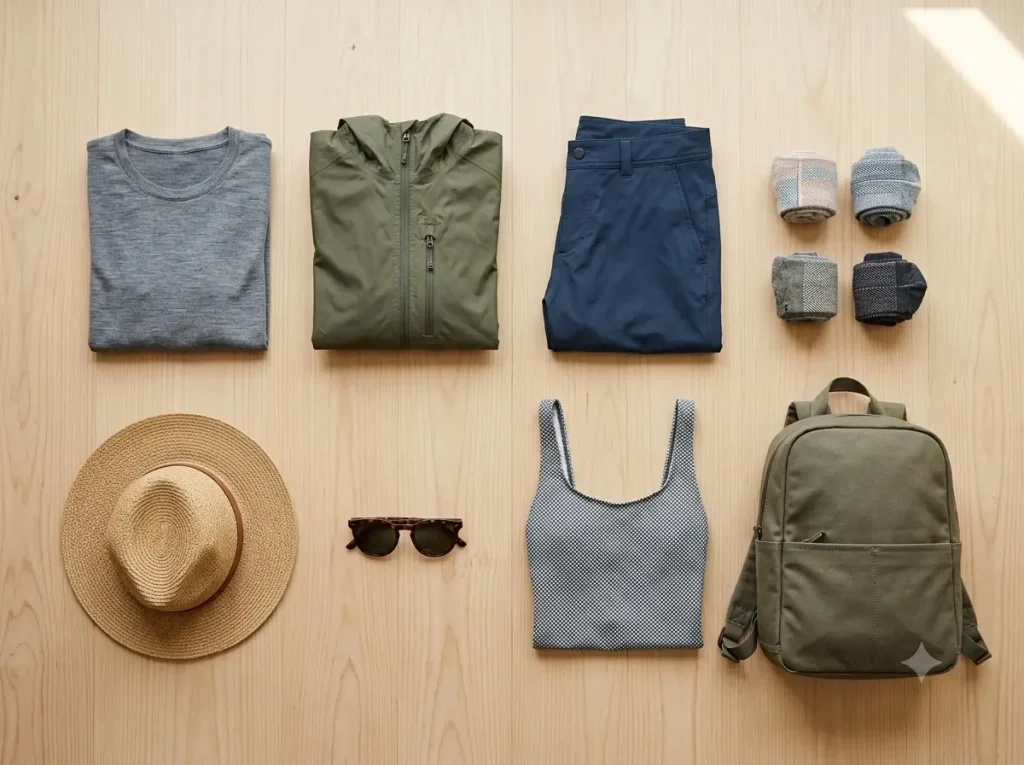
- Day 1–2, Lima: Linen top, travel pants, sneakers, cardigan for the evening breeze.
- Day 3, Flight to Cusco: Merino base layer under a fleece, since the altitude change hits as soon as you land.
- Day 4, Sacred Valley: Full layering system: base layer, fleece, rain shell, hiking pants, waterproof shoes.
- Day 5, Machu Picchu: Repeat Sacred Valley layers, add a beanie for the early train departure.
- Day 6, Cusco city: Knit top, jeans, walking shoes, light jacket for the evening chill.
- Day 7, Return to Lima: Swap back to linen and sneakers as soon as you land at sea level.
Notice how few pieces actually change across the week. That's the entire point of building this trip around a small, layer-able capsule instead of separate outfits for every day.
Frequently Asked Questions
Is Peru cold in April?
Not uniformly. Lima and the coast stay warm, with highs near 75°F (24°C). Cusco, the Sacred Valley, and Machu Picchu are noticeably cooler, especially at night, when temperatures can drop into the mid-40s°F (5–7°C).
Do I need a rain jacket in Peru in April?
Yes. April is the tail end of the rainy season in the Andes, and showers are still common, especially early in the month. A packable, fully waterproof shell is worth the space in your bag.
Can I wear shorts in Peru in April?
In Lima and the coast, yes, on warm afternoons. In Cusco and at Machu Picchu, stick to pants or leggings with the option to layer up, since mornings and evenings are cold enough to make shorts impractical.
Do I need hiking boots for Machu Picchu in April?
Waterproof hiking shoes are strongly recommended. The stone paths and trails around the ruins get slick after rain, and April still sees regular showers.
What should I pack for both Lima and Cusco?
Pack for Cusco’s cold mornings and layer down for Lima’s warmth. A merino base layer, fleece, and rain shell cover the Andes, while your lightest tops and travel pants cover the coast.
Is April a good time to visit Peru?
Yes. April falls in the shoulder season, with fewer crowds than the June–August peak, lower rates, and the Andes still green and lush from the rainy season. The trade-off is a slightly higher chance of rain than in the dry winter months.
What should I wear for outdoor photos in Peru?
Solid, earthy tones (forest green, terracotta, cream) photograph well against Machu Picchu’s stone and greenery. A structured jacket adds shape on windy overlooks, and a scarf in a contrasting color adds visual interest without extra bulk.
Final Peru April Packing Checklist
- 2 merino base layers
- 1 packable waterproof rain jacket
- 1 fleece or knit mid-layer
- 1–2 pairs quick-dry hiking pants
- 3–4 lightweight tops
- 1 versatile dress or jumpsuit
- Wool hiking socks + everyday socks
- Waterproof hiking shoes, everyday sneakers, one pair of flats
- Sun hat, sunglasses, swimsuit
- Daypack big enough for your rain shell and water bottle
Packing for a trip that spans desert coastline, alpine valley, and rainforest in the same two weeks? Our international packing list covers the carry-on habits that make multi-climate trips like this one manageable, and our guide to comfortable travel pants for women breaks down which fabrics actually hold up across a trip this varied. If you’re chasing more shoulder-season destinations this year, our Norway in September guide covers a similar layering approach for an entirely different climate.

Jitu Niranjan is a travel fashion writer and the founder of Travel in Styles. With three years of experience curating outfit guides and packing strategies for women travelers, he covers everything from airport looks to destination dressing across beaches, cities, and beyond. Follow his curation on Pinterest.