
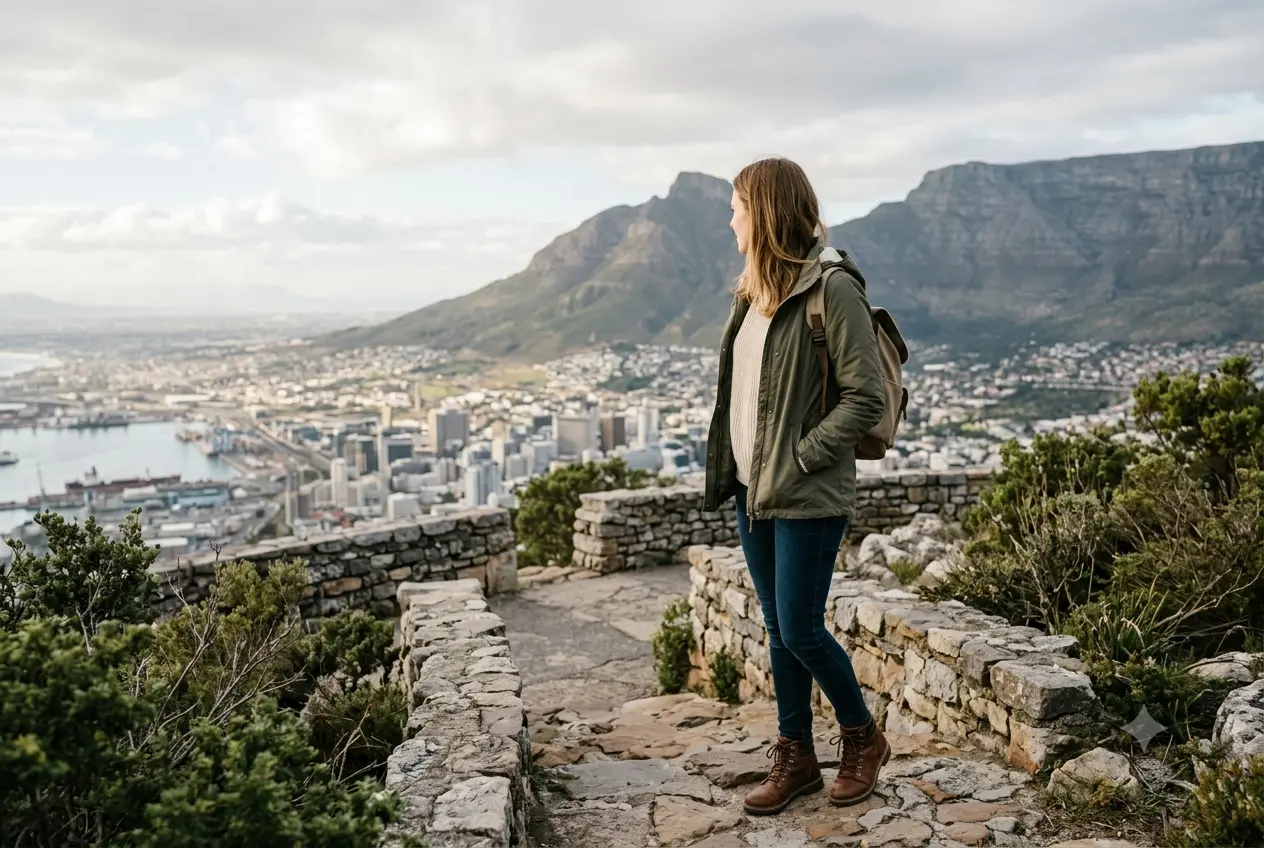
What to wear in South Africa in August comes down to one word: layers. August sits at the tail end of South African winter, which means cold mornings, warm-ish afternoons, and evenings that drop fast once the sun goes down — often within the same day, in the same city. Add in the fact that a single trip might take you from Cape Town’s cafe culture to a Kruger game drive to a Stellenbosch wine estate, and “what to pack” stops being a simple question.
Figuring out what to wear in South Africa in August is trickier than most single-destination trips because you’re rarely visiting just one climate. South Africa is roughly twice the size of Texas, and its winter behaves differently depending on where you land — coastal, dry-inland, and bushveld regions can each demand a different jacket on the same day. This guide breaks down what to wear in South Africa in August region by region and occasion by occasion, so you’re building a capsule instead of guessing.
Table of Contents
What to Wear in South Africa in August: Climate by Region
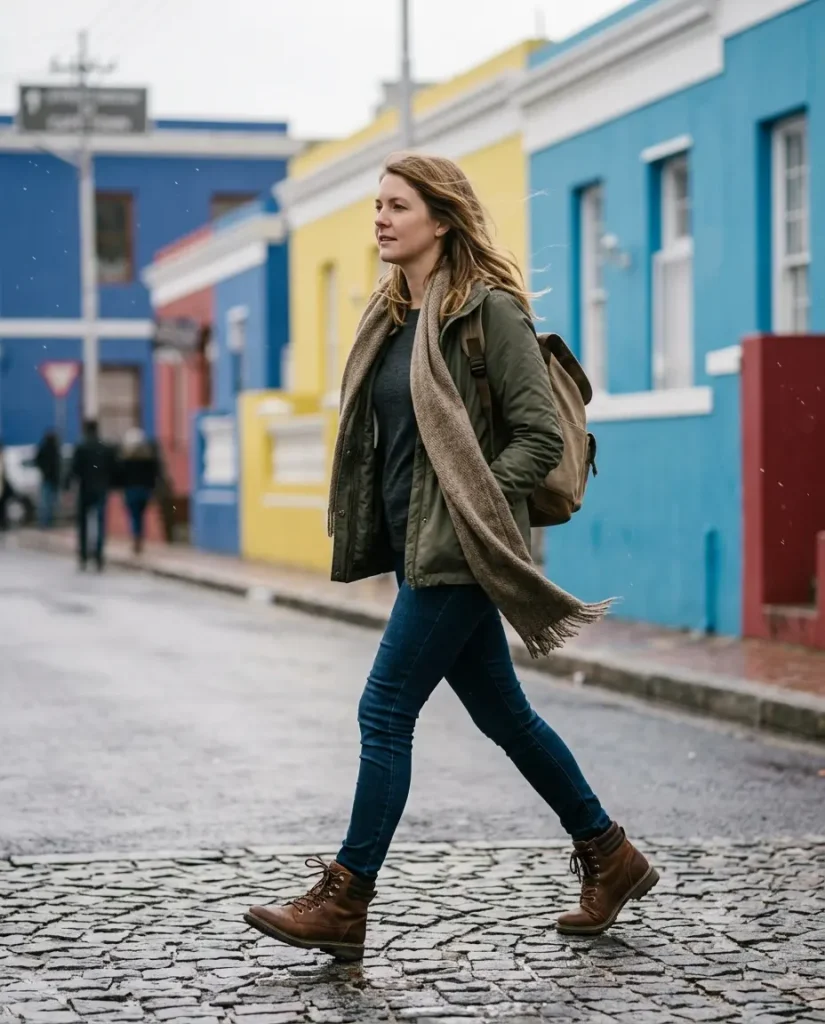
South Africa is enormous, and its seasons don’t move at the same pace everywhere. August is deep winter in Cape Town and the Western Cape, cool-to-mild in Johannesburg and Gauteng, and — further into the month — the first hints of spring start showing in the Cape’s wildflower regions. Here’s what to expect city by city.
| Region | Daytime High | Overnight Low | Conditions |
|---|---|---|---|
| Cape Town | 63–66°F (17–19°C) | 46–50°F (8–10°C) | Rainiest month of the year; wind is constant |
| Johannesburg | 66–68°F (19–20°C) | 39–43°F (4–6°C) | Dry, sunny days; sharp overnight chill |
| Kruger / Safari region | 75–79°F (24–26°C) | 45–50°F (7–10°C) | Warm dry days, cold early-morning game drives |
| Garden Route | 64–68°F (18–20°C) | 46–50°F (8–10°C) | Mild but unpredictable, coastal wind |
By late August, the Western Cape starts showing early signs of spring — wildflowers begin appearing in the Cape’s northern regions, and the harshest of the winter rain starts to ease. But don’t pack for spring yet; early-to-mid August is still solidly winter weather everywhere except the safari regions, where daytime warmth returns faster than in the cities.
The single biggest packing mistake people make for a South African August trip is packing for one climate. A two-week itinerary covering Cape Town and a safari can swing 30 degrees Fahrenheit between a rainy city morning and a warm bush afternoon. Check the South African Weather Service in the weeks before you travel, since regional forecasts shift more than most first-time visitors expect.
The Layering Formula That Works for Every Region
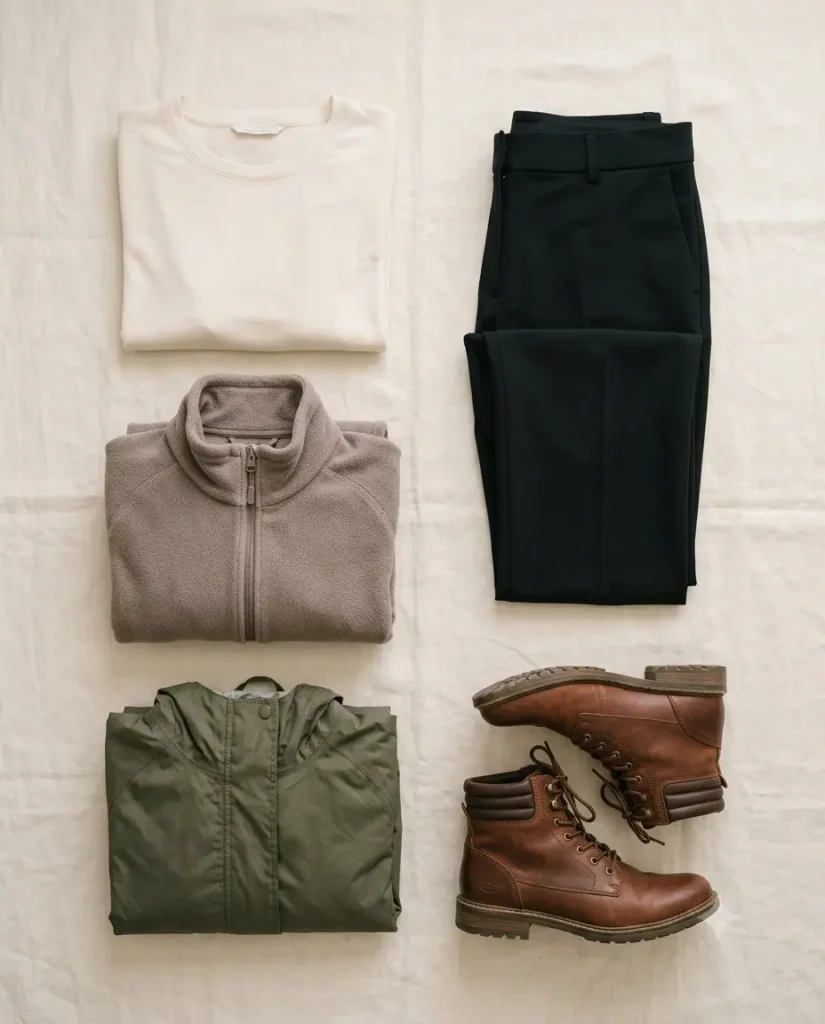
Instead of packing separate wardrobes for each stop, build around a four-layer system you can add or subtract from depending on where you are:
- Base layer: A merino or cotton long-sleeve top. Merino is worth the splurge — it regulates temperature across the wide swings you’ll hit in a single day.
- Mid layer: A sweater, fleece, or cardigan you can tie around your waist once the afternoon warms up.
- Outer layer: A waterproof, windproof jacket. Cape Town’s August wind and rain make this non-negotiable — a cute coat that isn’t wind-resistant will let you down fast.
- Bottom layer: Comfortable, structured pants that work for both city walking and a safari vehicle. If you’re still deciding, our guide to comfortable travel pants for women covers the fabrics and fits that hold up best across climates like this one.
Cape Town City Outfits
Cape Town reads as a casual, coffee-shop city where sundresses and yoga pants sit at the same table without anyone blinking — but working out what to wear in South Africa in August means Cape Town is the exception. This is the city’s rainiest, windiest month, so the outfit formula shifts toward function.
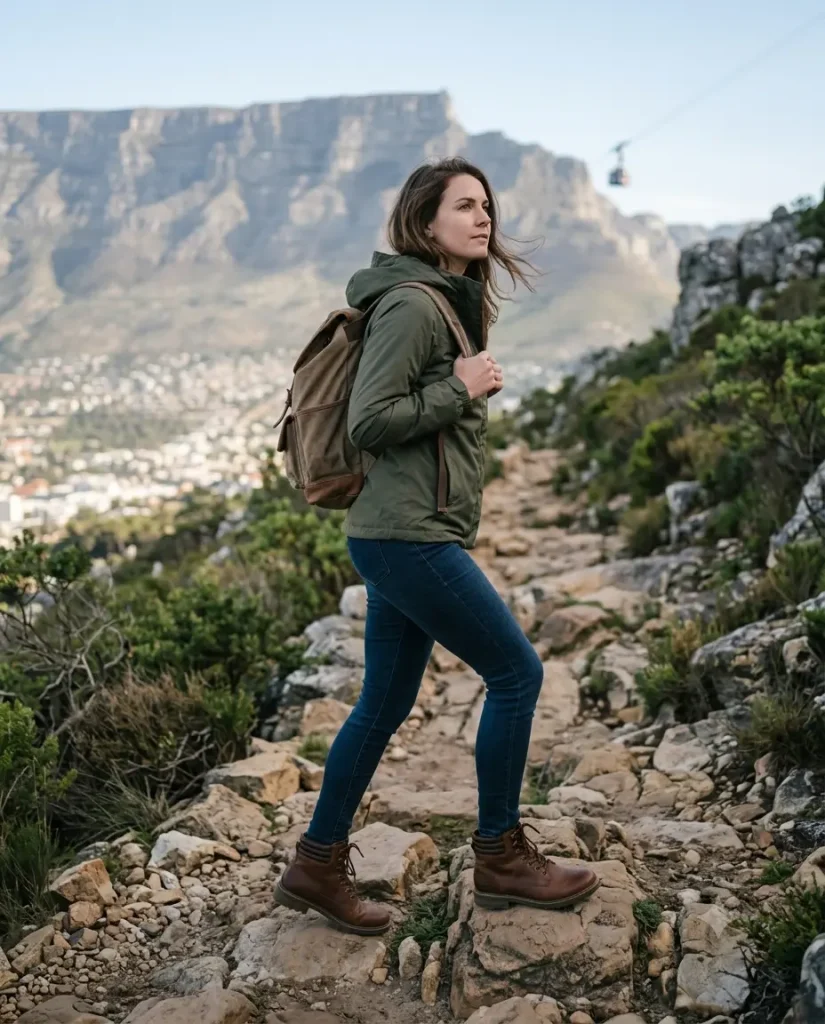
Sightseeing (Table Mountain, V&A Waterfront, City Bowl): Waterproof boots or trail sneakers, dark wash jeans or weatherproof trousers, a merino base layer, and a windproof shell jacket. Skip the umbrella for the Cape’s wind — it won’t survive Table Mountain’s gusts. A packable rain jacket is more reliable.

Wine region day trip (Stellenbosch, Franschhoek): This is where you can dress up a little. A knit dress or tailored trousers with a blazer, ankle boots, and a scarf for the cooler vineyard mornings. Stellenbosch is the country’s most famous wine-producing area and the outfit can lean elevated-casual since you’ll be seated for tastings rather than walking miles.
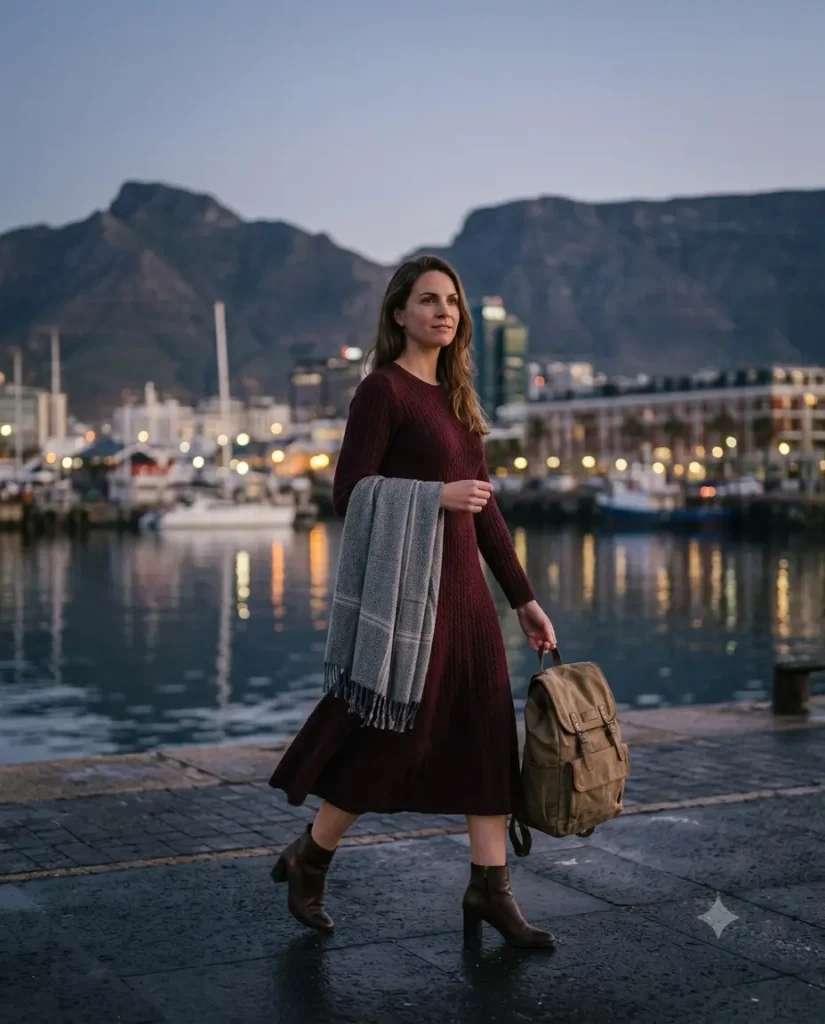
Dinner and evening out: Cape Town’s restaurant scene runs smart-casual to dressy. A midi dress or trousers with heeled boots, layered under your coat for the walk over, works for most City Bowl and Waterfront restaurants. If you want more ideas on layering a going-out look under a practical coat, Who What Wear regularly covers exactly this kind of cold-weather styling.
Johannesburg City Outfits
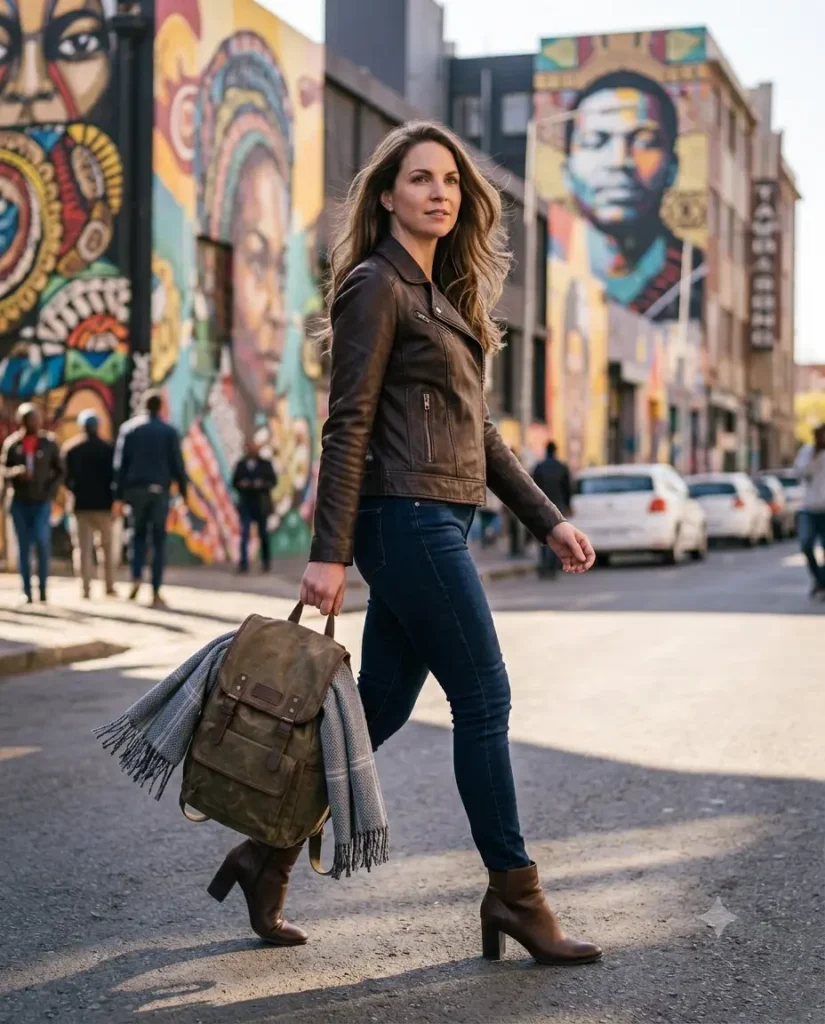
Anyone researching what to wear in South Africa in August specifically for Johannesburg will find drier, sunnier weather than Cape Town’s, but a sharper overnight temperature drop — expect to shed layers by 11am and put them back on by 5pm.
Daytime: A long-sleeve top under a light sweater, straight-leg jeans or trousers, and comfortable sneakers or ankle boots. Save the heavy coat for mornings and evenings only.
Evening (Maboneng, Sandton): Joburg’s nightlife and dining districts skew polished. A leather jacket over a fitted top, dark denim or trousers, and boots reads right for most bars and restaurants in Maboneng or Sandton.
Safari and Game Drive Outfits
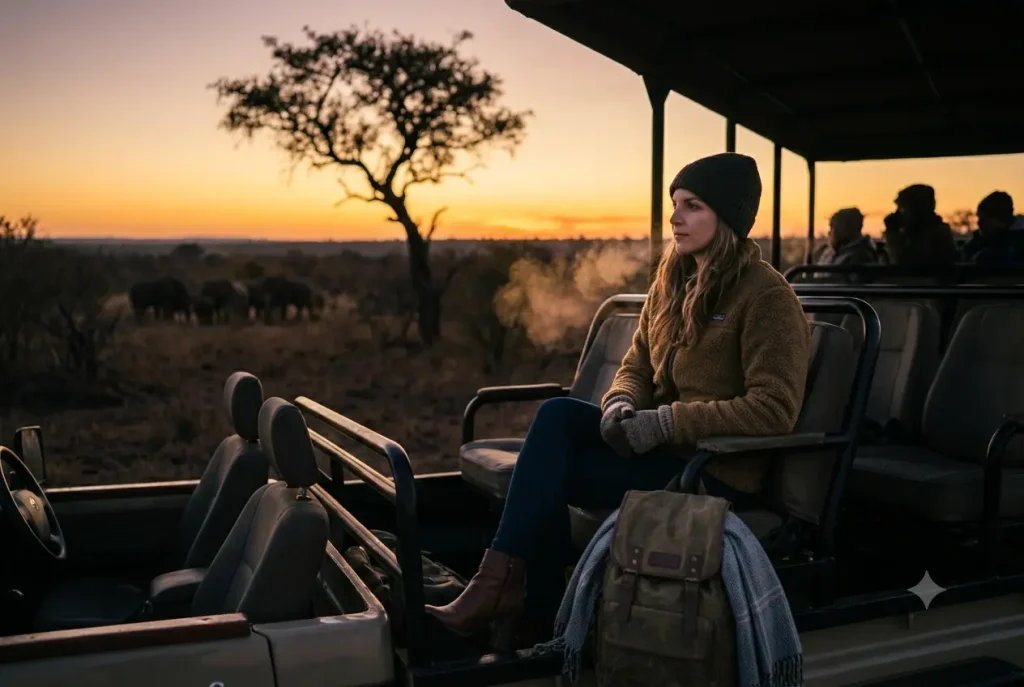
Safari dressing has its own rules, and they’re less about style than about staying warm, staying cool, and not spooking wildlife — this is where what to wear in South Africa in August diverges most sharply from city dressing.
| Time | What to Wear | Why |
|---|---|---|
| Early morning drive | Fleece, warm layers, gloves, beanie | Open vehicles at dawn can feel close to freezing even when the daytime high hits 78°F |
| Midday | Lightweight long sleeves, breathable pants | Sun protection matters more than the heat itself |
| Evening drive | Same layering as morning, plus the mid-layer back on | Temperature drops fast once the sun sets |
Stick to neutral tones — khaki, beige, olive, brown — and avoid black, navy, bright colors, and white. Dark colors attract biting flies, bright colors and white make you more visible to animals, and camouflage print is best avoided altogether since it’s associated with hunting and military use in parts of Africa. A wide-brimmed hat and polarized sunglasses round out the kit, and a soft duffle bag (not a hard-shell suitcase) is often required for small charter flights between lodges.
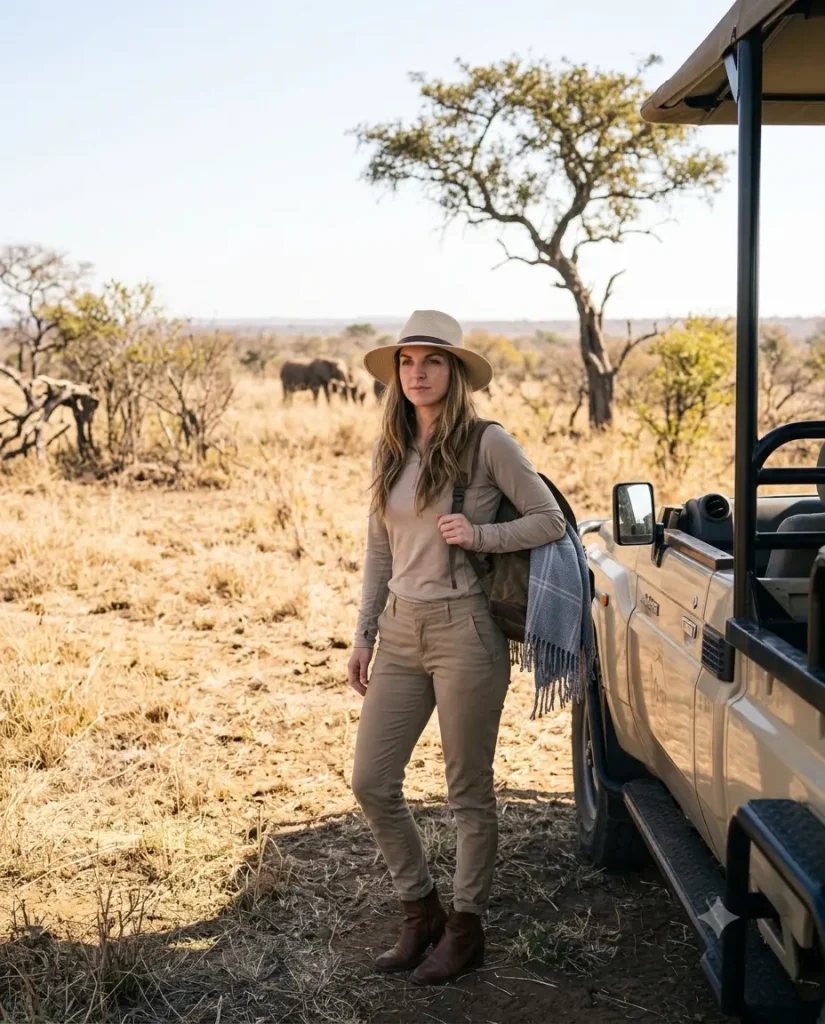
August is actually one of the better months for safari precisely because it’s winter: the bush is drier, vegetation is thinner, and animals cluster around the remaining water sources, which makes sightings easier and more predictable. The tradeoff is the cold — a 6am open-vehicle game drive in August can feel closer to freezing than the region’s daytime numbers suggest, so the layering habit matters more here than almost anywhere else on a South Africa itinerary. Most lodges provide blankets and hot water bottles for morning drives, but your own base layer and gloves make a bigger difference than either.
What Not to Wear in South Africa
A few etiquette notes worth packing around: full safari-style khaki and pith-helmet looks read as costume-y in cities — save that wardrobe for the actual bush. Revealing clothing is generally more conservative than beach-destination norms, particularly outside tourist areas. And camouflage-print clothing of any kind is best left at home entirely. The official South African Tourism site is a good resource for region-specific cultural context before you go.
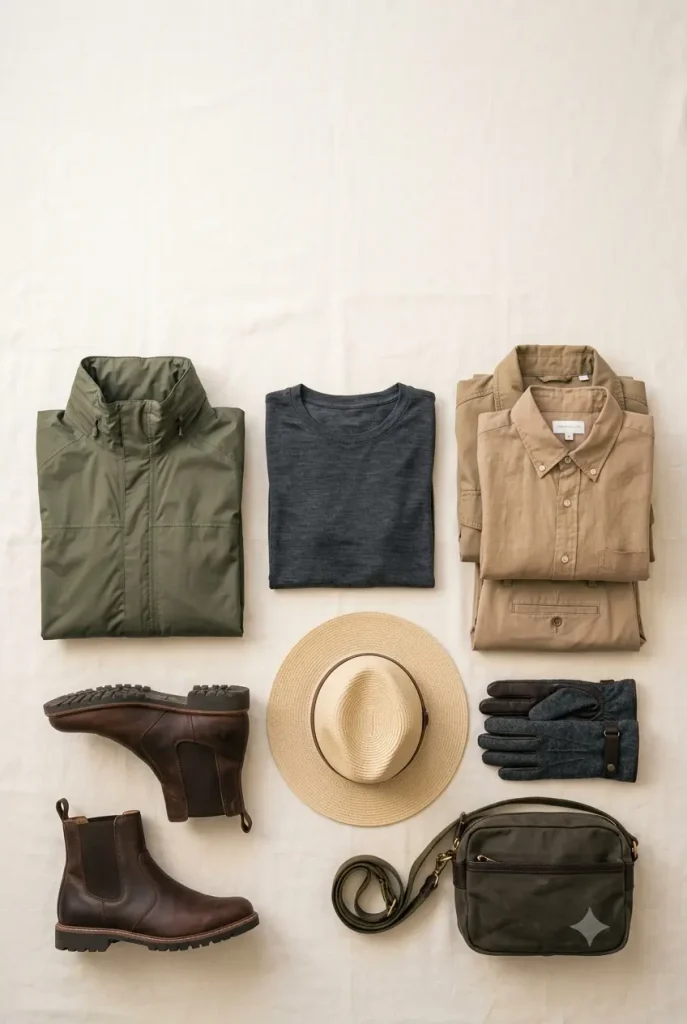
What to Wear in South Africa in August: The Packing List
| Item | Why You Need It |
|---|---|
| Waterproof, windproof jacket | Cape Town’s wind and rain make this the single most important piece |
| Merino base layers (2–3) | Temperature-regulating across 30°F daily swings |
| Fleece or knit sweater | Mid-layer for cool mornings and evenings, city and safari alike |
| Neutral-toned safari layers | Khaki, olive, or beige for game drives |
| Waterproof boots or trail sneakers | Cape Town sidewalks and safari terrain both call for grip |
| One dressier outfit | Wine estate lunches and city dinners lean smart-casual |
| Beanie, gloves, warm scarf | Dawn game drives get close to freezing |
| Wide-brimmed hat and sunglasses | Midday sun on safari is strong even in winter |
This packing list covers what to wear in South Africa in August whether your trip is city-only, safari-only, or both. For the rest of your packing checklist beyond clothing — adapters, documents, toiletry limits — our international packing list covers what to bring on any trip abroad. And if you’re flying long-haul into Cape Town or Johannesburg, our roundup of the best sneakers for airport travel is worth a look before you go.
What to Wear in South Africa in August: FAQs
Is August too cold to visit South Africa?
No — it’s winter, but daytime temperatures are still mild to warm depending on the region, and it’s actually one of the best months for safari since animals gather around limited water sources, making sightings easier.
Do I need a winter coat for Cape Town in August?
Yes, but prioritize waterproof and windproof over simply warm. A heavy wool coat that isn’t wind-resistant will underperform against Cape Town’s August wind and rain compared to a lighter, technical shell.
What colors should I avoid on safari?
Black and navy attract biting flies, bright colors and white increase visibility to animals, and camouflage print is best avoided entirely.
Can I wear the same outfits in Cape Town and on safari?
Mostly no — safari calls for neutral tones and different layering logic than city dressing. Plan on a distinct safari capsule within your suitcase rather than stretching city outfits to cover both.
Building Your South Africa Capsule
The trips that go smoothest are the ones packed around a small, flexible capsule rather than a full outfit for every day. The short answer to what to wear in South Africa in August is: fewer pieces, smarter layers. That means: two to three base layers, one warm mid-layer, one waterproof shell, one pair of structured pants that transition between city and safari, one dressier option, and a dedicated set of neutral-toned safari layers. Everything else — scarves, a beanie, jewelry — is what makes each outfit feel distinct without adding suitcase weight.

Jitu Niranjan is a travel fashion writer and the founder of Travel in Styles. With three years of experience curating outfit guides and packing strategies for women travelers, he covers everything from airport looks to destination dressing across beaches, cities, and beyond. Follow his curation on Pinterest.