

Sandals for walking all day are the single most important footwear decision you will make before any trip. Get it right, and your feet carry you confidently through cobblestone streets, long museum corridors, and seaside promenades without a second thought. Get it wrong, and blisters, aching arches, and swollen ankles become the defining memory of your vacation.
This guide cuts through the noise. We evaluated what the top travel and outdoor testing resources found in real-world conditions — covering 27-mile hikes, multi-week international trips, and every surface in between — and combined that with deep research into the anatomy of what makes sandals for walking all day actually work.
Whether you are exploring a European capital, trekking Southeast Asian temples, or doing a 10-mile city day in summer heat, you will find exactly what you need here.Pair these all-day walking sandals with the perfect travel wardrobe — check out our ultimate guide on what to wear in Bali for women for practical outfit ideas that suit long sightseeing days.
Table of Contents
Why Most Sandals Fail for All-Day Walking
Most sandals are designed for looks, not longevity. They look great on a rack but fall apart under the demands of real travel: long hours on your feet, varied terrain, heat, moisture, and the repetitive stress of thousands of steps.
The most common failures in sandals that are not built for walking all day include:
- Flat footbeds with no arch support — fine for an hour, brutal after five
- Thin, rigid soles that transmit every bump in the pavement directly to your heel
- Straps that dig into the sides of the foot once swelling begins in heat
- Poor lateral stability that causes ankle roll on uneven cobblestones
- Materials that do not handle moisture, causing the footbed to become slippery
Understanding these failure points is the foundation of choosing sandals for walking all day that actually perform. Every feature that matters in a quality travel sandal exists to solve one of these problems.
The Anatomy of Great Sandals for Walking All Day
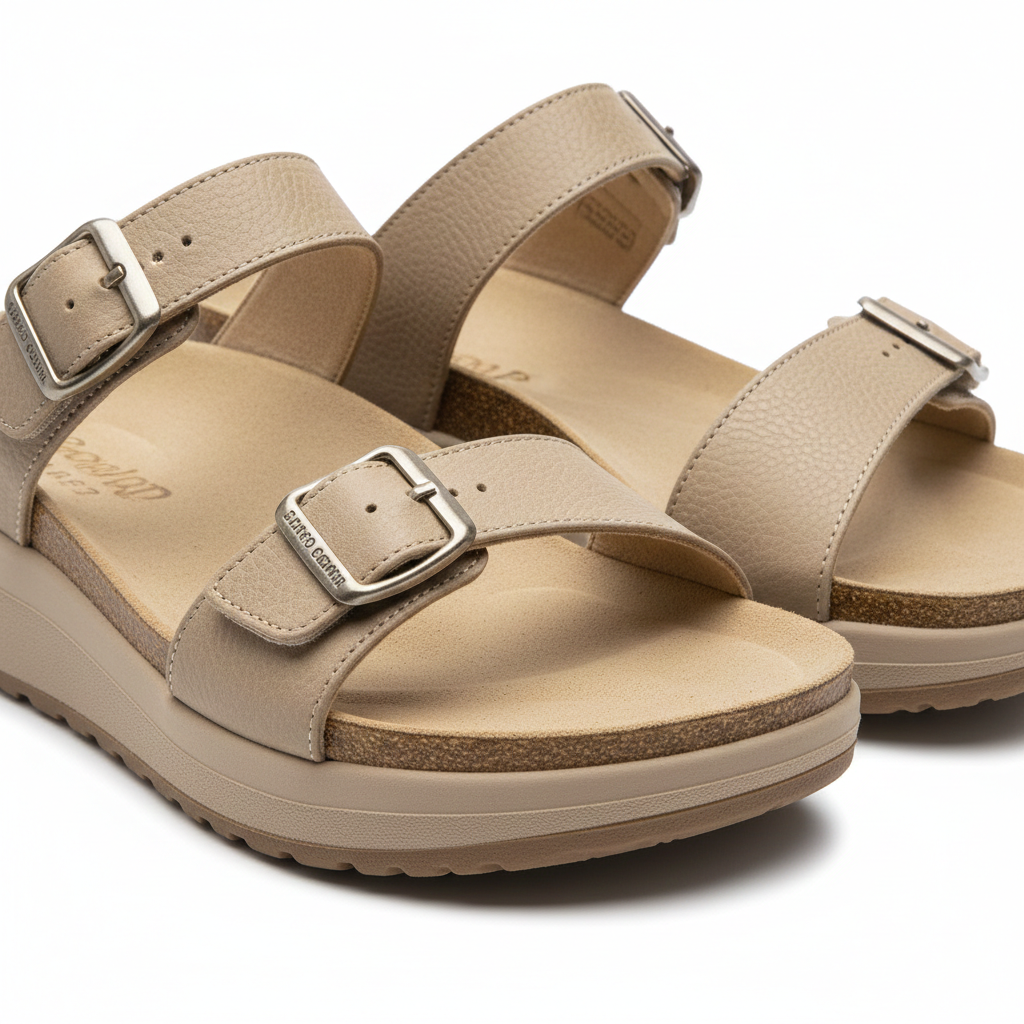
Before looking at specific brands and styles, it pays to understand the components that separate a genuine all-day walking sandal from a fashion piece dressed up with marketing claims.
The Footbed: Your Foundation
The footbed is the most critical component in sandals for walking all day. A contoured footbed — one that rises slightly at the arch and cups the heel — distributes your body weight across the entire surface of your foot rather than concentrating it at the heel and ball. This dramatically reduces fatigue over long distances.
Look for EVA (ethylene-vinyl acetate) or polyurethane midsoles, which offer the best balance of cushioning and rebound. Cork footbeds, as used by Birkenstock, offer excellent natural contouring and mold to your foot shape over time, becoming genuinely personalized with wear.
The Outsole: Grip and Shock Absorption
Rubber outsoles are the gold standard for sandals for walking all day. Vibram rubber — used by Chaco, Keen, and several premium brands — offers outstanding grip on wet surfaces, durability across thousands of miles, and enough flex to work with your natural gait. Avoid hard plastic or thin foam outsoles, which provide little grip and zero shock absorption.
Sole thickness matters too. A stack height of at least 20–25mm provides meaningful cushioning on hard urban surfaces like concrete and stone. Anything thinner may feel fine briefly but will leave your feet aching after 8+ hours.
The Straps: Adjustability Is Non-Negotiable
Fixed straps are the enemy of the all-day walker. Feet swell — sometimes by a full shoe size — during long, warm travel days. Sandals for walking all day must have adjustable straps, ideally with micro-adjustable buckles or ratchet systems rather than simple notch buckles.
Strap material matters just as much as adjustability. Webbing straps (nylon or polyester) are the most durable and dry fastest after water exposure. Leather straps look beautiful and soften with wear but take longer to dry and can cause blisters when wet. Foam-padded straps offer superior comfort out of the box but may compress and wear thin over time.
Heel Cup and Ankle Support
A deep heel cup stabilizes the foot during impact and prevents lateral wobble — one of the leading causes of ankle fatigue on uneven surfaces. Sandals for walking all day on varied terrain should have a heel cup depth of at least 12–15mm. For active travel involving trails, stairs, or rough terrain, ankle straps or a three-point adjustable harness system (as used by Chaco’s Z-strap) provides meaningful additional stability.
Choosing Sandals for Walking All Day Based on Your Foot Type
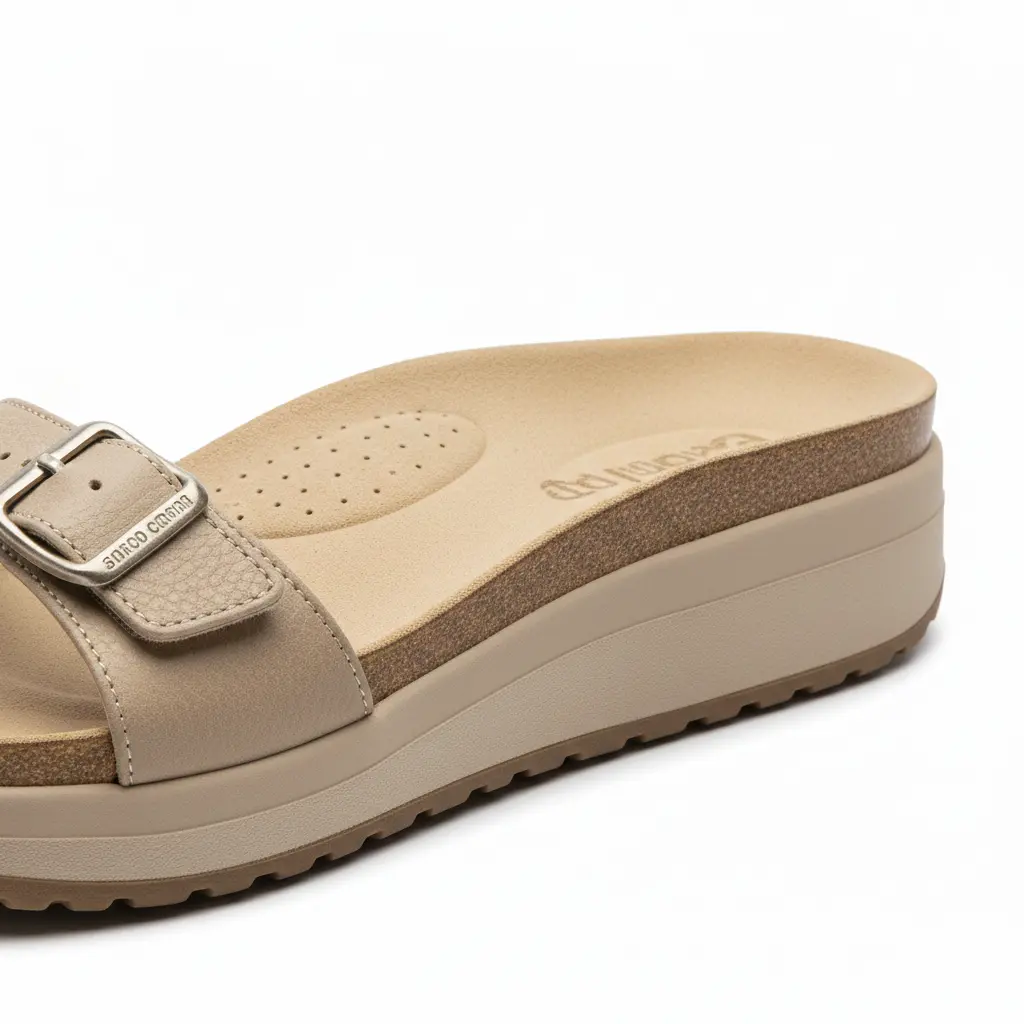
One of the biggest gaps in most travel sandal guides is the failure to account for foot type. The same sandal that feels like a dream on one traveler destroys another’s feet — usually because their arch type is incompatible with the sandal’s footbed design.
| Foot Type | What You Need | Best Sandal Style | Avoid |
| Flat Feet / Low Arch | Firm arch support, motion control | Chaco Z/Cloud, Birkenstock Arizona | Minimal / zero-drop sandals |
| Neutral Arch | Moderate cushioning, mild contouring | Teva Original Universal, Keen Newport | Extra-rigid orthopedic soles |
| High Arch | Deep heel cup, flexible forefoot | Keen Newport H2, Bedrock Cairn | Flat cork beds without contouring |
| Wide Feet | Wide toe box, adjustable straps | Birkenstock (wide), Keen Newport | Narrow webbing designs |
The Best Brands Making Sandals for Walking All Day
These brands have consistently earned top marks in real-world testing from outdoor reviewers and veteran travelers alike. Each has a distinct philosophy — knowing those differences helps you choose the right match for your trip.
Chaco — The Long-Distance Standard
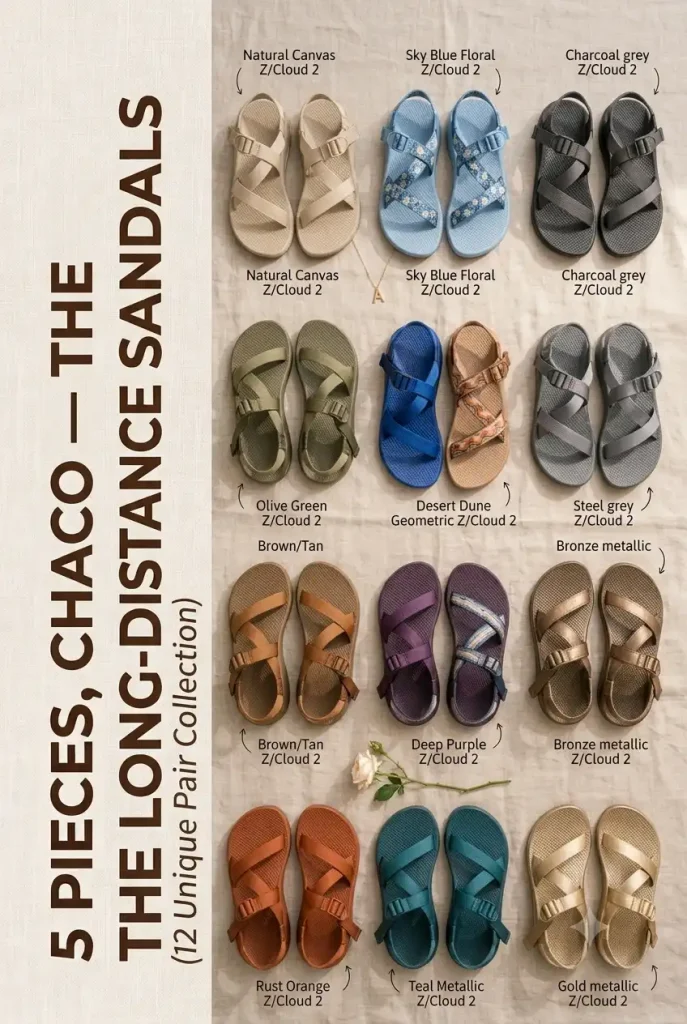
Chaco’s Z/Cloud 2 is the benchmark for sandals for walking all day in the outdoor travel community. The LUVSEAT polyurethane footbed delivers exceptional arch support straight out of the box — no break-in required for most people. The adjustable single-piece webbing harness system wraps over the foot and around the ankle, distributing pressure evenly and virtually eliminating the hot spots that cause blisters.
Chaco’s Vibram outsole is bomb-proof. Experienced travelers report using the same pair across three or four years of heavy travel without meaningful sole degradation. They are also fully resolable through Chaco’s repair program, making them a genuinely sustainable long-term investment for serious walkers.
Trade-off: Chaco sandals take a short break-in period of 1–2 days of wear before the footbed fully conforms. Walking long distances on day one of a trip in brand-new Chacos is not advised.
Birkenstock — Legendary Comfort, Lifestyle Versatility

Birkenstock’s contoured cork-latex footbed is one of the most studied and copied designs in footwear history. The anatomically shaped footbed has distinct zones for the heel, arch, and forefoot that promote natural foot mechanics — essentially training your foot to walk correctly. For travelers with flat feet or plantar fasciitis, the supportive arch profile of the Arizona or Boston models is often genuinely therapeutic.
Birkenstocks excel as sandals for walking all day in urban settings — city breaks, coastal towns, cultural tourism — where you want comfort without sacrificing style. They are less suited for wet conditions or technical trails, as the cork footbed becomes slippery when soaked.
The Soft Footbed version adds a suede-covered foam layer over the standard cork for additional cushioning, which OutdoorGearLab testers specifically highlighted as the “plush comfort choice” for travelers who prioritize underfoot feel over maximum support.

Keen — Best for Protection and Varied Terrain
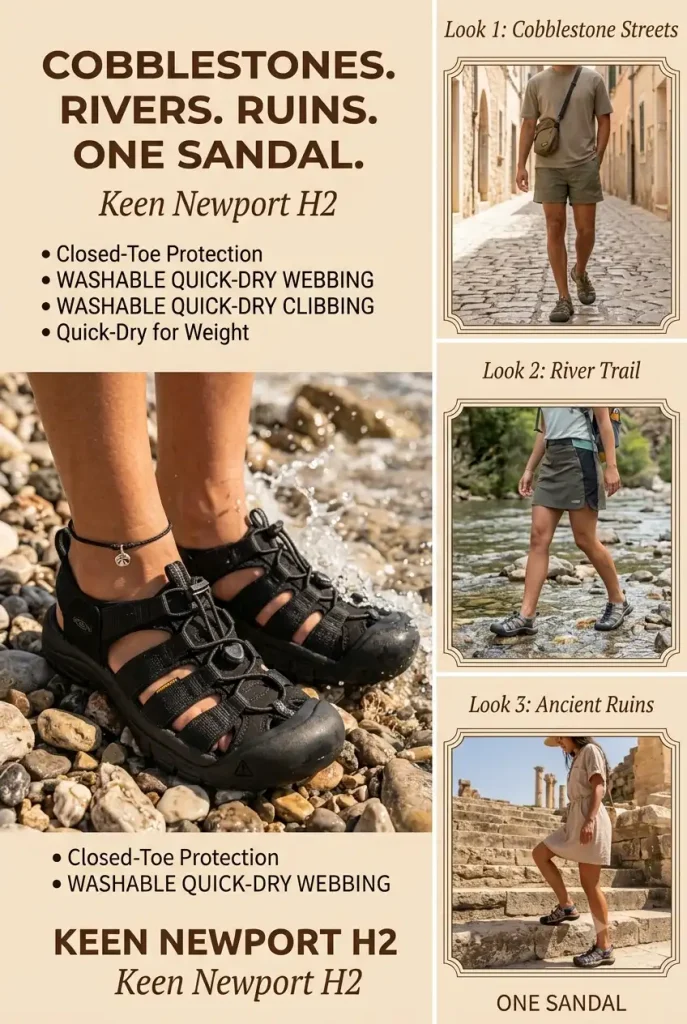
Keen’s Newport H2 is the standout choice for travelers whose itineraries include a genuine mix of urban walking, water activities, and light trails. The closed-toe design protects against stubbed toes on uneven surfaces — a real concern on ancient cobblestones, jungle boardwalks, and rocky beaches. The washable polyester webbing straps dry quickly and resist odor, making them the most practical sandals for walking all day in humid or wet destinations.
Keen uses a metatomical footbed design — contoured specifically to follow the natural shape of the foot at every contact point. Combined with a non-marking rubber outsole and a 4mm multi-directional lug pattern, the Newport H2 handles surfaces that would send open-toe sandals sliding.
Teva — The Best Value Entry Point
The Teva Original Universal has maintained its position as the best budget sandals for walking all day for nearly four decades. The four-point adjustable strap system gives a genuinely secure fit, the EVA midsole cushions adequately for moderate walking days (8–12 miles), and the Durabrasion rubber outsole provides solid grip at a price point well under $70.
Teva sandals are an ideal choice for travelers who want reliable performance without a premium investment — particularly for beach and resort trips where you are not logging 15+ miles daily but still need something more capable than a flip flop.
Bedrock Sandals — Ultralight and Minimalist
Bedrock Cairn sandals appeal to the ultralight travel community — those packing into carry-on bags and counting every ounce. At roughly 200g per sandal, they are dramatically lighter than Chaco or Keen equivalents while still delivering a secure strap system and a Vibram outsole. They are genuinely the best sandals for walking all day for minimalist travelers who have strong feet and neutral or high arches.
Trade-off: Bedrock sandals offer less cushioning and arch support than Chaco or Birkenstock. Travelers with flat feet, plantar fasciitis, or histories of heel pain should choose a sandal with more structural support.
For a side-by-side comparison of specific test scores across traction, support, and comfort metrics from real-world field testing, OutdoorGearLab’s comprehensive sandal testing methodology and results provide detailed performance ratings that go beyond marketing claims.
Sandals for Walking All Day: Which Style for Which Terrain?
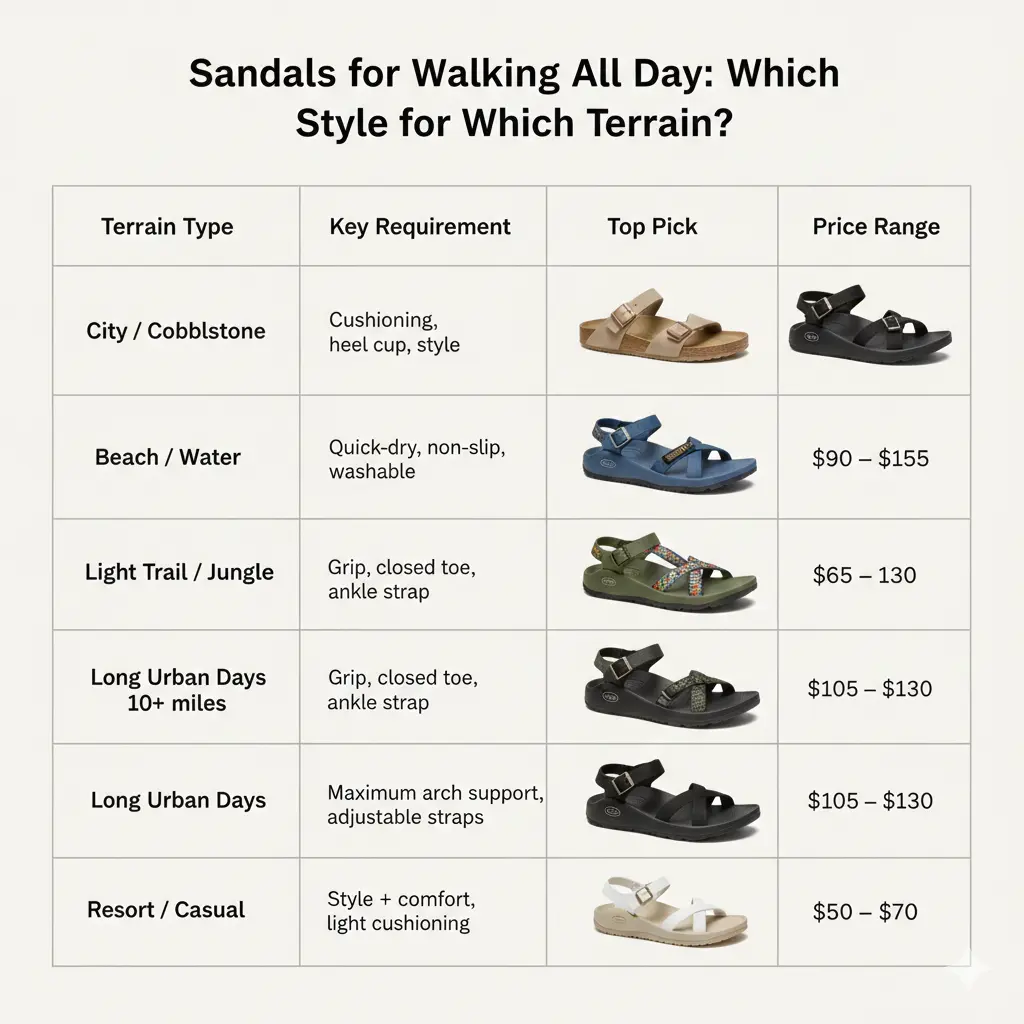
| Terrain Type | Key Requirement | Top Pick | Price Range |
| City / Cobblestone | Cushioning, heel cup, style | Birkenstock Arizona / Chaco Z/Cloud 2 | $90 – $155 |
| Beach / Water | Quick-dry, non-slip, washable | Keen Newport H2 / Teva Universal | $65 – $130 |
| Light Trail / Jungle | Grip, closed toe, ankle strap | Keen Newport H2 / Chaco Z/2 Classic | $105 – $130 |
| Long Urban Days 10+ miles | Maximum arch support, adjustable straps | Chaco Z/Cloud 2 / Keen Newport | $105 – $130 |
| Resort / Casual | Style + comfort, light cushioning | Teva Original / Cushionaire Luna | $50 – $70 |
Blister Prevention: The Honest Guide Nobody Talks About

Even the best sandals for walking all day can cause blisters if you handle break-in incorrectly. This section covers what most guides completely skip — and what experienced travelers know from hard experience.
The Break-In Rule
Never wear brand-new sandals for a long walk on day one of a trip. No matter how comfortable they feel in the store, every sandal needs 2–3 days of progressive wear to soften strap contact points and allow the footbed to adapt to your foot shape. Break in your sandals at home for at least a week before the trip — start with 30-minute walks and build to full days.
Where Blisters Form and Why
In sandals for walking all day, blisters most commonly form at three points: the web between the big and second toe (from toe post straps), the top of the foot where the main strap crosses, and the back of the heel where the heel strap sits. Each of these points represents a friction zone — an area where the strap rubs against skin repeatedly.
The fix is reducing friction, not toughening skin. Body Glide anti-chafe balm applied to known friction points before a long walk day dramatically reduces blister formation — it is one of the most reliable travel hacks for walking-intensive trips.
Heat and Swelling
Feet swell in heat and on long walking days. Always adjust your sandal straps at midday when feet are at their largest rather than tightening them to the same notch all day. Sandals for walking all day with micro-adjustable buckles — rather than fixed notch systems — are a meaningful upgrade for warm-weather destinations precisely because they accommodate this swelling without requiring you to stop and fiddle.
Budget vs. Premium Sandals for Walking All Day
How much should you spend? The honest answer depends on how seriously you walk. Here is a practical breakdown.
| Price Tier | What You Get | Best For | Example Brands |
| Under $60 | Basic cushioning, adequate straps, limited durability | Casual resort trips, short walks | Teva, Cushionaire, Dream Pairs |
| $60 – $100 | Good arch support, durable outsole, adjustable system | City breaks, moderate walking 5–10 miles/day | Teva Hurricane, Birkenstock entry |
| $100 – $155 | Premium footbeds, Vibram rubber, excellent longevity | Serious travel walking 10+ miles/day | Chaco, Keen, Birkenstock premium |
| $155+ | Resolable, lifetime warranty, specialist performance | Frequent travelers, mixed terrain, multi-year use | Chaco (resolable), Bedrock |
For most travelers doing 6–12 miles per day of urban and mixed sightseeing, the $100–$130 range delivers the best value. Spending less works for light use; spending more is justified for those who travel frequently or cover serious distances.
REI’s buyer guides and verified customer reviews provide helpful real-world feedback on long-term durability across their sandal range — particularly useful for comparing the REI’s women’s and men’s walking sandal reviews with verified purchaser insights before committing to a pair.
Packing and Airport Tips for Travel Sandals
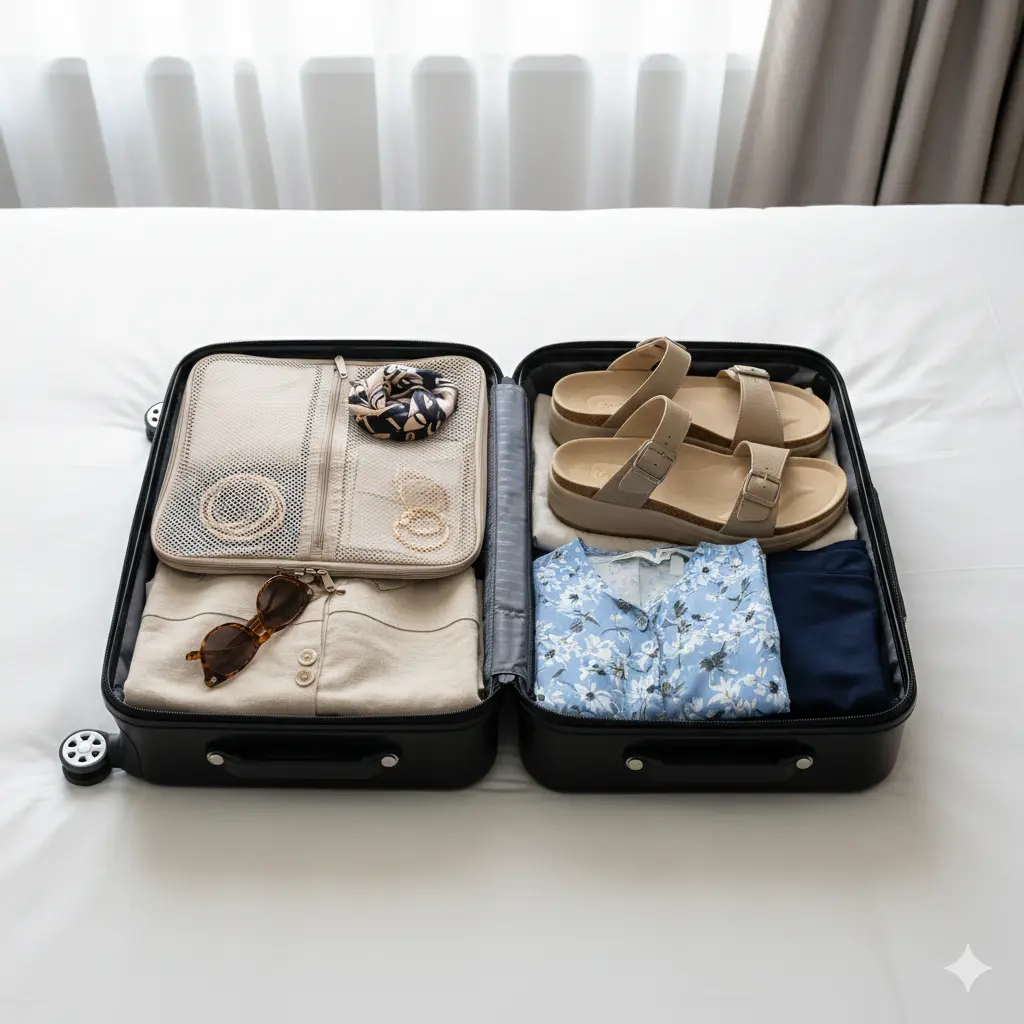
Sandals for walking all day are also the smartest shoes to wear through airport security. No laces, easy removal, and if your sandals are your heaviest footwear, wearing them on the plane rather than packing them saves meaningful luggage weight. Here is how to make the most of travel sandal packing:
- Wear your sandals at the airport — they slip on and off instantly at security and add zero weight to your bag
- Pack sandals sole-to-sole inside a dust bag to protect clothing from outsole dirt
- If packing in a carry-on, sandals fit neatly inside shoes or at the base of the bag where rigid items belong
- Allow sandals to fully dry before packing if used near water — damp sandals in a sealed bag develop mildew quickly
- Pack a small tube of Body Glide or blister plasters for the first few days in case of friction spots
For expert advice on building a complete travel footwear kit around versatile walking sandals, REI’s Expert Advice on choosing travel shoes covers the full decision framework from terrain matching to fit testing.
For a lightweight, coordinated wardrobe that complements comfortable sandals and keeps you stylish throughout your trip, browse our Summer Travel Capsule Wardrobe for Women guide.
Caring for Your Sandals for Walking All Day
Well-maintained sandals last dramatically longer. These simple habits protect your investment and keep your sandals performing at their best across multiple trips.
Daily Care on the Road
Rinse sandals with clean water at the end of a long walk day, especially after beach use or walking in rain. Salt, grit, and urban grime abrade strap materials and accelerate outsole wear. Allow them to air dry fully before wearing again — overnight drying is usually sufficient.
For leather straps, apply a small amount of leather conditioner every few days of intensive use. Dry leather cracks and loses its suppleness quickly in heat, which is both uncomfortable and accelerates wear.
Deep Cleaning
For webbing-strap sandals like Chaco and Teva, machine washing on a cold gentle cycle works well and removes ingrained dirt effectively. Remove any footbeds that are not bonded before washing. Air dry only — heat causes EVA midsoles to compress permanently and can warp rubber outsoles.
For Birkenstock cork footbeds, wipe clean with a damp cloth only — never submerge in water, as extended moisture exposure damages the cork-latex bonding. A dedicated Birkenstock cork refresher spray applied occasionally protects the footbed from drying and cracking.
Frequently Asked Questions
How many miles can you walk in sandals for walking all day?
Quality sandals from brands like Chaco, Keen, and Birkenstock are genuinely capable of 15–20+ mile days when broken in properly and chosen to match your foot type. OutdoorGearLab testers covered 27-mile hikes in Chaco Z/Cloud 2 sandals without significant foot fatigue. That said, daily sustainable distances depend heavily on terrain, heat, your individual foot mechanics, and how well you have broken in the sandal.
Are sandals better than sneakers for travel walking?
For warm-weather travel, sandals for walking all day often outperform sneakers in comfort over long days because they eliminate heat and moisture buildup — one of the main causes of blisters and foot fatigue. On cold, wet, or very uneven terrain, closed-toe shoes or boots offer better protection. Many experienced travelers bring both: sandals for city days and sneakers or trail shoes for specific activities.
Can I wear sandals for walking all day on cobblestones?
Yes — but choose wisely. Cobblestones are hard, uneven, and surprisingly punishing on flat-soled sandals. Look for sandals with thick, cushioned midsoles (20mm+), good arch support, and an outsole with some texture for grip. Birkenstock with a soft footbed, Chaco Z/Cloud 2, and Keen Newport H2 all handle cobblestones well. Thin-soled or flat fashion sandals will leave you with sore heels by afternoon.
Do Birkenstocks work as sandals for walking all day?
For many travelers, yes — with caveats. Birkenstocks are excellent for urban walking on moderate distances (5–10 miles per day) and are particularly good for people with flat feet who benefit from firm arch support. They are less suitable for very long distances, wet conditions, or technical terrain. The Soft Footbed model adds comfort for those who find the standard cork footbed too firm initially.
How do I prevent blisters when using new sandals for walking all day?
Break them in progressively at home for at least one week before the trip — starting with 30-minute sessions and building to full days. Apply Body Glide or a similar anti-chafe product to known friction zones (toe post area, top strap, heel strap) on heavy walk days. Carry blister plasters as a backup. Adjust straps at midday when feet have swollen to their largest to prevent pressure points from developing.
Final Verdict: The Best Sandals for Walking All Day Are Worth Investing In
The difference between a vacation defined by joyful exploration and one defined by painful, swollen feet often comes down to a single decision made before you pack. Choosing the right sandals for walking all day — based on your foot type, your terrain, and your daily mileage — is one of the highest-return investments any traveler can make.
Start with your foot type. If you have flat feet or any history of heel or arch pain, prioritize support above everything — Chaco or a contoured Birkenstock. If you have neutral arches and want versatility, the Keen Newport H2 handles more situations than any other sandal on the market. If you are budget-conscious and doing moderate walking, the Teva Original Universal has proven itself across decades of loyal users.
Whatever you choose, break them in at home, bring blister prevention, and adjust your straps mid-day. Your feet will carry you farther, and your memories of the journey will be far fonder for it.

Jitu Niranjan is a travel fashion writer and the founder of Travel in Styles. With three years of experience curating outfit guides and packing strategies for women travelers, he covers everything from airport looks to destination dressing across beaches, cities, and beyond. Follow his curation on Pinterest.