

Knowing what to wear in Bali for women is more nuanced than most travel guides let on — and getting it wrong has real consequences. Wear the wrong thing at Tirta Empul and a temple guardian will hand you a sarong with unmistakable disappointment. Stroll through a Seminyak village in your beach cover-up and you’ll feel the quiet discomfort of being obviously out of place. Show up to Savaya in flip-flops after sunset and you won’t get past the entrance. Bali is not a single-setting destination. Within a single day, you might move from a jungle waterfall, to a 500-year-old temple, to a beachside lunch, to a rooftop bar — and each of those settings has a genuinely different dress expectation.
This guide was built on that reality. It goes deeper than ‘pack a sarong and some sundresses.’ It tells you which fabrics survive Bali’s 80%+ humidity, the specific rules at different temple tiers that most articles get wrong, exactly which beach clubs enforce cover-up rules and when, where to find the best clothing in Ubud at fair prices, and the answers to the questions women actually Google before their trip. By the end, you’ll pack smarter, feel more confident, and show up to every Bali situation exactly right.
Table of Contents
Understanding Bali’s Climate: Why Fabric Choice Is Everything
Before you pack a single item, you need to understand what Bali’s climate actually feels like on the body — not just on paper. Temperatures hover between 26°C and 33°C (79°F–91°F) year-round, but humidity is the real factor. Most of coastal Bali sits at 75–85% relative humidity for much of the year. That means a synthetic dress that feels fine in your air-conditioned hotel room will feel like wearing a plastic bag the moment you step outside.
Bali has two seasons: dry (April–October) and wet (November–March). During wet season, afternoon downpours are daily and intense — typically starting around 2–4pm and lasting an hour. They pass quickly but soak everything instantly. A compact, packable poncho or a thin waterproof layer is genuinely useful. Note: the wet season also means fewer tourists, lush green rice terraces at their most beautiful, and cheaper accommodation — many experienced Bali travellers prefer it.
Fabrics That Actually Work in Bali
The best fabrics for Bali are natural and breathable: linen, cotton, rayon (viscose), and bamboo. These absorb moisture and allow airflow. Rayon and viscose, in particular, are the island uniform — flowy, lightweight, quick-drying, and widely available in local markets for very affordable prices. Avoid polyester, nylon, and anything labelled ‘moisture-wicking’ that isn’t specifically designed for tropical heat. Contrary to what activewear brands suggest, most performance fabrics do not breathe well enough for 33°C humidity.
Expert tip: Pack clothes in darker shades or busy prints for beach days. Sunscreen — which you’ll apply constantly — leaves permanent white stains on white and pale fabrics. Experienced Bali travellers leave their white linen for evenings only.
For Ubud and the highlands, evenings drop noticeably cooler than the coast. If you’re staying in Ubud, a thin cotton cardigan or light wrap is genuinely useful after dark — not for warmth as you’d know it, but relative to the daytime heat, the 22–25°C evenings can feel refreshingly cool.
What to Wear in Bali for Women (Expert Guide Based on Real Travel Experience)
If you’re wondering what to wear in Bali for women, the answer isn’t just “light dresses and sandals.” Bali’s tropical humidity, sacred temples, beach club culture, scooter rides, and café aesthetics all demand thoughtful outfit choices.
After multiple trips across Ubud, Canggu, and Seminyak, one thing becomes clear:
Bali rewards breathable fabrics, respectful styling, and versatile pieces.
This guide will help you pack confidently — without over packing or under-dressing.
What to Wear in Bali for Women: Temple Visits and Cultural Sites
Temple dress is the area where most women get into trouble — either because their guide gave them outdated information or because they assumed the sarong at the temple gate was just a formality. It is not. Bali has over 20,000 temples (pura), ranging from major tourist sites like Tanah Lot and Uluwatu to tiny village shrines you’ll pass on village roads. The rules apply to all of them.
The Non-Negotiable Temple Dress Code
Every visitor — regardless of gender, age, or religion — must meet three requirements to enter an active Balinese Hindu temple: shoulders and upper arms must be covered; legs must be covered below the knee; and a sarong (kain) plus a sash (selendang) must be tied around the waist. This is not a suggestion. Temple staff at the gate actively enforce it, and at major sites like Besakih (the ‘Mother Temple’), enforcement is strict.
- Shoulders covered: A sleeveless top is not sufficient on its own. You must add a scarf, shawl, or light cardigan — or wear a sleeved top.
- Legs below the knee: Even long trousers require a sarong on top in most inner temple areas. A sarong over leggings is perfectly acceptable.
- Sarong AND sash: Both are required. Many travellers bring a sarong but forget the sash. Most temple entrances provide or rent both together for around IDR 10,000–20,000 (less than $2 USD).
- Women who are menstruating are asked, by custom, not to enter the inner sanctum — this is a longstanding Hindu purity belief. The outer temple grounds remain accessible.
- Women more than seven months pregnant, or who have given birth within the past six weeks, are similarly asked not to enter inner temple areas.
Practical reality: Bring your own sarong. Not because rented ones are lower quality, but because if you’re temple-hopping in a day — Tanah Lot in the morning, Uluwatu at sunset — having your own means no waiting at gates, no fumbling with unfamiliar knots, and no accumulating entry fees. A sarong from any Bali market costs IDR 30,000–80,000 (roughly $2–5 USD).
What Actually Works: Temple Outfit Ideas
- A midi or maxi dress with short sleeves — wrap your sarong around the waist, done. This is the single most versatile temple outfit.
- Linen wide-leg trousers + a short-sleeved blouse + sarong over the top. Comfortable, breathable, elegant.
- A traditional Balinese kebaya — a lace blouse paired with a batik kamen. You can buy this at the Ubud Art Market or Sukawati Market for IDR 80,000–200,000. Wearing one earns noticeable warmth from temple staff and locals.
- For yoga retreaters spending mornings in studios: keep a dedicated ‘temple bag’ with a sarong and sash already folded inside so you can transition instantly without going back to your accommodation.
One thing most articles get wrong: the sash is tied differently from the sarong. The sarong wraps around the lower body; the sash ties over it at the waist — it represents spiritual focus and respect. Watch how local women do it at the gate if you’re unsure. They’re almost always willing to help you tie it correctly.
Beach and Pool Outfits: What’s Actually Appropriate (And Where)
Bali’s beaches range from intensely touristy (Kuta, Legian) to chic and international (Seminyak, Canggu) to quiet and local (Amed, Lovina). The dress expectations differ meaningfully between them.
On the Beach Itself

Bikinis and swimwear are entirely appropriate on Bali’s tourist beaches. There is no prohibition on swimwear at the beach — it’s a thoroughly international setting. High-waisted bikinis, bikini sets, one-pieces, and rash guards are all common. What is not appropriate anywhere in Bali is going topless. Unlike some European beach destinations, toplessness is considered offensive to local Balinese communities and is prohibited on public beaches.
The moment you leave the sand and step onto the street, road, or into a café or warung (local restaurant), you should be covered. A sarong wrapped around the waist, a kaftan, or a loose sundress over your swimwear is the expected transition. This isn’t a strict legal requirement everywhere, but it is a deeply held local expectation, particularly as you move away from the tourist beach zones.
Beach Club Dress Codes: What Actually Varies by Venue
Beach clubs are one area where the ‘just wear whatever’ advice fails women. Different clubs have different codes, and some actively turn people away. Here’s what’s current:
- Savaya (Uluwatu): One of Bali’s most upscale cliff clubs. After sunset, the dress code becomes genuinely enforced — stylish resort wear expected, swimwear-only not permitted near the dining and DJ areas. Women report being turned away for being too casual after 6pm.
- Potato Head (Seminyak): Playful and artistic — relatively relaxed. Swimwear is fine poolside during the day. Evening sees people naturally dress up but enforcement is loose.
- La Brisa (Canggu): Built from driftwood and reclaimed materials with a barefoot, bohemian vibe. A sarong and flowy top feels perfectly at home here. One of the most relaxed dress codes on the island.
- The Lawn (Canggu): Smart casual required after 7pm — no singlets or branded T-shirts, no swimwear near the bar area.
- Atlas Beach Club (Canggu): Large, lively, and relatively casual during the day. As the evening progresses, most guests shift to a more put-together look.
The universal beach club rule: branded alcohol singlets (the classic Bintang logo from street vendors) are refused at virtually every club. It reads as ‘tourist from the street market’ rather than ‘beach club guest.’ Save those for wearing around the pool at your villa.
Reef-Safe Sunscreen Is Not Optional
In 2025, several Bali beach clubs and marine parks moved toward requiring reef-safe sunscreen — and for good reason. Standard sunscreens containing oxybenzone and octinoxate have been shown to bleach and damage coral reefs. Pack a reef-safe SPF 50 from home. EWG’s annual sunscreen guide independently tests and rates hundreds of products for both skin safety and environmental impact — a reliable resource for finding options that protect both you and Bali’s extraordinary marine ecosystems.
Ubud, the Jungle, and the Rice Terraces: Practical Outfit Advice

Ubud operates at a different pace and sensibility from the beach towns, and your clothing choices should reflect that. The town itself has a creative, spiritual, yoga-inflected community — you’ll see women in flowing linen, yoga pants under sarongs, and embroidered blouses from local boutiques. The surrounding nature — rice terraces, waterfalls, volcanic paths — demands practicality.
For the Tegalalang Rice Terraces
The Tegalalang terraces are spectacular and muddy. Paths between the rice paddies are narrow, uneven, and slippery — particularly after rain. Flip-flops are genuinely dangerous here and sandals with zero grip are nearly as bad. Wear closed-toe shoes or sneakers you don’t mind getting dirty. A flowy maxi dress looks beautiful in the photos but the hemline will drag through mud. Midi length or above is more practical. Bring a hat and sunscreen — there’s very little shade on the open terraces, and the sun is intense even on overcast days.
For the Sacred Monkey Forest
The Monkey Forest in Ubud is extraordinary, but the macaques are bold and opportunistic. They have a documented habit of targeting sunglasses, loose earrings, dangling bags, open water bottles, and food. Remove dangling jewellery before entering. Secure your bag against your body. Don’t bring food visibly into the forest — even packaged items will attract attention. A cross-body bag worn across the front is the safest option. Loose, flowing fabrics with no obvious pockets or dangly bits are fine.
For Yoga Retreats and Wellness Centres
Ubud is Bali’s yoga capital. If you’re attending classes at any of the well-known studios — The Yoga Barn, Radiantly Alive, Taksu — you’ll want moisture-wicking leggings or yoga pants and a breathable sports bra. Most studios provide mats. Between sessions, the Ubud aesthetic runs strongly toward linen trousers, light knitwear, and natural tones rather than bright sportswear. You’ll fit in and feel comfortable moving between class and café in relaxed, earthy-toned separates.
For Hiking and Waterfalls
If you’re trekking Mount Batur for sunrise (a hugely popular activity), temperatures at the summit can drop to 10–15°C — significantly colder than anywhere on the coast. Bring a packable down or fleece layer specifically for this. Waterfall hikes like Nungnung or Sekumpul involve long descents on uneven steps, often in humidity. Quick-dry shorts or leggings and a light layer you can remove when you inevitably get soaked are ideal. You will get wet. Plan for it.
What to Wear in Bali for Women by Location: Sunset Bars, Fine Dining, and Nightlife
Bali’s evening scene is genuinely varied — from barefoot beach fires in Canggu to the sophisticated cliffside theatre of Uluwatu’s sunset bars to the upscale restaurant scene along Seminyak’s Eat Street. The good news: Bali never requires formal wear. The dress code is almost always smart-casual at its most dressed-up.
For sunset cocktails at venues like Single Fin (Uluwatu) or Ku De Ta (Seminyak), a wrap dress or silk slip dress with flat sandals is perfect. For dinner at fine restaurants in Seminyak — Metis, Sarong, Mamasan — a midi dress or tailored linen set elevates the experience without feeling overdressed. For beach club DJ nights (Finns, Atlas, Savaya), the transition from beach to evening is the key challenge: bring a dry change of clothes if you’re spending the day poolside and staying for the night.
The single most useful piece for Bali evenings: a wrap dress in a silk or satin-finish fabric. It packs to almost nothing, works across temperature ranges, moves from casual to elegant depending on how you style it, and is sold beautifully by dozens of Seminyak and Canggu boutiques for IDR 200,000–500,000 ($13–32 USD).
One honest note on footwear: many upscale Seminyak and Kuta clubs after midnight enforce a no-open-toe shoes policy on the dance floor for safety reasons — La Favela being a notable example. If you’re planning to stay late and dance, one pair of strappy heeled sandals or block-heeled mules with a strap around the ankle hits the sweet spot of practical and dress-appropriate.
What to Wear in Bali for Women: Activity Breakdown
Waterfalls & Nature Hikes
Wear:
- Athletic shorts or breathable leggings
- Sports bra + tank
- Sneakers with grip
- Hair tie (humidity frizz is real)
Avoid cotton-heavy outfits if rain is expected during monsoon season.
Temple Visits (Important Cultural Respect)
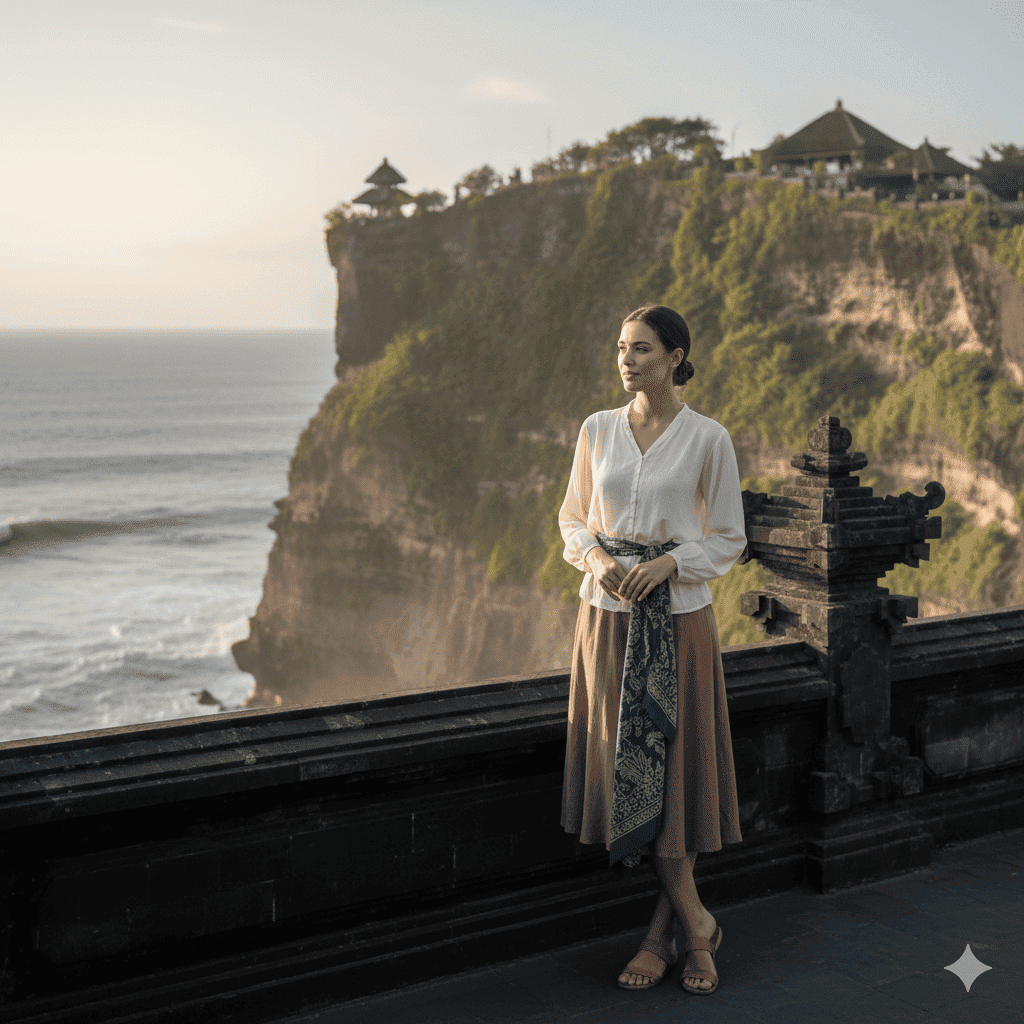
When planning what to wear in Bali for women for temple visits:
✔ Shoulders covered
✔ Knees covered
✔ Minimal cleavage
✔ Calm colors preferred
You can read cultural etiquette recommendations from Lonely Planet’s Bali travel guide
Respectful dressing enhances your experience and avoids entry issues.If you’re planning other culturally rich destinations, you may also find this guide on what to wear in Dubai for women helpful for understanding modest travel fashion.
Shopping for Clothes in Bali: Specific Places, Honest Prices, and What to Buy
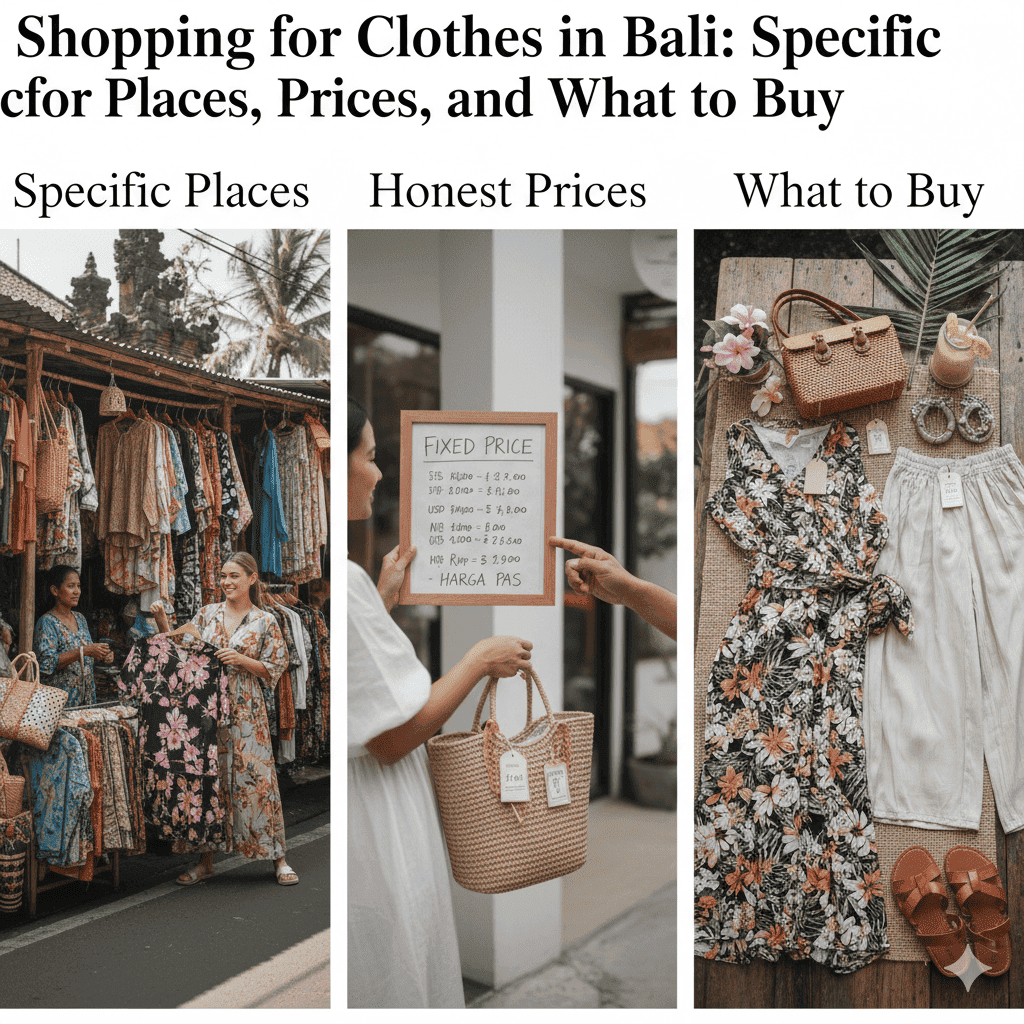
Shopping in Bali is one of the genuine joys of the trip — and one of the best strategies is to travel light and fill your bag here. But not all shopping areas are equal, and knowing the difference saves both time and money.
Ubud Art Market (Pasar Seni Ubud)
Located directly across from the Ubud Royal Palace on Jalan Raya Ubud, this is the most visited market on the island. It sells sarongs, batik clothing, handmade bags, scarves, and woven goods. The quality varies enormously stall to stall — some items are genuinely handmade by local artisans, others are mass-produced imports. Prices start inflated for tourists; expect to bargain down 30–50% from the opening offer. Go early (before 9am) when stalls are freshest and vendors are more willing to negotiate. For sarongs specifically, you can find beautiful batik wraps for IDR 30,000–80,000 ($2–5 USD) after negotiation.
Threads of Life (Jalan Kajeng No. 24, Ubud)
This is not a market — it’s a fair-trade gallery showcasing traditional Indonesian textiles from weavers across twelve islands of the archipelago. Every piece — ikat, songket, naturally-dyed cloth — is handmade and certified ethically produced. Prices are fixed and significantly higher than market stalls, but the quality and provenance are incomparable. If you want one truly meaningful textile to bring home, this is where to find it. It feels more like a quiet cultural gallery than a shop, and the staff are knowledgeable about each piece’s origin.
Seminyak Boutiques for Resort Wear
Seminyak’s boutique strip along Jalan Laksmana (Eat Street) and the surrounding lanes hosts many of Bali’s most stylish independent brands. Faithfull the Brand, Magali Pascal, and Lily Jean are internationally known labels with roots in Bali that produce genuinely beautiful resort wear. Prices are higher than market stalls — IDR 600,000–1,500,000 ($40–95 USD) for a dress — but the quality and cut justify it. These are pieces that will outlast the trip.
Canggu for Surf and Casual Wear
Canggu’s shopping scene runs younger and more surf-influenced. Along Jalan Batu Bolong and the surrounding streets, you’ll find excellent surf-brand stores, vintage shops, and independent boutiques selling the kinds of casual cover-ups and swimwear that have become Canggu’s visual identity. Indigo Luna is a popular ethical brand here known for its earthy, minimalist yoga and resort wear.
A Note on Bargaining
Bargaining (tawar-menawar) is expected and culturally normal at Bali’s markets. The opening price at tourist markets is routinely 2–4 times the expected selling price. A good approach: smile, show genuine interest, offer about 40–50% of the asking price, and meet somewhere in the middle. Never bargain aggressively or with hostility — the goal is a good-natured negotiation, not a confrontation. Walking away slowly after an offer often prompts the seller to call you back with a better price.
For ethical shoppers who want to understand which Bali-based brands prioritise fair wages and sustainable production, Good On You’s ethical fashion directory provides independently verified ratings — useful when choosing between boutiques rather than markets.
The Authority-Level Bali Packing List for Women: What to Wear in Bali for Women, Consolidated
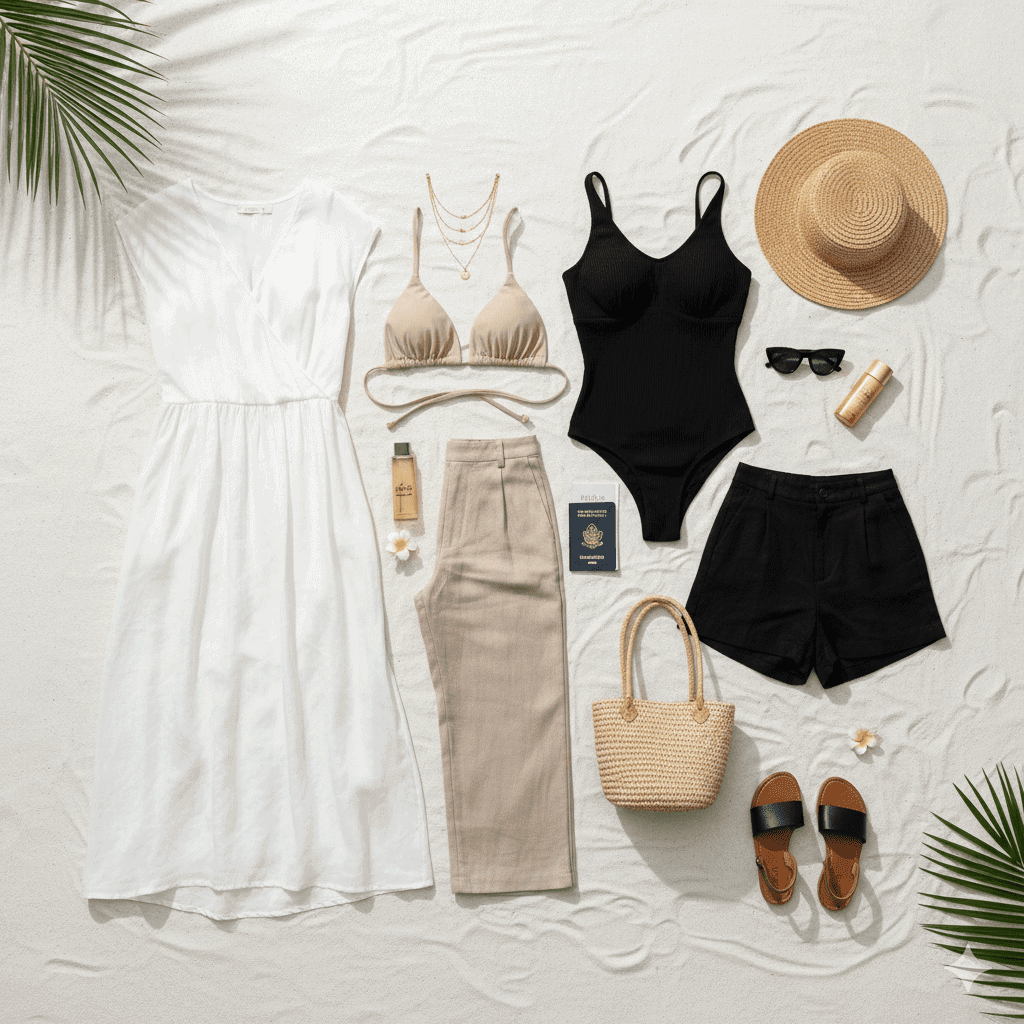
This is the list built from everything above — not a generic template, but a genuinely considered wardrobe for a 7–14 day Bali trip covering multiple zones and activities. Before finalizing what to wear in Bali for women, make sure you also pack smart accessories from this complete guide to travel essentials for women.
Clothing
- 3–4 lightweight dresses: 1–2 casual midis or maxis for temples and daytime, 1 wrap or slip dress for evenings, 1 sundress for beach days.
- 2 linen or cotton blouses or loose tops in neutral tones — versatile with trousers for temples, with shorts for casual days.
- 1 pair of wide-leg linen trousers — the single most useful item in a Bali wardrobe. Works for temples, restaurants, day trips, and yoga transitions.
- 1 midi skirt (wrap style preferred) — pairs with blouses, functions as a second sarong option in a pinch.
- 2–3 swimsuits: one bikini, one one-piece or tankini for temple-adjacent activities. Saltwater and sunscreen degrade swimwear quickly.
- 2 sarongs: one for temples, one for beach. A good batik sarong from Ubud Art Market costs less than $4 USD and weighs almost nothing. Buy locally.
- 1 sash (selendang) for temples — small, lightweight. Often gifted with a sarong purchase.
- 1 lightweight cardigan or kimono: for air conditioning, temple shoulder coverage, and cool Ubud evenings.
- 1 packable rain poncho: not optional for wet season, useful year-round.
- Activewear: if you’re doing yoga, 2 sets of moisture-wicking leggings and a sports bra. Skip if you’re beach-only.
Footwear
- 1 pair of comfortable flat sandals for daily walking — leather sandals from Seminyak cobblers can be custom-made in 24 hours for IDR 250,000–450,000 ($16–28 USD) and are worth every rupiah.
- 1 pair of closed-toe shoes for hiking, rice terraces, and temple stone steps. Lightweight trail runners are ideal.
- 1 pair of dressier sandals for evenings — ankle strap or mule style for beach clubs and restaurants.
- Flip-flops for beach and pool. Do not rely on these for any walking beyond sand.
Accessories and Essentials
- Wide-brimmed sun hat — your face will thank you by day three.
- Quality UV sunglasses — Bali’s UV index regularly reaches 11–12+ (extreme).
- Small secure crossbody bag for day use — compact, body-worn, and macaque-resistant.
- Reef-safe SPF 50 sunscreen (pack this from home — quality options are harder to find locally).
- A light scarf or shawl: temple modesty backup, air-con layer, and beach cover.
Fabric Comparison: What Actually Works in Bali
| Fabric | Comfort in Humidity | Dry Time | Recommendation |
|---|---|---|---|
| Linen | Excellent | Fast | Highly Recommended |
| Cotton | Very Good | Moderate | Good Choice |
| Rayon | Good | Fast | Good Choice |
| Polyester | Poor | Fast | Avoid for daytime |
FAQ: What to Wear in Bali for Women — Answers to the Questions People Actually Ask
Can I wear shorts in Bali?
Yes — shorts are completely appropriate on the beach, at cafés, markets, and most tourist areas. However, shorts alone are not sufficient for temple entry. You’ll need to add a sarong over the top to cover your legs below the knee. In rural villages away from tourist centres, longer clothing is appreciated out of respect for local norms.
Do I need to cover my shoulders everywhere in Bali?
No — shoulder coverage is required only at temples and some traditional ceremonies. On the beach, at restaurants, markets, and beach clubs, bare shoulders are completely fine. A good rule: if you’re in a sacred space (temple, shrine, or during a religious ceremony), cover up. Everywhere else, dress for the heat.
What do Balinese women wear?
Everyday Balinese women typically wear a kebaya (lace or embroidered blouse) with a batik kamen (sarong) for ceremonial occasions, and simple cotton clothing for daily life. For temple prayer, traditional dress is standard. If you want to try wearing a kebaya yourself, you can buy a complete set at the Ubud Art Market or Sukawati Market for IDR 80,000–200,000 — and wearing one to a temple is genuinely appreciated as a mark of respect.
Is it disrespectful to wear a bikini in Bali?
On the beach and at hotel pools: no, not at all. Bali’s beach resort areas are thoroughly international and bikinis are standard. It becomes disrespectful when you wear a bikini (or bikini top without a cover-up) into streets, markets, temples, or local villages. The ‘cover up off the sand’ guideline covers the great majority of situations.
What shoes should I bring to Bali?
The non-negotiable three: flat sandals for daily walking, closed-toe shoes for active days (rice terraces, waterfalls, hiking), and flip-flops for beach and pool only. A fourth pair of dressier sandals for evenings is worth it if you plan to visit upscale venues. High heels are almost never necessary and are impractical on Bali’s mixed terrain.
What should I wear to a Bali beach club?
During the day: your swimwear with a cover-up. A sarong, kaftan, or loose sundress over a bikini is the standard. In the pool: swimwear only — most clubs prohibit T-shirts in the pool. In the evening: venues like Savaya and The Lawn shift toward smart casual — a flowy dress, linen set, or wrap skirt and top. Avoid alcohol-branded singlets, gym wear, and overly revealing clothing at most clubs after sunset.
The Honest Summary: Dress Thoughtfully, Pack Light, Buy Locally
The women who have the best experience with what to wear in Bali for women are the ones who pack half of what they think they need and build the rest of their wardrobe on the island. Bali’s markets, boutiques, and artisan stores are extraordinary — and buying locally means you’re supporting the Balinese economy, carrying lighter luggage, and leaving with something genuinely unique.
The cultural layer matters too. Bali is not a backdrop for holiday content — it’s a living, breathing Hindu culture with deeply held traditions around purity, modesty, and the sacred. Dressing with awareness in that context isn’t a restriction; it’s the difference between being a guest who is welcomed warmly and one who is quietly tolerated. The Balinese are extraordinarily gracious, and most small offences are forgiven with a smile — but it’s worth doing better than hoping to be forgiven.
For deeper cultural context on Bali’s Hindu traditions and how they shape daily life on the island — including the significance of temple ceremonies, offerings, and sacred spaces — Lonely Planet’s comprehensive Bali guide remains one of the most detailed and culturally sensitive resources available for travellers.
And if you’re planning an extended stay or thinking about what Bali’s sustainable fashion scene looks like for longer-term visitors, Travel + Leisure’s Bali packing guide offers an additional perspective from seasoned travel journalists who cover the destination regularly.

Jitu Niranjan is a travel fashion writer and the founder of Travel in Styles. With three years of experience curating outfit guides and packing strategies for women travelers, he covers everything from airport looks to destination dressing across beaches, cities, and beyond. Follow his curation on Pinterest.