
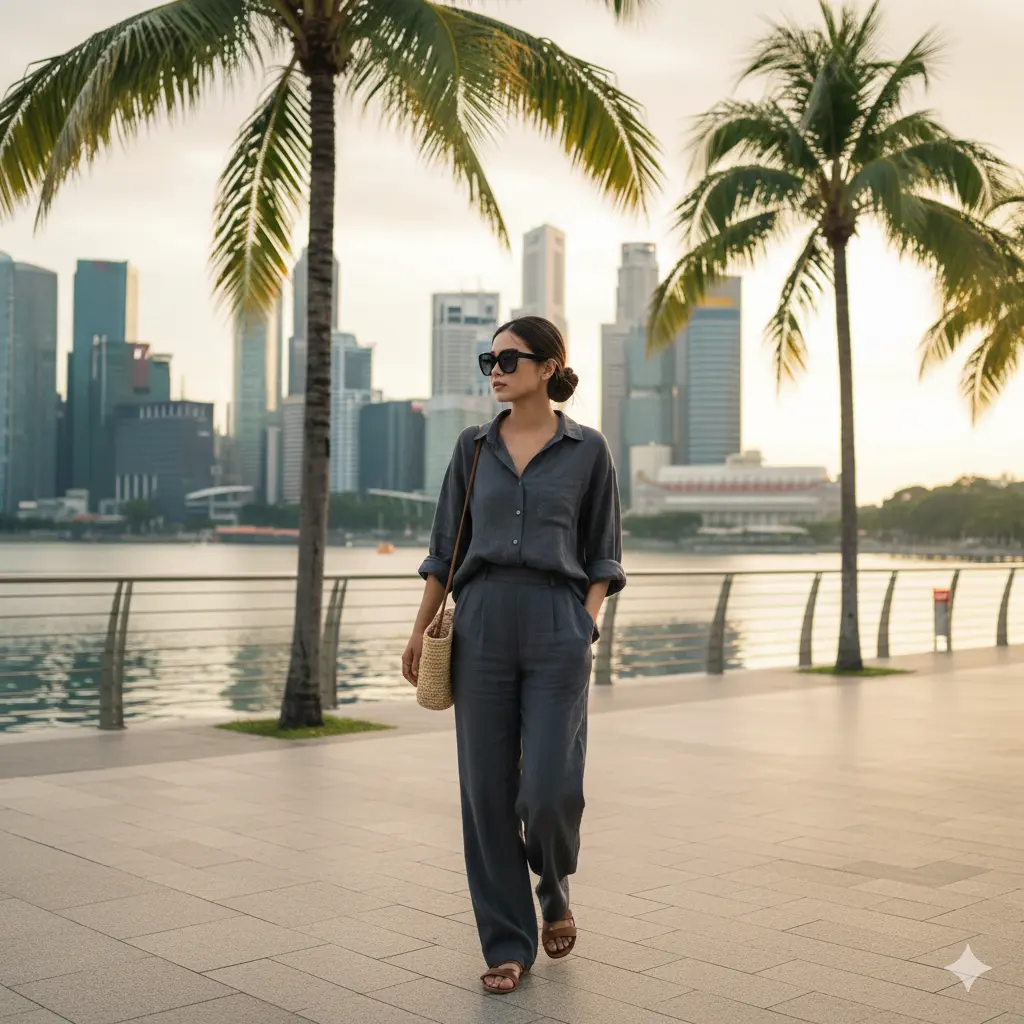
The first time you step outside in Singapore, the heat hits differently. It’s not just warm — it’s humid, tropical, and wrapped around you like a blanket you didn’t ask for. Within minutes, you’ll understand why so many travelers search what to wear in Singapore before they even book their flights.
Located in the heart of Southeast Asia, Singapore is a compact but incredibly diverse destination — where colonial architecture, futuristic skylines, and hawker centres coexist within walking distance.
If you’re planning multiple destinations in Asia, you may also want to read our complete guide on what to wear in Thailand in summer for another tropical climate packing strategy.
This vibrant city-state sits just one degree north of the equator. That means no winter break from the heat, no crisp autumn layers — just year-round sunshine, sudden tropical downpours, and aggressively air-conditioned malls that feel like you’ve stepped into a different climate entirely.
Pack wrong, and you’ll spend your trip:
- Sweating through heavy fabrics
- Freezing inside shopping malls
- Ducking into 7-Eleven during surprise thunderstorms
Pack right, and Singapore becomes effortless — breezy linen outfits, comfortable walking sandals, smart layers for rooftop cocktails overlooking Marina Bay Sands, and temple-ready coverage when exploring heritage neighborhoods.
This is not generic advice. This is your complete, stress-free answer to what to wear in Singapore year round — broken down by weather, activity, and real-life comfort.
Table of Contents
Understanding Singapore’s Climate Before You Pack
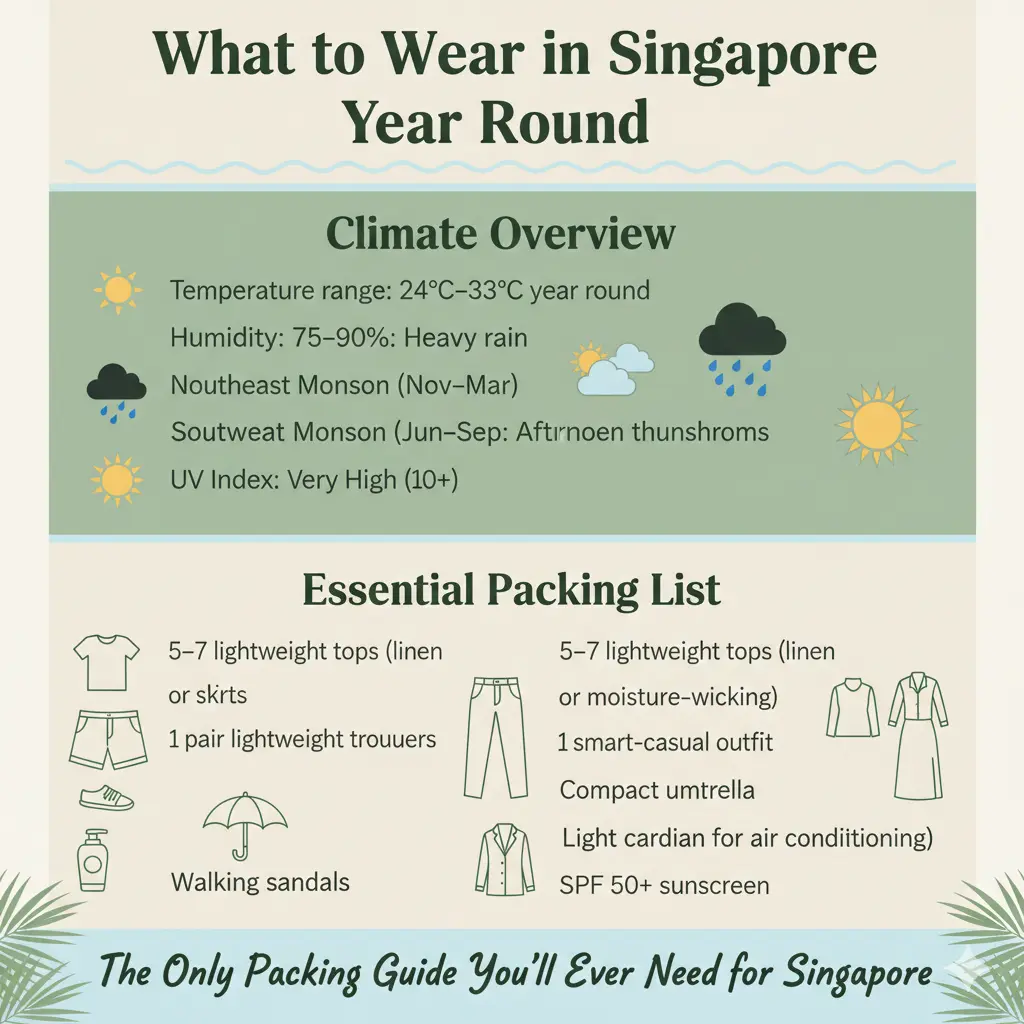
Before you decide what to wear in Singapore, you need to understand what the weather is actually doing. Singapore doesn’t have a winter, a spring, or a fall. What it has is two monsoon seasons that influence rainfall patterns, and a baseline of heat and humidity that never truly lets up.For cooler European destinations, compare this with our guide on Winter Travel Outfits for Europe to see how dramatically packing strategies differ.
Temperatures hover between 24°C (75°F) at night and 33°C (91°F) during the day throughout the year. The humidity routinely sits between 75–90%, which is the real game changer. That 30°C reading feels closer to 38°C once you factor in humidity, especially if you’re walking outside between noon and 3pm. This is the single most important thing to internalize when deciding what to wear in Singapore — it’s not just hot, it’s wet-hot, and your clothing choices need to reflect that.
The Northeast Monsoon runs from November through early March. During this period, especially in December and January, you can expect heavier, more sustained rain — sometimes for several days in a row. The Southwest Monsoon runs from June through September and tends to bring shorter but intense afternoon thunderstorms that arrive like clockwork and clear up just as fast. February, March, and September are among the drier months, though no month is truly “dry” in Singapore.
The practical takeaway: pack for heat and rain every single month. There is no “off-season” for moisture-wicking fabrics or a compact umbrella.
The Golden Rules of What to Wear in Singapore
Experienced Singapore travelers tend to arrive at the same wardrobe philosophy after their first sweaty, soaked afternoon: light fabrics, breathable fits, and layers for air conditioning. Here’s what that actually looks like in practice.
Choose fabrics that breathe and dry fast. Cotton is comfortable but absorbs sweat and takes a long time to dry. Linen is excellent — it breathes beautifully and looks polished. Moisture-wicking synthetics (common in athletic wear) are underrated for Singapore travel because they dry almost instantly, which matters when you’re caught in a 20-minute downpour. Brands like Uniqlo, which has multiple stores across Singapore, offer affordable linen and moisture-wicking basics that locals swear by.
Carry a light layer for indoors. Singapore’s air conditioning is aggressive. Shopping malls like Orchard Road’s ION, hawker centres in converted buildings, and nearly every restaurant and museum are kept at a temperature that feels arctic after an hour outside in the heat. A lightweight cardigan, a thin long-sleeved shirt, or a compact packable jacket tucked into your bag will save you. Many first-time visitors to Singapore get sick not from the heat but from the constant dramatic shift between 32°C outdoors and 19°C indoors.
Always have rain protection within reach. A compact umbrella small enough to fit in a daypack is non-negotiable. Foldable ponchos also work well and take up almost no space. You can buy both cheaply at convenience stores across Singapore, but having one already in your bag saves the scramble when the sky opens up with no warning.
Wear comfortable, versatile footwear. You will walk more than you expect. Hawker centres, MRT stations, heritage districts, and major attractions involve significant time on foot. Walking sandals with good arch support are ideal for the heat. Sneakers work but can become uncomfortably hot and take forever to dry if soaked. Avoid heels on heritage district streets — the uneven paving stones in Chinatown and Little India are genuinely treacherous.
What to Wear in Singapore: Month-by-Month Breakdown
Even though the core packing list stays consistent year round, there are subtle seasonal adjustments worth knowing.
November Through March (Northeast Monsoon Season)
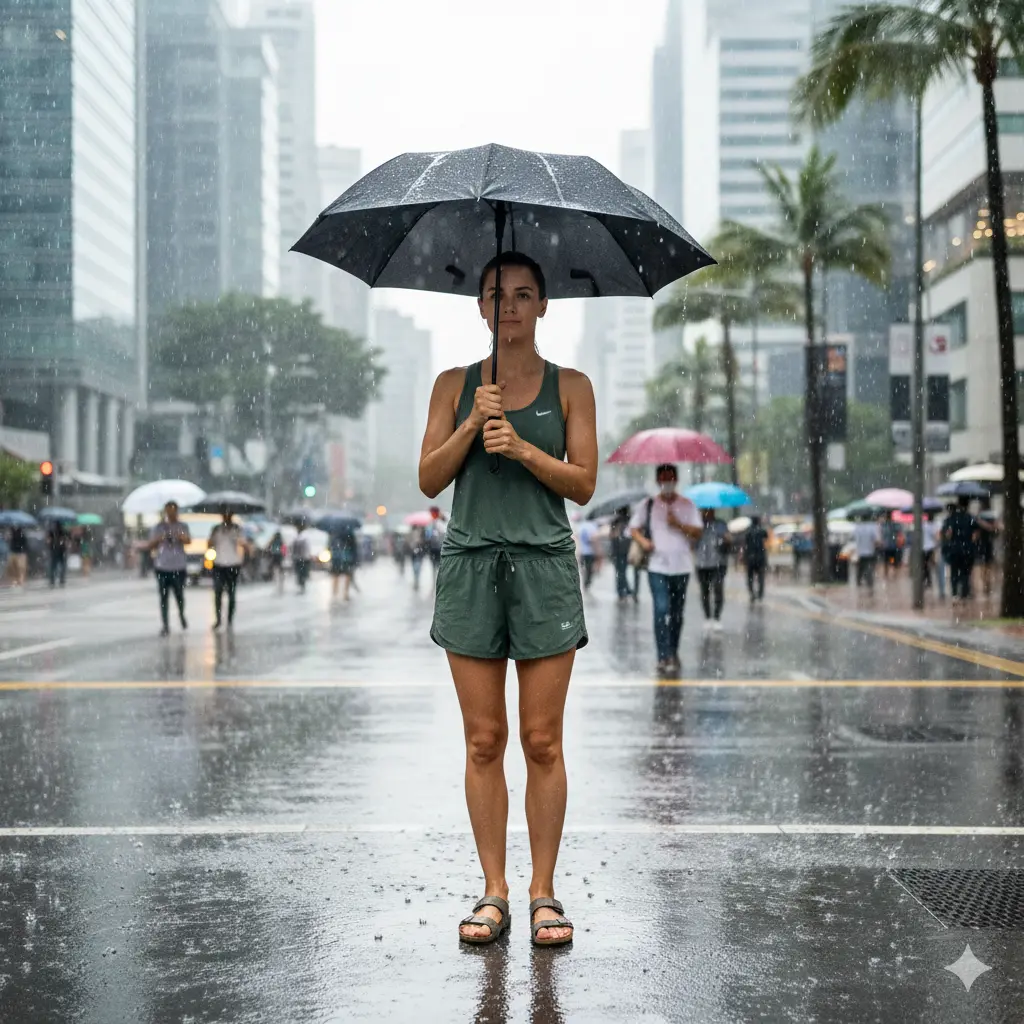
This is when Singapore sees its heaviest rainfall, particularly in December and January. Rain can last for hours rather than minutes, and the wind accompanying monsoon rain makes umbrellas less reliable. A lightweight waterproof rain jacket becomes genuinely useful during this period rather than just optional. Temperatures feel marginally cooler — still hot by most standards but occasionally dropping to a pleasant 26–27°C in the evenings.
What to wear in Singapore during this period: the same lightweight, breathable clothing as any other time, but with a better rain jacket and perhaps one extra layer for evenings that can feel breezy during the monsoon. This is also peak Christmas and Chinese New Year travel season, so you’ll be visiting temples, markets, and heritage areas — plan modest coverage options accordingly.
April and May (Inter-Monsoon — Hottest Months)
April and May are widely considered the hottest months in Singapore. The inter-monsoon transition brings reduced wind, intense sunshine, and temperatures that consistently hit 33–34°C. If you’re visiting during these months, lean even harder into breathable fabrics and plan outdoor activities exclusively in the early morning or after 5pm.
What to wear in Singapore in April and May: linen tops, loose shorts or flowy skirts, and sun protection (wide-brim hat, sunglasses, SPF50+ sunscreen applied generously). Keep the physical exertion minimal between noon and 3pm regardless of how good your outfit is.
June Through September (Southwest Monsoon)
This period brings shorter, more predictable thunderstorms — often between 2pm and 5pm — that clear quickly. Mornings and evenings are generally lovely. This is a popular travel season thanks to school holidays, and the city is busy. What to wear in Singapore during the Southwest Monsoon is essentially the same as always, though the predictable afternoon rain window means you can actually plan around it.
October (Second Inter-Monsoon)
October tends to be one of the wetter months with unpredictable, heavy showers that don’t follow the afternoon-only pattern. Pack your umbrella with extra determination in October and don’t assume morning skies mean rain-free days. Otherwise, the same packing approach applies.
What to Wear in Singapore: Activity-by-Activity Guide
The biggest nuance in answering what to wear in Singapore is that it’s a city of dramatic contrasts. You might visit a Hindu temple, eat at an open-air hawker centre, enter a fine-dining restaurant, and end the night at a rooftop bar — all in the same day. Your wardrobe needs to flex.
Exploring Outdoor Attractions (Gardens by the Bay, Sentosa, East Coast Park)
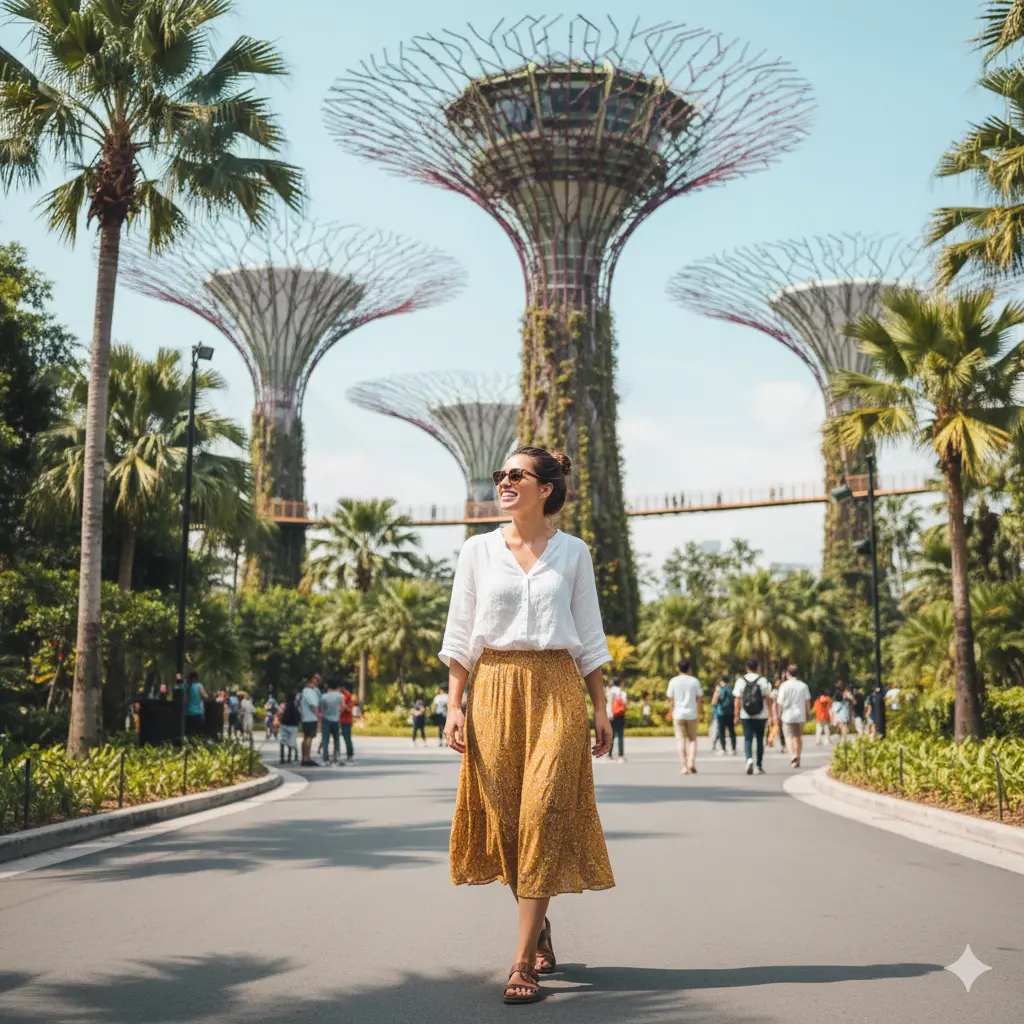
Singapore’s iconic outdoor attractions — particularly Gardens by the Bay, Sentosa, and East Coast Park — require breathable outfits and serious sun protection. Think breathable T-shirts or tank tops, shorts or light athletic pants, and walking sandals or sneakers. A hat is essential at Gardens by the Bay, where large sections are exposed with limited shade. If you’re visiting the Supertree Grove at night, temperatures are cooler and the aesthetic is magical — a slightly dressier casual look works well.
For Sentosa, swimwear under a cover-up or shorts is perfect if you’re heading to the beach or Universal Studios Singapore. Waterproof sandals are smart since you’ll move between pool areas, sand, and indoor attractions.
Visiting Temples, Mosques, and Heritage Sites
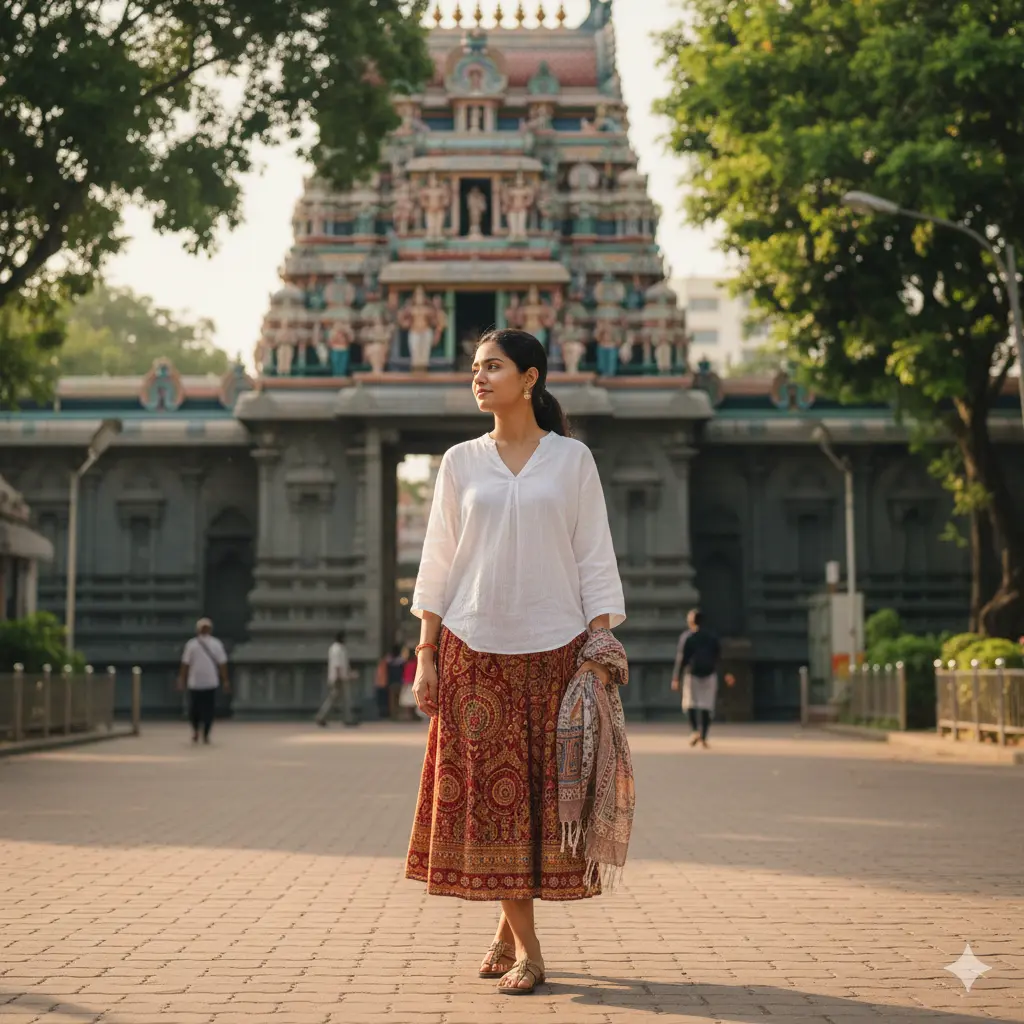
This is where what to wear in Singapore requires the most advance planning. Sri Mariamman Temple in Chinatown, the Sultan Mosque in Kampong Glam, and the Sri Veeramakaliamman Temple in Little India all require covered shoulders and knees for entry. This isn’t optional. Most temples provide sarongs at the entrance for a small fee or as a courtesy, but having your own lightweight scarf or sarong is more comfortable and avoids the wait.
A practical approach: wear shorts and a T-shirt for general exploration, but pack a long lightweight skirt or pants and a loose button-up shirt in your bag. You can change or simply pull the shirt on over your tank top. The key is that the fabric be reasonably modest — very tight clothing even when covering the knees and shoulders can still be considered inappropriate at some sites.
Hawker Centres and Local Food Markets
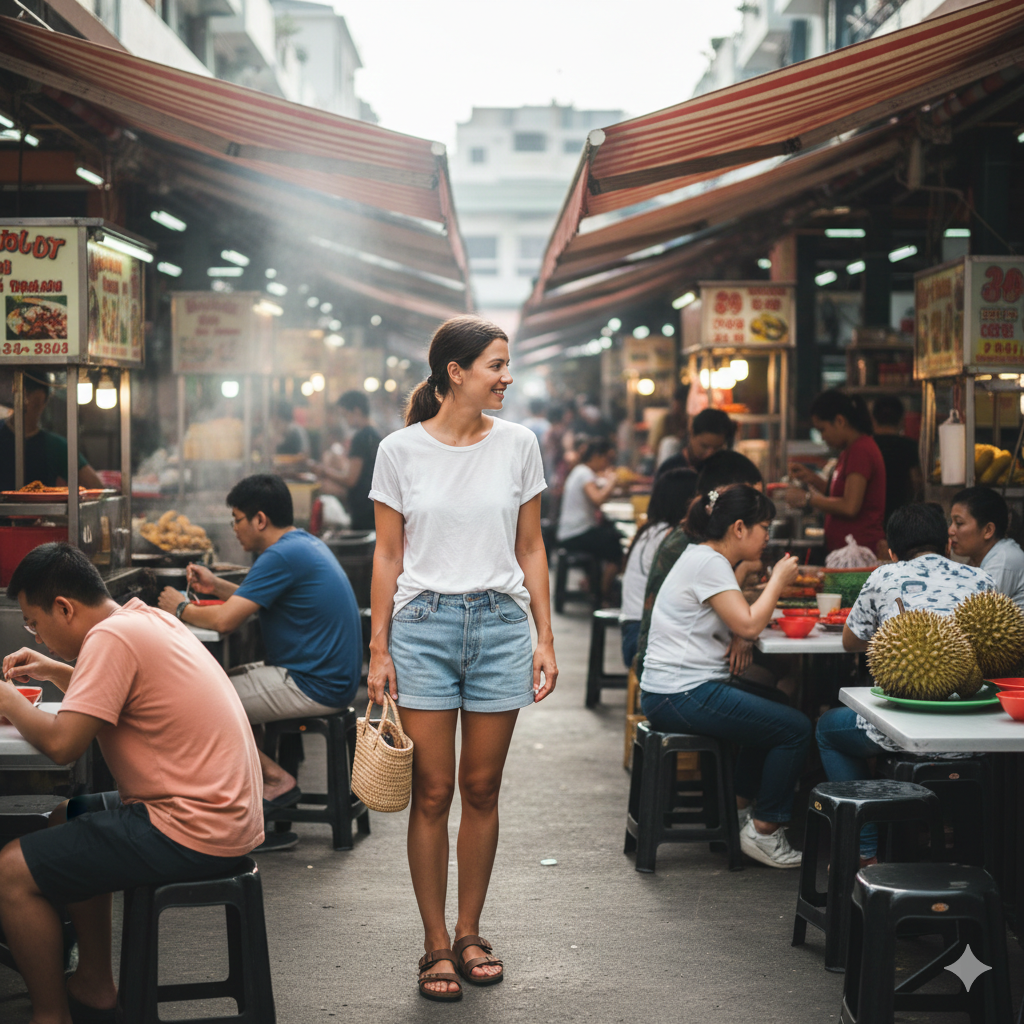
Hawker centres are quintessential Singapore experiences and they’re entirely casual environments. Shorts, sandals, and a T-shirt is exactly right. Many hawker centres have open-air or semi-outdoor seating that means you’re exposed to ambient heat — light, breathable clothing is particularly important here. Maxwell Food Centre, Lau Pa Sat, and Old Airport Road Food Centre are among the most visited and all follow the same relaxed dress code: anything you’re comfortable eating in.
Night markets and pasar malams (travelling night markets) are similar — casual, colorful, and hot. A loose dress or shorts and a fun top is perfectly appropriate.
Orchard Road Shopping and Air-Conditioned Malls
Here’s where that cardigan or light layer becomes essential. Singapore’s luxury malls along Orchard Road — ION Orchard, Paragon, Ngee Ann City — maintain aggressive air conditioning that feels genuinely cold after extended time inside. Many travelers find that lightweight jeans or long trousers are actually more comfortable in these environments than shorts, particularly if you plan to spend several hours browsing.
Popular hawker centres like Lau Pa Sat and Maxwell Food Center are casual, humid, and often semi-open air — dress accordingly.
Smart-casual clothing — a neat blouse or collared shirt with clean trousers or a midi skirt — fits the upscale mall environment well and gives you the flexibility to transition to a nicer lunch or afternoon cocktail without changing.
Rooftop Bars and Evening Dining
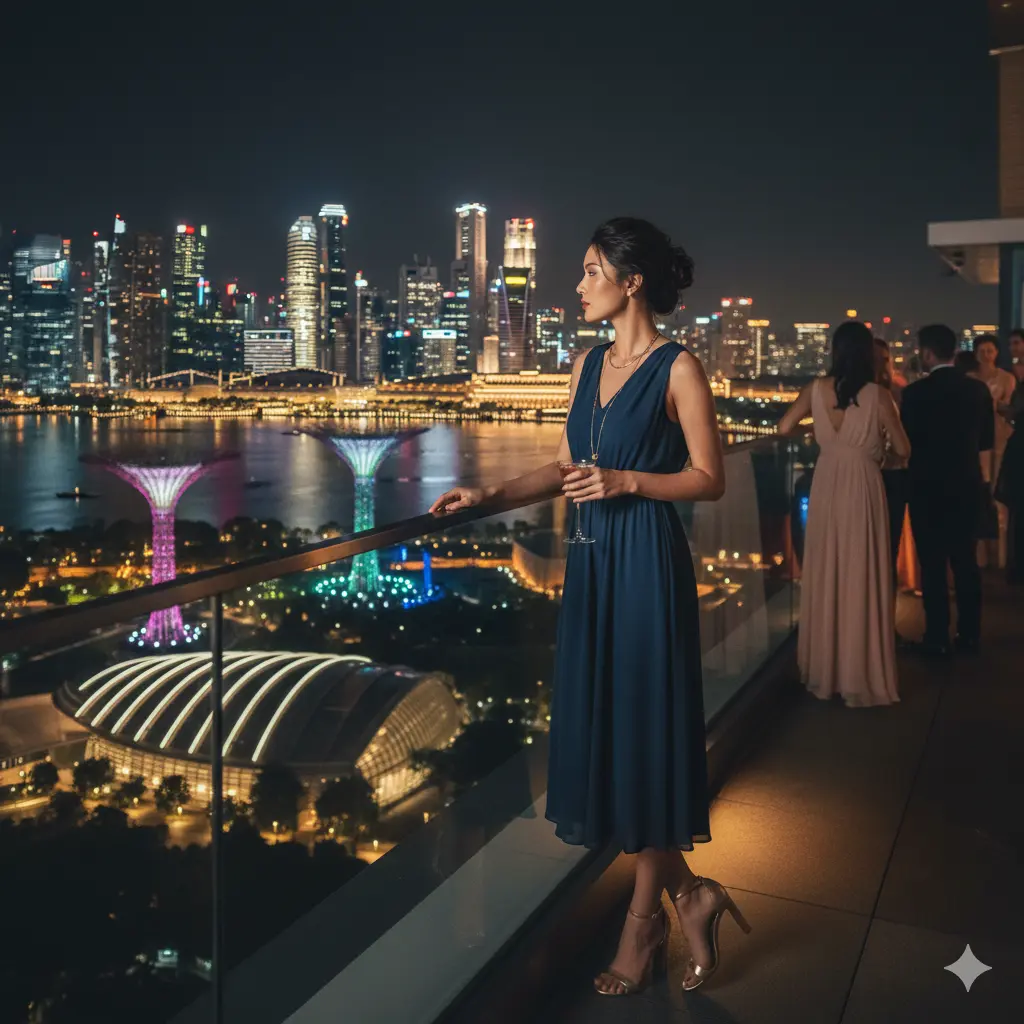
Singapore has a spectacular rooftop bar scene, from the iconic 1-Altitude to the bar at Marina Bay Sands. These venues typically have a smart-casual dress code, and some explicitly prohibit flip-flops, athletic wear, and very casual shorts. For men, a neat collared shirt and slim trousers or chinos is safe. For women, a sundress, a blouse with nice trousers, or a smart jumpsuit works beautifully.
Evening dining at mid-range to upscale restaurants follows similar logic. Singapore’s dining scene ranges from extremely casual to black-tie optional — check the specific restaurant’s dress code, but smart-casual covers you in most situations.Planning stylish travel looks across continents? See our curated list of chic travel outfits for women in Europe for elevated inspiration.
Business and Professional Settings
Singapore is a major international business hub with a professional culture that blends Western business formal with tropical practicality. Business formal means suits for men and formal dresses or suits for women, though the humidity means locals and experienced expats wear lighter fabrics — tropical wool, linen blends, or high-quality cotton. For business-casual meetings, a neat button-up shirt and trousers for men and a blouse with tailored trousers or a structured dress for women is appropriate.
Avoid wearing the same suit you’d wear to a London or New York boardroom — you’ll be visibly uncomfortable and it will show. Singapore’s business culture has long adapted to the climate; there’s no shame in choosing lighter fabrics.
The Essential Packing List: What to Wear in Singapore
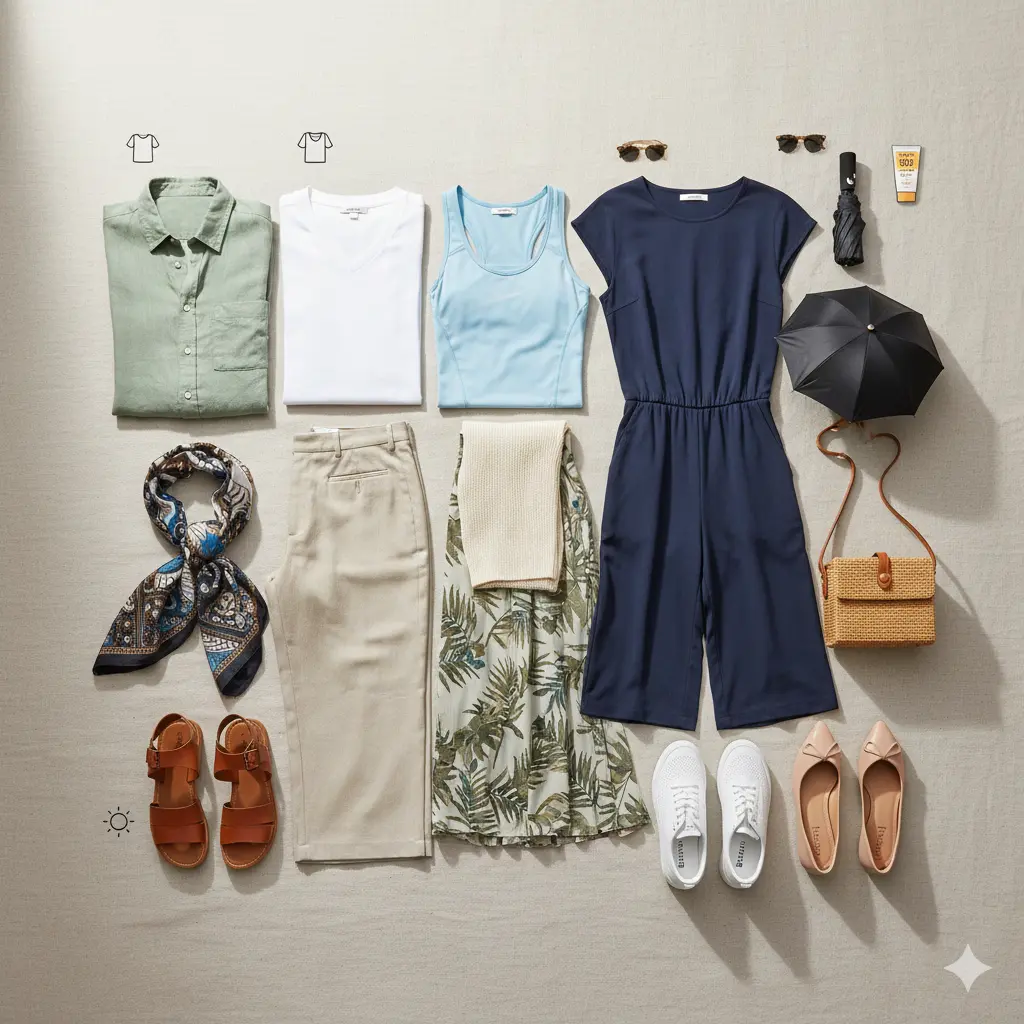
Based on a seven to ten day trip, this is the practical wardrobe that works year round:
Tops: Five to seven lightweight tops — a mix of T-shirts, tank tops, and one or two smarter blouses or collared shirts. Prioritize linen, moisture-wicking synthetics, or bamboo fabric. Avoid dark colors if sweat visibility concerns you, though dark colors do hide stains from street food, which is a real consideration.
Bottoms: Two to three pairs of shorts or lightweight skirts for daily exploration. One pair of lightweight long trousers for temple visits and evening dining. Women might replace one pair of shorts with a flowy maxi skirt that does double-duty for temple coverage and casual evenings.
Dresses: For women, two to three versatile dresses do enormous heavy lifting in Singapore. A midi dress covers temple entry requirements and looks polished for dinner. A casual sundress is ideal for daytime heat. A wrap dress handles both contexts gracefully.
One Smart-Casual Outfit: For rooftop bars, upscale restaurants, or evening events — a smart blouse with tailored shorts or trousers for women, a collared shirt and chinos for men.
Outerwear: One lightweight cardigan or packable jacket for air conditioning. Not optional.
Rain Gear: A compact folding umbrella. A lightweight rain poncho as backup if you’re visiting during the Northeast Monsoon (November–March).
Shoes: One pair of comfortable walking sandals (Birkenstock, Teva, or similar quality). One pair of clean sneakers for longer walking days. One pair of dressier flats or loafers for evenings. Avoid bringing more than three pairs of shoes — Singapore’s excellent public transport (the MRT system) means you won’t need hiking boots or elaborate footwear.
Accessories: Wide-brim hat or packable sun hat. UV-protection sunglasses. SPF50+ sunscreen (buy locally if you want to avoid liquid restrictions — Guardian Pharmacy and Watsons are everywhere). Reusable water bottle — tap water in Singapore is completely safe and drinking 2–3 litres daily is important.
What NOT to Wear in Singapore
Knowing what to avoid is just as useful as knowing what to bring. Avoid heavy denim jeans as your primary daywear — they absorb heat and moisture and take forever to dry. Avoid synthetic fabrics that don’t breathe (polyester blouses without moisture-wicking properties are uncomfortable in this humidity). Avoid packing multiple formal outfits unless your trip is specifically business-focused — Singapore is casual in most contexts and you’ll resent the weight.
Also worth noting: Singapore does not have a specific dress code for its streets or outdoor markets, but modest and respectful clothing is appreciated when visiting religious neighborhoods like Kampong Glam. Short shorts and revealing tops are technically legal but can feel incongruous in some areas. Reading the context around you and adjusting accordingly is the best approach.
Buying Clothes in Singapore: An Underrated Option
One genuinely practical tip that doesn’t appear in most packing guides: Singapore is an excellent place to buy lightweight tropical clothing on arrival. Uniqlo outlets across the city stock excellent linen shirts, moisture-wicking T-shirts, and lightweight trousers at reasonable prices. Mustafa Centre in Little India is a sprawling 24-hour department store with inexpensive basics. Bugis Street and Bugis Junction have affordable local fashion for women and men. If you’ve overpacked heavy clothes or simply want to embrace tropical dressing from day one, an hour of shopping on arrival can solve a lot of problems.
Frequently Asked Questions: What to Wear in Singapore
FAQ: What to Wear in Singapore
For general street wear, Singapore has no specific modesty requirements. However, when visiting Hindu temples, mosques, and some Buddhist temples, covered shoulders and knees are required. Carrying a scarf or sarong in your bag solves this throughout your trip.
Is Singapore too hot for jeans?
Yes, for most visitors, standard denim jeans are genuinely uncomfortable in Singapore’s heat and humidity. Lightweight chinos, linen trousers, or cotton joggers are far more practical alternatives.
Can I wear swimwear on Sentosa Island?
Yes, swimwear is completely appropriate on Sentosa’s beaches and around its pools and water parks. Cover up for walking between venues or entering restaurants and shops.
What shoes are best for Singapore?
Comfortable walking sandals with good support are the most popular choice among experienced Singapore travelers. Quality sandals like those from Birkenstock or Teva handle both casual sightseeing and light evening use. Bring one pair of cleaner footwear for evening dining and bars.
What should women wear in Singapore?
Women can comfortably wear sundresses, loose tops, midi skirts, and lightweight trousers. For temples, ensure shoulders and knees are covered.
What should men wear in Singapore?
Men should wear breathable T-shirts, linen shirts, lightweight shorts, or chinos. A collared shirt and tailored trousers work well for evenings or business settings.
External Resources for Your Singapore Trip
Planning your Singapore wardrobe goes hand in hand with understanding the destination itself. The Singapore Tourism Board’s official travel guide is the most authoritative starting point for entry requirements, attraction information, and cultural guidance. For real-time weather forecasts and monsoon updates, the Meteorological Service Singapore provides daily and 14-day outlooks that help you finalize your packing. If you’re building a capsule travel wardrobe for Southeast Asia more broadly, Travel Fashion Girl’s packing resources offer detailed community-sourced advice. For understanding Singapore’s cultural dress expectations at religious sites, Singapore’s National Heritage Board provides context on the cultural significance of heritage neighborhoods and temples. And for health and sun safety guidance specific to tropical climates, the World Health Organization’s UV index resources are worth reviewing — Singapore regularly records UV indices of 10 or above, among the highest in the world.
Final Thoughts: Packing Confidently for Singapore
Knowing what to wear in Singapore year round ultimately comes down to embracing the tropical reality rather than fighting it. Lightweight fabrics, breathable fits, versatile layers for air conditioning, and reliable rain protection — this combination covers 95% of situations you’ll encounter in Singapore regardless of whether you’re visiting in January or July.
Singapore is a city that rewards confident, practical travelers. Its remarkable cleanliness, efficient MRT system, and extraordinary food culture make it one of the world’s most enjoyable destinations — and the heat, while real, is entirely manageable once you dress for it rather than against it. Pack smart, stay hydrated, embrace the occasional thunderstorm as part of the experience, and you’ll find that Singapore’s climate is as much a part of its character as its hawker centres, colonial architecture, and extraordinary multicultural neighborhoods.
What to wear in Singapore is, in the end, a question with a liberating answer: wear what makes you feel comfortable, cool, and respectful of the places you’re visiting. Everything else falls into place from there.
Word count: approximately 2,500 words | Focus Keyword: “what to wear in Singapore” | Keyword Density: ~1.2%

Jitu Niranjan is a travel fashion writer and the founder of Travel in Styles. With three years of experience curating outfit guides and packing strategies for women travelers, he covers everything from airport looks to destination dressing across beaches, cities, and beyond. Follow his curation on Pinterest.