
I learned the hard way.
My first trip to Japan was in early April. I packed like I was heading to a warm European spring — linen shirts, light sandals, one thin cardigan. By my second evening in Kyoto, I was standing outside Fushimi Inari at 9pm in 9°C wind, wearing every single layer I owned and still shivering. A Japanese grandmother nearby was in a wool coat and scarf. She looked at my outfit with an expression I can only describe as polite concern.
Knowing what to wear in Japan in spring can make the difference between a magical trip and spending half your holiday regretting your packing choices. This guide is everything I wish I’d read before I left.
Spring in Japan (March through May) is one of the most breathtaking times to visit. The sakura blooms, parks fill with hanami picnickers, wisteria drapes over garden trellises, and the whole country seems to exhale with color. But the weather is genuinely trickier than it looks on paper.
Temperatures swing wildly — a sunny 22°C afternoon in April can turn into a 10°C evening in the blink of an eye. Northern Hokkaido still sees snow in early spring, while subtropical Okinawa feels like early summer by March. Pack wrong, and you’ll either sweat through your sweater in Tokyo or freeze at a temple in Kyoto.
This guide covers every outfit decision you need to make — broken down by month, by region, and by situation — so you can spend your trip enjoying Japan instead of hunting for a coat in Uniqlo.If you are planning multiple European trips, check our Europe packing list for women.
Table of Contents
Why Packing Right Matters More in Japan
Here’s something most travel guides don’t tell you plainly: Japan notices how you dress.
That’s not meant to intimidate you — Japanese people are warm and welcoming regardless of what you’re wearing. But there’s a real cultural difference in how people approach clothing here. Locals tend to dress neatly and intentionally — pressed, tidy, and considered. Walking into a Kyoto temple district in gym leggings and a hoodie doesn’t just feel slightly wrong, it genuinely sticks out in a way it simply wouldn’t in, say, Barcelona.
There’s a well-known Japanese principle that roughly translates as “if a nail sticks up, hammer it in” — a reminder that fitting in socially, including how you dress, carries cultural weight.
None of this means you need designer clothes or a fashion-forward wardrobe. It means choosing versatile, polished basics in neutral colors that look intentional. That’s it. The good news? That’s exactly the kind of packing that also photographs beautifully against cherry blossoms.
Spring Weather in Japan: What to Actually Expect
Most people arrive expecting mild, pleasant spring warmth. Some months deliver that beautifully. Others absolutely do not.
Here’s the honest temperature picture across the main regions:
| Month | Tokyo Avg Temp | Kyoto/Osaka Avg Temp | Hokkaido Avg Temp | Rain Risk |
|---|---|---|---|---|
| March | 5°C – 13°C | 8°C – 18°C | -3°C – 8°C | Moderate |
| April | 11°C – 20°C | 12°C – 21°C | 3°C – 11°C | Low–Moderate |
| May | 16°C – 25°C | 16°C – 25°C | 8°C – 17°C | Low |
Source: Japan Meteorological Agency data via MATCHA Japan Travel Guide
What those numbers don’t show is the feeling of each month:
- March feels like late winter with occasional flashes of spring. Don’t be fooled by a warm afternoon — evening temperatures drop fast, and rain arrives without much warning.
- April is the trickiest. The famous cherry blossom season runs through most of this month, but April weather in Japan can swing 10°C in a single day. Locals joke that you need a different outfit for morning, afternoon, and night.
- May is the reward. Genuinely lovely weather, long warm days, and the wisteria is stunning. You’ll finally use those short-sleeve tops you’ve been carrying since March.
The One Rule That Changes Everything: Layer Like You Mean It
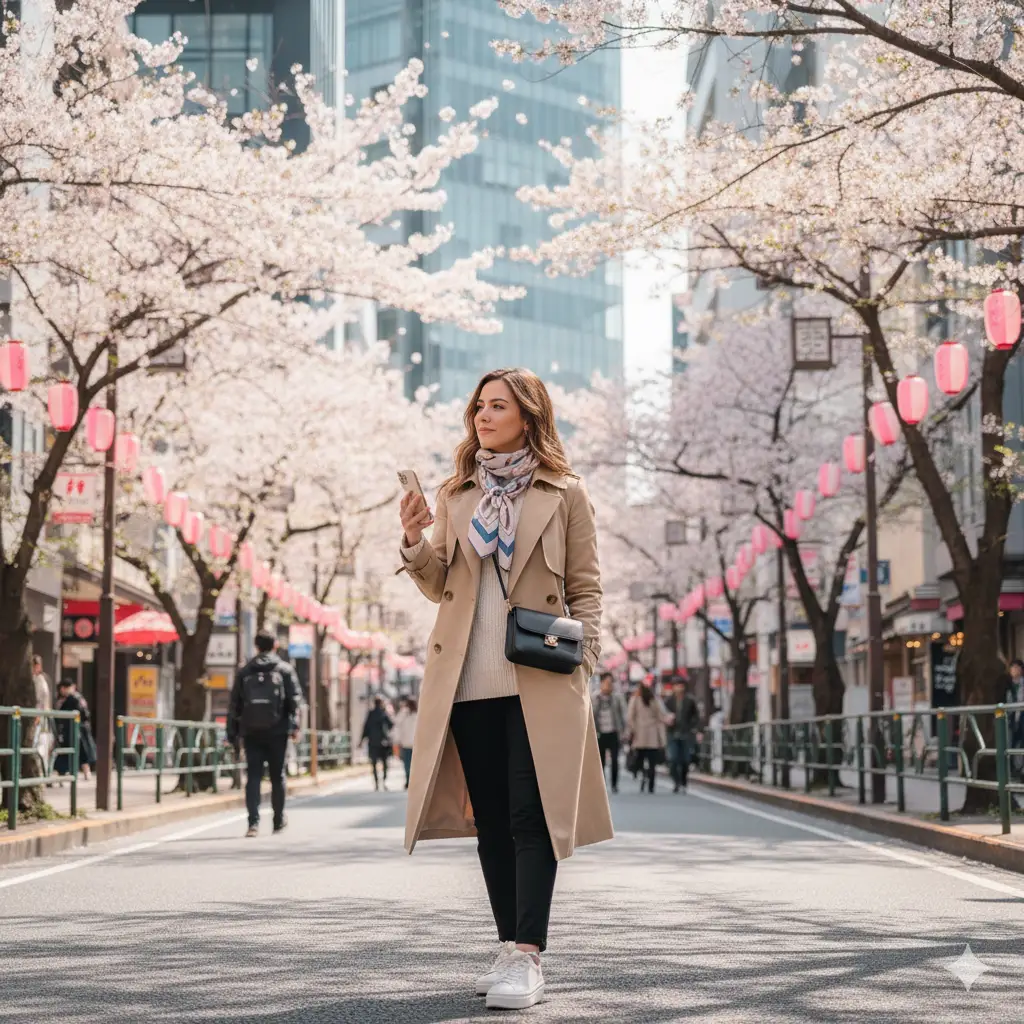
If I could give you only one piece of advice about your spring wardrobe for Japan, it’s this: build every outfit around layers you can actually add and remove throughout the day.
This sounds obvious. It isn’t. Most people pack layers in theory but then wear a bulky knit sweater that can’t go under anything, or a coat that’s too warm to carry once the afternoon heats up. The trick is choosing thin, packable layers that genuinely work in combination.
Think of your outfit as three tiers:
- Base layer — a lightweight long-sleeve or breathable tee. Merino wool is ideal; it regulates temperature, doesn’t smell after a long day of walking, and looks neat under everything.
- Mid layer — a cardigan, light knit, or fitted button-down. This is the piece you’ll put on and take off most.
- Outer layer — a trench coat, light jacket, or packable rain jacket. This is your insurance policy against the cold evenings and sudden rain that April specialises in.
I watched a Japanese woman in Tokyo one April afternoon peel off her layers at a café with the kind of practiced ease that comes from a lifetime of dressing for this climate. Base layer, blouse, cardigan, trench — all coordinated, all neatly folded over her bag. That’s the goal.
What to Wear in Japan in Spring: Month-by-Month Breakdown
March: Still Cold — Don’t Be Fooled by the Blossoms
March is a month of contradictions. Some days genuinely feel like spring arriving — the first blossoms appear at the end of the month and the whole country gets excited. Other days feel like February forgot to leave.
Mornings in Tokyo regularly hover around 5–8°C. If you’re visiting Hokkaido or higher-altitude areas around Nikko or the Japanese Alps, it can feel closer to winter.
What to pack for March:
- Merino wool long-sleeve base layer (genuinely the single best investment for Japan spring travel)
- Light-to-medium knit sweater or cardigan
- A proper warm jacket — down jackets are completely appropriate in early March and still practical in late March evenings
- Scarf and light gloves, especially for early morning temple visits
- A packable, water-resistant outer layer — March rain is real
- Slim or straight-leg trousers; well-fitted jeans work fine
One honest tip for March: Don’t ditch the warm jacket just because the forecast shows a 15°C afternoon. That temperature drops to 9°C by 6pm, and you’ll be outdoors for the evening. Trust me on this one.
For Hokkaido in March: Full winter packing. Down coat, thick knit layers, and warm boots.
For Okinawa in March: A completely different experience. Temperatures reach 20–23°C and it genuinely feels like spring. Swap the heavy jacket for a light cardigan.
April: The Sweet Spot — Beautiful but Unpredictable
April is why most people come to Japan in spring. Peak cherry blossom season across most of the country, warm afternoons, and the whole nation seems to be in a state of joyful celebration.
It’s also the month that catches the most travelers off guard with its weather. You’ll see people at hanami picnics in shirt sleeves at 2pm, then scrambling for their jackets by 5pm as the temperature drops and wind picks up. Plan for both.
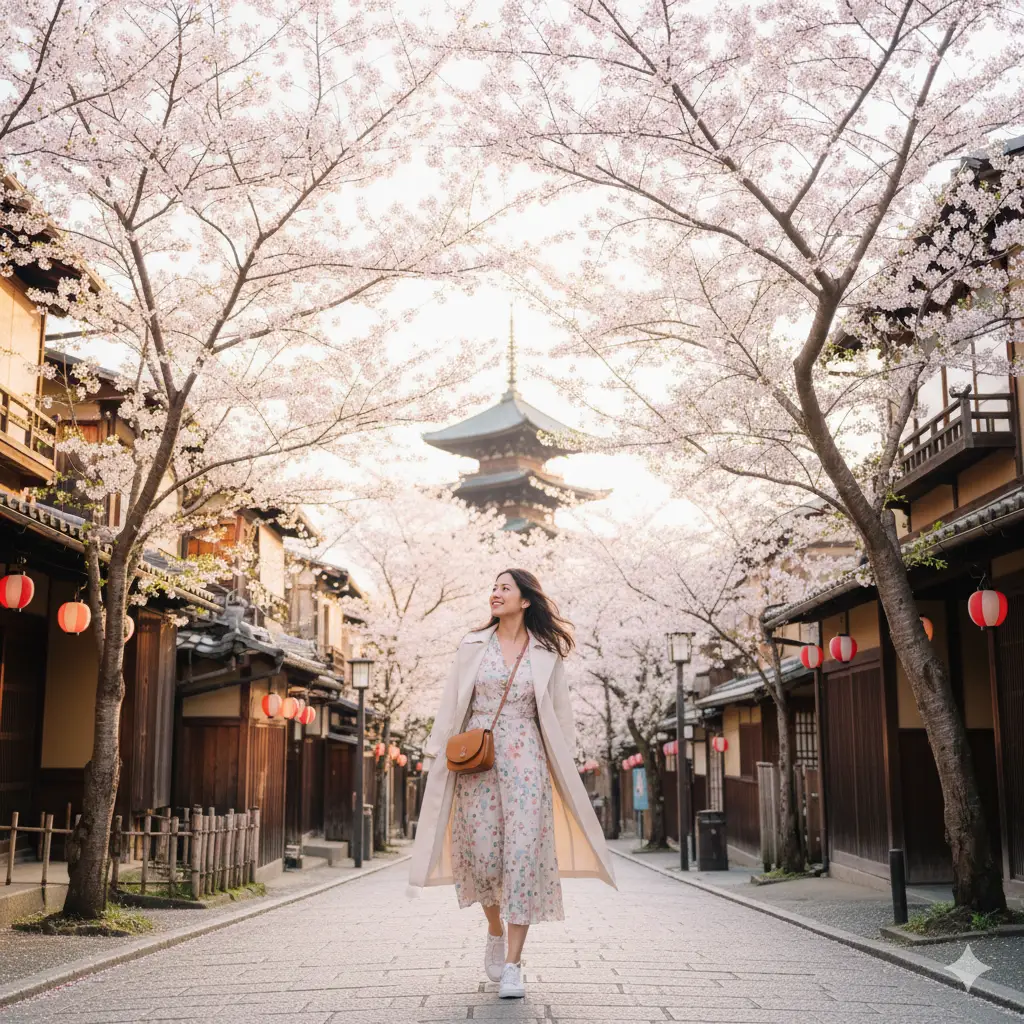
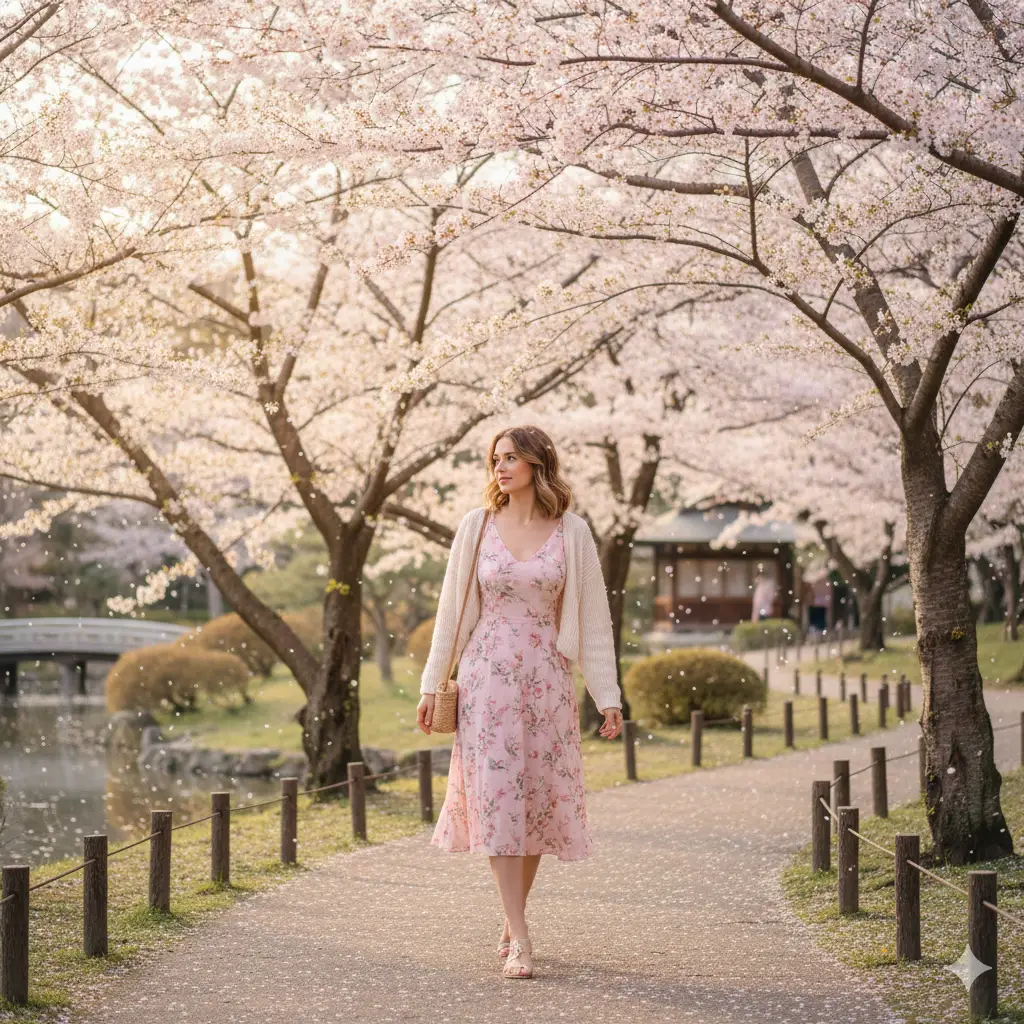
The upside: April is genuinely when Japanese spring style shines. Soft florals, light neutrals, the perfect excuse to wear that trench coat you’ve always wanted to commit to. Light-colored outfits — white, cream, pale blue — photograph absolutely beautifully against sakura.
What to pack for April:
- A mix of long-sleeve and short-sleeve tops (you’ll genuinely need both)
- One or two cardigans or light knit layers
- A trench coat — the single most useful outer layer for April in Japan
- Slim trousers, wide-leg pants, or a midi skirt with tights
- A compact travel umbrella that actually fits in your bag (not a massive golf umbrella — those are unwieldy on crowded temple paths)
- Good walking shoes — more on this shortly
Outfit that works every single time: Floral or striped blouse + neutral wide-leg trousers + trench coat + white sneakers. It’s versatile, polished, comfortable, and looks great in every photo you’ll take.
May: Finally Warm — Your Reward for Patient Packing
By May, Japan exhales. The wisteria is blooming in purple cascades, Golden Week brings the parks to life, and daytime temperatures across Tokyo, Kyoto, and Osaka regularly hit 20–25°C.
This is the month you’ll finally wear those short-sleeve tops. It’s also the month you’ll deeply appreciate having packed linen or light cotton — anything heavier starts to feel uncomfortable on long sightseeing days.
A note of caution: Japanese air conditioning is famously aggressive. Restaurants, museums, department stores, and trains are often chilly enough to make you reach for a layer even on a 25°C afternoon outside. Never pack that cardigan away entirely.
What to pack for May:
- Breezy short-sleeve tops and lightweight blouses — these are the stars of May
- One reliable cardigan or denim jacket for evenings and indoor A/C
- Three-quarter sleeve tops if you run warm — perfect for the transition moments
- Wide-leg or relaxed-fit trousers in lighter fabrics
- Light sneakers, loafers, or flat sandals
Colors and Style: What Actually Works
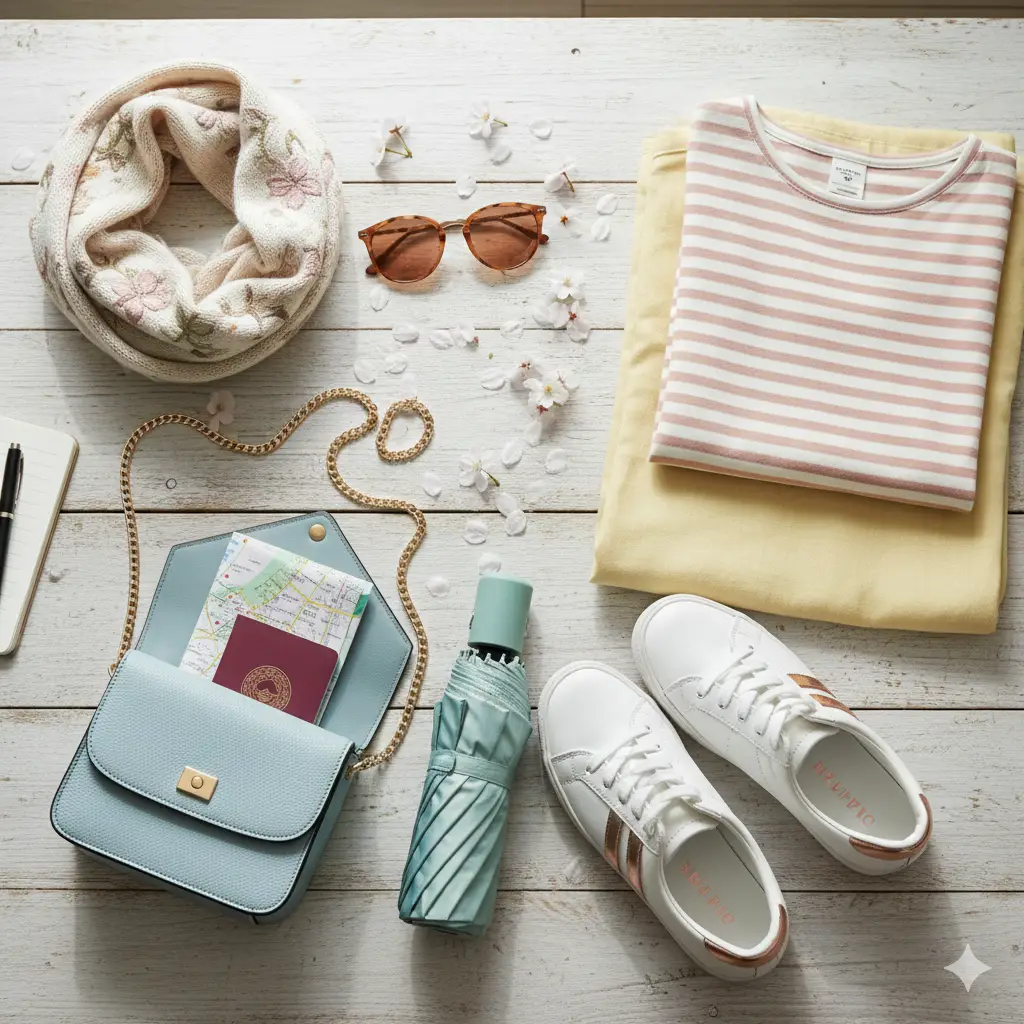
Japan’s fashion aesthetic — particularly in Kyoto and Tokyo — tends toward polished, considered, and calm. That doesn’t mean boring. It means intentional.
Colors that work beautifully:
- Neutrals: black, white, navy, cream, taupe, soft gray
- Muted florals — these are everywhere in Japanese spring fashion and they feel completely natural
- Soft pastels, especially against cherry blossom and wisteria backdrops
- Earthy tones: terracotta, olive, warm brown
Silhouettes and styles to lean into:
- Wide-leg or straight-leg trousers — this is what you’ll see everywhere in Japan. Skinny jeans look slightly dated.
- Oversized or relaxed knits — a longline cardigan or slouchy sweater fits right in with Tokyo street style
- Midi skirts and dresses — elegant, practical for temple visiting, and incredibly versatile
- Classic button-downs — crisp, polished, works everywhere from a convenience store breakfast to a high-end kaiseki dinner
What genuinely doesn’t work:
- Casual athletic wear as everyday clothing — yoga pants, hoodies, and gym shorts stand out in a way that goes beyond just fashion. It reads as not quite respecting the space you’re in.
- Very revealing outfits, especially near temples and shrines
- Clothes that look damaged or heavily distressed
Shoes: The Decision That Will Define Your Trip
I’m going to be direct about this: your shoes matter more than anything else you pack.
Japan requires walking. A lot of it. Travelers regularly clock 20,000+ steps per day without thinking much about it. Tokyo alone has you walking between train stations, across temple grounds, up and down shopping district staircases, around castle moats. Kyoto’s temple circuit is beautiful and absolutely relentless on bad footwear.You’ll walk a lot while exploring Japan, so packing the best travel walking shoes for women is essential.
The shoes that work:
- Clean, comfortable sneakers — this is the answer. White leather or canvas sneakers look sharp with almost every outfit described in this guide, keep your feet comfortable through 25,000 steps, and are completely appropriate everywhere.
- Slip-on flats or loafers — essential for temple visits where you remove your shoes every twenty minutes. The easier to slip off, the better. You’ll feel the difference by temple number four.
- Low block-heeled ankle boots — genuinely walkable, stylish for evenings, appropriate for dinners and more formal experiences
The thing about socks: At temples, traditional restaurants, and ryokan inns, you will remove your shoes and your socks will be on full display. In Japanese etiquette, worn-out, mismatched, or hole-ridden socks are genuinely awkward. Pack socks you’re happy to be seen in.
Leave at home: High heels (the cobblestones and uneven temple paths are brutal), brand-new shoes you haven’t broken in, and flip-flops for anything earlier than late April.
Outfit Ideas by Destination
Each major region in Japan has its own fashion personality. Here’s how to dress for each one.
Tokyo: Fashion-Forward and Forgiving
Tokyo is Japan’s most fashion-forward city and also its most accepting of individual style. Harajuku celebrates the extreme; Shimokitazawa leans vintage; Ginza is sleek and monochromatic. A well-put-together neutral outfit works anywhere.
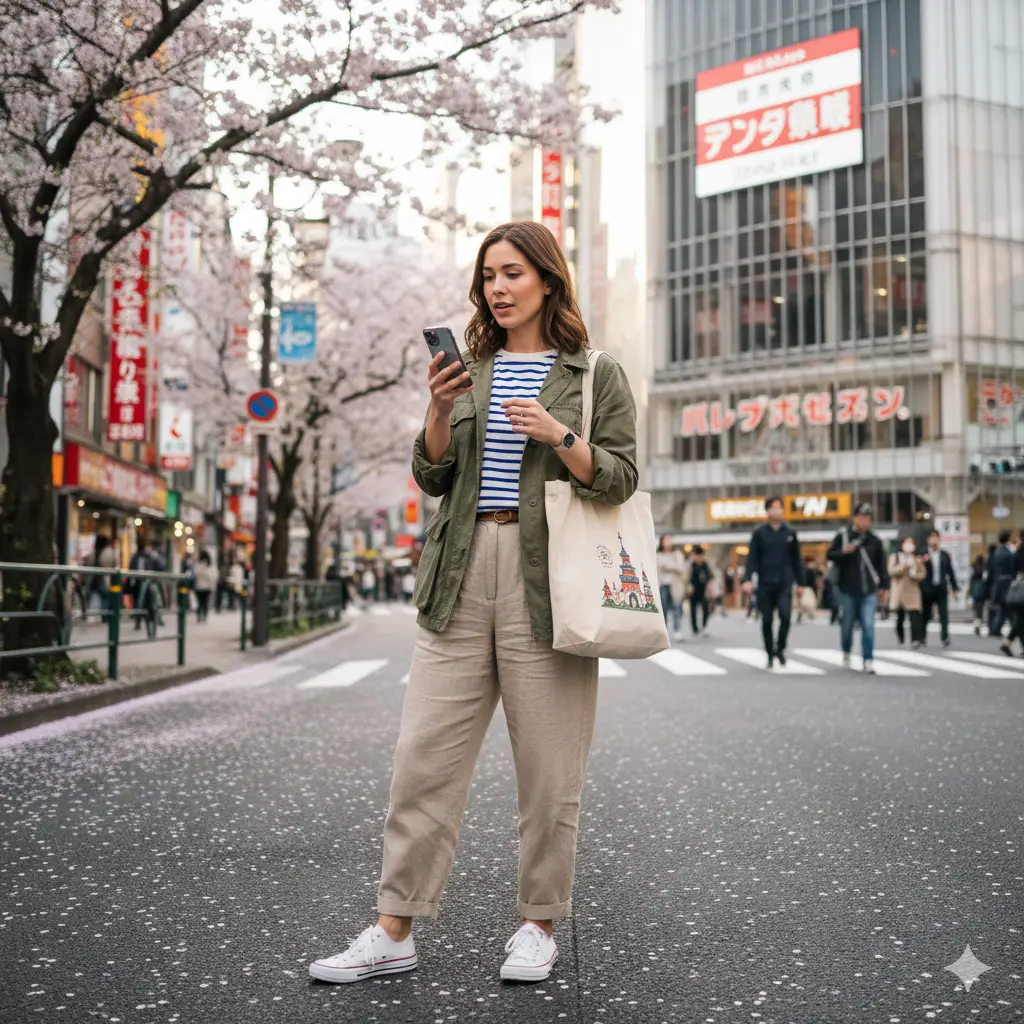
Perfect Tokyo spring outfit: Wide-leg trousers + fitted long-sleeve + light trench + white sneakers
Kyoto: Understated Elegance
Kyoto moves at a different pace and dresses to match. This is the city where you’ll most feel the cultural pull toward modest, considered clothing — particularly around the historic Higashiyama and Arashiyama districts.
Many visitors rent a kimono for a day here, which is genuinely worthwhile. It costs around ¥2,000–4,000 (£10–20), takes about 20 minutes to put on with help from the rental shop, and gives you an entirely different experience of walking through Kyoto’s streets.
Perfect Kyoto spring outfit: Midi skirt + light cardigan + flat loafers. Respectful, elegant, and comfortable for a full day of temple walking.
Osaka: Relaxed and Colorful
Osaka is Japan’s most casual major city. The food culture is louder, the people are funnier, and the fashion allows more room to breathe. You can get away with more color and personality here without it feeling out of place.
Perfect Osaka spring outfit: Dark jeans + a colorful but neat top + denim jacket
Okinawa: A Different World
Okinawa operates on a subtropical schedule. By April, temperatures are 25°C+, the beaches are calling, and the spring clothing rules for mainland Japan barely apply. Pack light, breathable, and beach-adjacent.
Perfect Okinawa spring outfit: Linen trousers + short-sleeve blouse + light cotton jacket for evenings
The Japan Spring Packing Checklist
Here’s everything in one place. This is a one-week to ten-day list — adjust quantities for longer trips.
| Category | What to Pack |
|---|---|
| Tops | 3–4 long-sleeve tees or blouses, 2–3 short-sleeve tops, 1–2 button-down shirts |
| Layers | 1–2 cardigans or light knits, 1 denim jacket or blazer |
| Bottoms | 2 pairs of trousers (straight or wide-leg), 1 pair of jeans, 1 midi skirt or dress |
| Outerwear | 1 trench coat or light jacket, 1 packable rain jacket |
| Shoes | 1 pair walking sneakers, 1 pair slip-on flats or loafers |
| Accessories | Compact umbrella, scarf (March trips), sunglasses (May trips), good socks |
| Other | SPF sunscreen stick, reusable tote bag (very normal to carry in Japan) |
Special Situations Worth Knowing About
Hanami (Cherry Blossom Picnics)
Hanami is one of the great joys of spring in Japan — spreading a picnic mat under a cherry blossom tree with snacks and drinks and spending a few hours watching the petals fall. It’s also several hours of sitting on the ground in whatever temperature April decides to serve that day.
Dress in your most comfortable layers, bring a light blanket or extra wrap if it’s March, and wear flat shoes you can remove easily. The prettiest hanami photos come from outfits in soft colors — pale pink, cream, white — that echo the blossoms above you.
Temple and Shrine Visits
Most Japanese temples don’t require specific clothing the way South or Southeast Asian temples do. That said, modesty is appreciated — nothing too revealing, particularly around the shoulders and upper thighs. You’ll be removing your shoes frequently, so prioritize easy-off footwear and presentable socks without exception.
Ryokan and Onsen Stays
A night in a traditional ryokan is one of the best experiences Japan offers, and the dress situation is beautifully simple: the ryokan provides you with a yukata (light cotton robe) to wear from the moment you arrive. Pack comfortable sleepwear and a small toiletry bag. That’s genuinely all you need for a ryokan stay.
Hay Fever Season (Important!)
Japan’s spring pollen season is severe. If you have hay fever, this will affect you more than you expect. A practical wardrobe tip that Japanese locals actively use: smooth nylon or polyester outer layers collect significantly less pollen than wool, fleece, or cotton knits. Surgical-style face masks are widely available, inexpensive, and completely normal — you’ll see them everywhere from late February through May.
What to Leave at Home
A genuinely useful list, learned from experience and from watching fellow travelers struggle:
- Heavy down coats — unless you’re going to Hokkaido in early March, they’re too much
- More than two pairs of shoes — your feet will thank you; your luggage weight limit will thank you
- Full-sized toiletries — Japanese convenience stores and hotel bathrooms are extraordinarily well-stocked
- Clothes you’ve never worn before — a new pair of shoes or an untested item of clothing has ruined many an otherwise perfect travel day
- Anything that needs dry-cleaning — spring rain, temple floors, hanami grass, and the occasional ramen splash are all real hazards
Quick Reference: What to Wear in Japan in Spring by Temperature
| Temperature | What to Wear |
|---|---|
| Below 10°C | Down jacket or warm coat + knit sweater + long-sleeve base + scarf |
| 10°C – 15°C | Trench coat + light cardigan or sweater + long-sleeve base |
| 15°C – 20°C | Light jacket or cardigan + long-sleeve or short-sleeve top |
| Above 20°C | Short-sleeve top + one light layer for A/C and cooler evenings |
Final Thoughts
Packing for Japan in spring is ultimately about respecting the climate enough to prepare properly for it — and respecting the culture enough to dress with a little intention.
Now you know exactly what to wear in Japan in spring: a thoughtful capsule wardrobe built around layers, neutral colors, comfortable shoes, and one good trench coat that pulls everything together.
The cherry blossoms don’t last long — about ten days to two weeks at any given location before the petals begin to fall. You want to spend those days outside, wandering, eating, taking photographs, and being fully present. Not shivering. Not hunting for a coat. Not nursing blisters.
Pack right. Japan is waiting.
Further Reading & Trusted Resources
- Japan National Tourism Organization — Official Seasonal Travel Guide — The official tourism body with up-to-date regional event calendars and travel guidance.
- MATCHA Japan Travel Magazine — Spring Packing Tips — Detailed monthly temperature breakdowns by region with local clothing recommendations.
- Japan Meteorological Corporation — Cherry Blossom Forecast — The most accurate annual sakura bloom tracker, updated each January.
- JNTO Onsen & Ryokan Cultural Etiquette Guide — Official guidance on ryokan stays and cultural customs around dress.

Jitu Niranjan is a travel fashion writer and the founder of Travel in Styles. With three years of experience curating outfit guides and packing strategies for women travelers, he covers everything from airport looks to destination dressing across beaches, cities, and beyond. Follow his curation on Pinterest.